 support@bizdata360.com
 +1-650-283-1644
 AI Enabled Data Integrations and AnalyticsAI Enabled Data Integrations and Analytics

Healthcare data silos are more than an IT problem. They are one of the biggest drags on clinical efficiency, patient safety, cost control, and strategic innovation across the U.S. healthcare system. In fact, fragmented systems cost the global healthcare economy an estimated $3.1 trillion annually due to inefficiencies, care gaps, and unnecessary work.( naacos.com )
For hospital leaders, CIOs, and healthcare IT teams, identifying and eliminating these silos is a top priority. This guide breaks down the 7 most harmful healthcare data silos of 2026, explains how each one slows your organization down, and provides practical ways to identify and address them early.
Whether you are aiming to improve care quality, accelerate workflows, or support advanced technologies like AI analytics, understanding healthcare data silos is critical.
Key Takeaways
Healthcare data silos happen when important patient and operational data get trapped inside systems that cannot communicate with each other. These might be separate electronic health record (EHR) platforms, diagnostic systems, lab databases, billing tools, or scheduling apps that don’t share data easily.
This fragmentation creates blind spots for clinicians, administrators, and analysts. One provider may have critical patient history in one system while another has recent test results in another. Without a unified view, care becomes slower, less accurate, and more expensive.
Healthcare data silos create inefficiency in multiple ways:
If your organization uses more than one EHR, you may already have data silos. Providers working across facilities or departments may not see complete patient histories because systems lack seamless interoperability. This is especially common in ACOs and multi-hospital networks.
Signs:
Old or custom-built systems often cannot integrate easily with modern platforms. These legacy silos trap patient data in outdated formats and complicate data exchange.
Signs:
Sometimes silos aren’t across the enterprise but within a facility. Departments like radiology, labs, or billing may use niche tools that don’t connect back to core systems.
Signs:
When systems speak different data languages, integration becomes harder. Not using standards like FHIR or HL7 means data can’t flow smoothly.
Signs:
If clinicians or administrators spend hours copying and pasting between tools, that’s a red flag for siloed data.
Signs:
Healthcare data silos often hide in plain sight: recurring administrative workload and unnecessary duplication of effort.
Signs:
If your analytics outputs lag or seem inconsistent with patient outcomes, the underlying data may be siloed.
Signs:
Here are practical, battle-tested strategies for eliminating silos and gaining unified data visibility.
Adopt FHIR or HL7 standards so that systems exchange structured, consistent data. This aligns platforms to a shared language and reduces integration barriers.
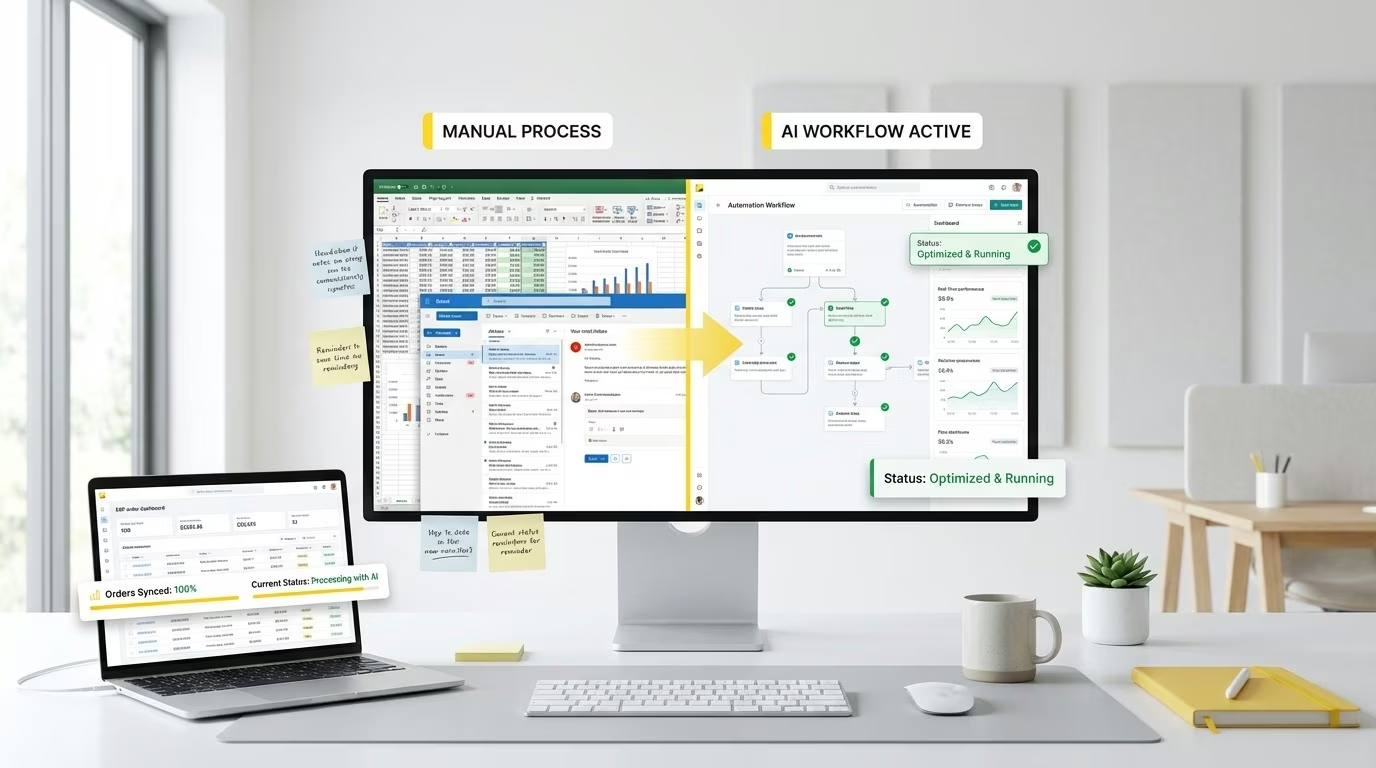
Instead of forcing teams to jump between tools, unify access to patient records and administrative data on a shared platform. Tools that centralize data and sync across systems in real time can dramatically improve workflows.
For many organizations, this is where technologies like eZintegrations™ deliver value. eZintegrations™ connects EHRs, labs, billing, and devices through zero-code workflows and open API connections. It creates a single source of truth your teams can trust.
AI doesn’t replace good data architecture. But it can eliminate repetitive data processing work and ensure structured, high-quality information flows into the right places. Solutions that automate data intake, cleanup, and routing accelerate value realization.
eZintegrations™ provides AI automation that cleans, harmonizes, and routes healthcare data so your teams spend less time on manual tasks and more time improving care.
Create consistent data governance across your organization. Standardize privacy, security, retention, and lifecycle policies so that integrated data remains secure and compliant with HIPAA and other regulations.
Healthcare data silos are not going away on their own. As systems continue to expand and data volumes grow, organizations that act now will see dramatic gains in care quality, operational efficiency, and strategic insight.
If you want to accelerate your healthcare data integration journey and unlock real efficiency, book a demo of eZintegrations™ today. Let’s turn fragmented data into a unified foundation that delivers results.
Recommend Blogs:
FAQ


© Copyright 2026 Bizdata Inc. | All Rights Reserved
 Watch Demo
 Post on LinkedIn
 Post on Facebook
 Post on Twitter/X