 support@bizdata360.com
 +1-650-283-1644
 AI Enabled Data Integrations and AnalyticsAI Enabled Data Integrations and Analytics

Cloud Data Integration connects data across systems to enable real-time, unified access and automation.
Define clear integration goals by identifying systems, data types, frequency, and business impact.
Select a scalable, cloud-native platform with hybrid/multi-cloud support and robust API compatibility.
Clean and standardize data to prevent errors and duplicate records before integration.
Prioritize security with encryption, OAuth/SAML, and compliance (GDPR, HIPAA, etc.).
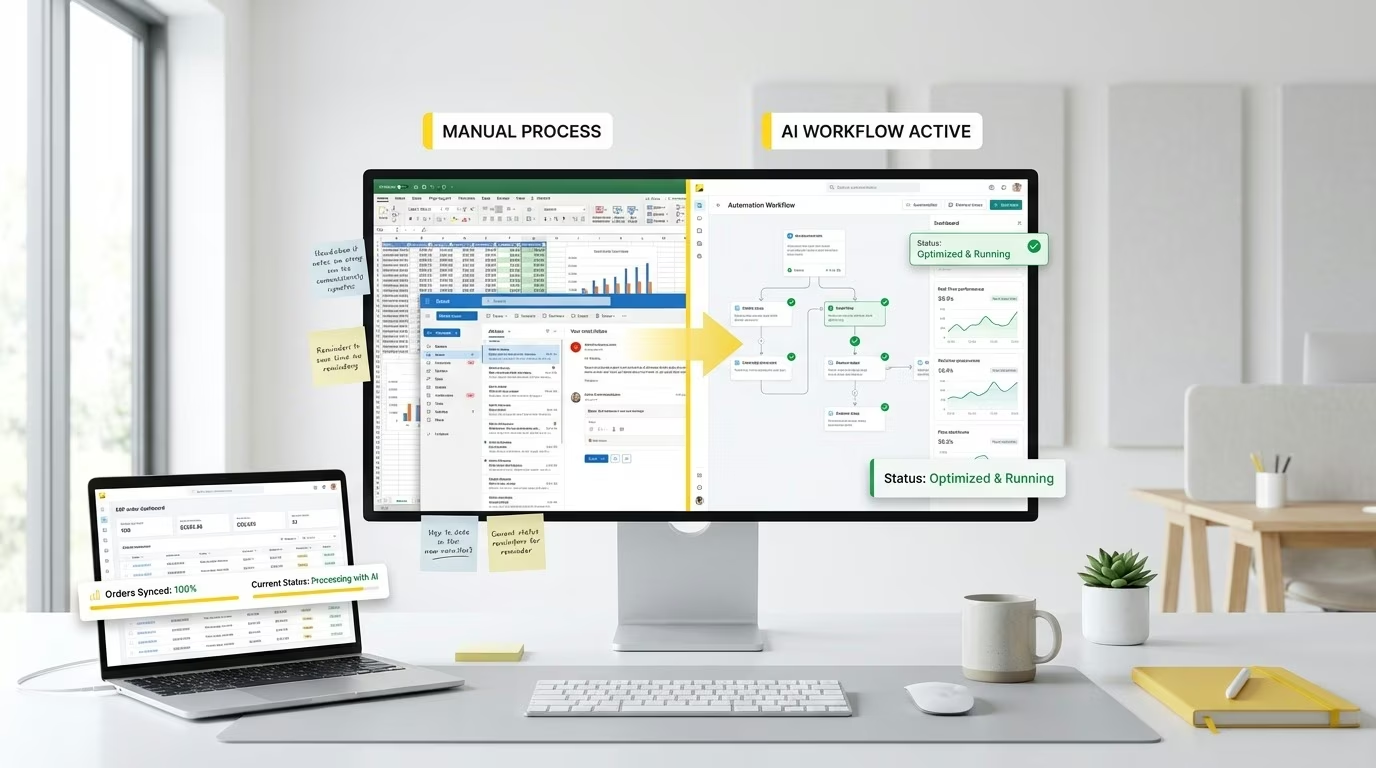
Automate workflows using event triggers, batch loads, and AI-based validation to streamline operations.
Scale strategically using modular design, API gateways, and AI-driven tools for adaptability.
In 2026, over 94% of enterprises use cloud services, and 85% of businesses operate in multi-cloud environments. Yet, 72% report integration challenges as a top obstacle to realizing full cloud ROI. As companies adopt more SaaS, PaaS, and on-premises systems, cloud data integration best practices become critical for B2B efficiency and scalability.
Without a solid integration strategy, data silos multiply, customer experiences suffer, and business decisions stall. Whether you’re syncing CRMs, ERPs, or eCommerce systems, following the right integration principles ensures your data flows seamlessly across platforms.
In this blog, we’ll break down the top 7 cloud data integration best practices that every B2B enterprise should follow complete with examples, expert tips, and real-world insights.
Cloud data integration is the process of connecting disparate data sources whether cloud-based, on-premises, or hybrid into a unified ecosystem that enables real-time and batch data sharing across applications and platforms.
At its core, cloud data integration ensures that the right data is available to the right systems at the right time, which is essential for streamlining business operations, enhancing analytics, and delivering seamless digital experiences.
This process typically involves several technologies, such as:
Cloud data integration tools help break down data silos, enabling businesses to leverage unified data for operations, reporting, and AI/ML initiatives. Whether syncing Salesforce with an ERP, or pulling product data into a data warehouse, integration plays a pivotal role in modern data architecture.
Cloud data integration unlocks significant value for organizations by seamlessly connecting disparate systems and delivering unified data experiences. Here are a few main Cloud Data Integration benefits:
By integrating cloud and on-premises systems, businesses gain a unified view of their operations. Real-time syncing ensures that decisions are based on the latest, most accurate data.
When customer data flows freely between marketing, sales, and support platforms, teams can deliver more tailored and timely experiences. This results in higher satisfaction and retention.
Integrated systems eliminate silos, enabling faster analysis and reporting. Teams can make smarter decisions with centralized dashboards powered by live, cross-system data.
Manual data entry, duplication, and reconciliation are virtually eliminated. This reduces errors, lowers costs, and frees up your team to focus on high-value tasks.
Cloud data integration supports flexible scaling across business units, partners, and geographies. It’s built for growth whether you’re onboarding new systems or expanding global operations.
Quick Stat: According to Deloitte, companies with mature data integration strategies see 2.5x higher operational efficiency compared to those with siloed systems.
Despite its benefits, cloud data integration comes with hurdles that organizations must navigate effectively:
Disparate systems often contain conflicting or redundant information. Without proper cleansing and normalization, integrated data can become a liability rather than an asset.
Many enterprises rely on legacy ERP or on-premises databases. Bridging these with agile cloud applications can be technically complex and resource intensive.
Cloud apps frequently update their APIs. Handling rate limits and evolving schemas without breaking integrations requires proactive monitoring and flexible tooling.
With varying data privacy laws (like GDPR, HIPAA, CCPA), integrated systems must enforce consistent policies to ensure legal compliance and avoid penalties.
Practical Solution: Platforms like eZintegrations™ bridge legacy and modern cloud systems without writing custom code. This low-code approach reduces complexity, shortens implementation time, and ensures long-term adaptability.
Also check out our recent blog on Customer Data Integration: Best Practices and Tools for Success
Before diving into tools or platforms, define what success looks like. Ask:
Clear objectives help guide tool selection, data mapping, and automation logic. For example, a logistics firm integrating a cloud-based TMS with its ERP may prioritize real-time inventory updates over historical data syncing.
Tip: Use a visual integration platform like eZintegrations™ to prototype integration workflows and align stakeholders early.
Selecting the best cloud data integration solution for your business is critical. Look for platforms that are:
Dirty data kills integrations. Inconsistent formats, missing values, or outdated fields cause sync failures and analytics errors.
Best practices for data cleansing:
Case in Point: A retail enterprise using eZintegrations™ cleaned 20 million product records before integrating with their Shopify and SAP systems, improving conversion accuracy by 27%.

As data crosses systems and clouds, risks rise. Prioritize encryption, access control, and compliance with:
Tip: Leading cloud data integration services like eZintegrations™ allow granular permission settings, audit trails, and secure API calls out-of-the-box.
Manual processes don’t scale. Use automation to:
Tools like eZintegrations™ offer prebuilt templates and drag-and-drop flow designers that simplify automation for both IT and business users.
Example: A B2B SaaS provider automated billing syncs between Stripe, Salesforce, and QuickBooks using cloud-based data integration tools, reducing financial close times by 40%.
Don’t “set and forget” your integrations. Continuous monitoring ensures performance and reliability.
Key metrics to track:
Look for platforms that offer real-time dashboards, alerts, and self-healing capabilities.
Pro Tip: eZintegrations™ includes built-in error logging and retry logic, helping teams resolve issues before users notice.
Your cloud data integration strategy isn’t static. As your company evolves adding apps, entering new markets, or adopting AI your integrations must adapt.
Best practices to scale:
Insight: The best cloud data integration for enterprise use combines scalability with governance, allowing secure growth across departments.
AI-powered cloud data integration is rapidly becoming a best practice for forward-thinking B2B organizations. By incorporating artificial intelligence into integration pipelines, businesses can automate data mapping, detect anomalies in real time, and even predict integration failures before they happen.
AI algorithms help normalize messy datasets, intelligently match fields across platforms, and adapt to evolving data schemas without manual intervention. For enterprises managing high data volume and velocity, AI-enhanced integration ensures better accuracy, faster processing, and reduced operational risk giving your B2B operations a competitive edge.
Stat: Gartner reports that by 2026, 80% of data integration will be performed using AI-enhanced platforms.
Cloud data integration isn’t just an IT concern, it’s a business-critical strategy. Following these Cloud data integration best practices helps your organization improve agility, reduce costs, and deliver better B2B outcomes.
IPaaS Platforms like eZintegrations™ empower tech professionals to integrate faster, more securely, and without writing code. Whether you’re syncing customer data across Salesforce, SAP, and HubSpot or connecting a data lake with analytics dashboards, smart integration is the key to growth.
Ready to streamline your B2B data operations? Book your free eZintegrations™ demo today and see how fast, flexible cloud integration can transform your business.
Q: Why is cloud data integration essential for B2B?
It prevents data silos, improves real-time insights, enhances customer experiences, and supports scalable digital workflows.
Q: How do we start with clean data?
Use profiling tools to audit formats, naming standards, deduplication, and normalization before integration.
Q: What are common integration security features?
Look for encryption, granular permissions, API rate‑limit handling, and adherence to GDPR, CCPA, HIPAA, and SOC 2.
Q: How can integration automation help?
It triggers workflows automatically, schedules data syncs, enriches content, and minimizes manual errors and delays.
Q: How do we ensure integrations stay reliable?
By actively monitoring key metrics like success rates, API uptime, and error logs and using platforms with alerts and retry logic.


© Copyright 2026 Bizdata Inc. | All Rights Reserved
 Watch Demo
 Post on LinkedIn
 Post on Facebook
 Post on Twitter/X