 support@bizdata360.com
 +1-650-283-1644
 AI Enabled Data Integrations and AnalyticsAI Enabled Data Integrations and Analytics

Despite a decade of digital transformation, data silos remain one of the most persistent and expensive problems in enterprise IT. In fact, a recent report by Gartner shows that over 87% of organizations struggle with disconnected data sources, leading to inefficiencies in operations and decision-making. For tech professionals, the cost of data silos extends beyond dollars. It includes slower innovation, fragmented customer experiences, and missed AI/ML opportunities.
This guide is for IT leaders, data engineers, and enterprise architects who are actively seeking solutions to understand and eliminate data silos. We’ll explore everything from the meaning of data silos to practical solutions using modern platforms like eZintegrations™ and Goldfinch AI.
Data silos are isolated repositories of data. These are pockets of information that cannot be accessed or shared easily by other departments within the same organization. Think of them as separate data containers that are not connected to each other. Because they are not integrated, they prevent seamless communication and collaboration across teams.
They typically arise when different departments use separate systems, tools, or databases that don’t communicate with each other. This separation makes it difficult to share, analyze, and use data cohesively. The term “data silo” is metaphorical, implying that the data is trapped in a container only accessible to a specific team or tool.
Not all data silos are created equal. They can take different forms depending on how and where the data is stored. Understanding the different types helps identify where integration is needed and how these silos affect organizational performance.
Separate teams like marketing, sales, and operations maintain their own CRMs or Excel files, limiting collaboration.
Using specialized SaaS tools (e.g., HubSpot, Salesforce, NetSuite) without integrations creates isolated data sources.
Legacy systems often don’t sync with cloud-native applications, creating gaps in real-time data flow.
When data is stored in spreadsheets or individual devices, there’s no centralized control or access.
Seeing data silos in real-world use cases helps clarify their impact. These examples are based on common enterprise scenarios across industries.
Data silos create a ripple effect on issues across your business. These disadvantages manifest in both operational inefficiency and strategic misalignment. Identifying these challenges is the first step to resolving them.
Teams spend more time looking for data or reconciling conflicting data from different sources.
Each department bases decisions on partial or outdated data, leading to inconsistent strategies.
Maintaining separate systems and handling duplicate data inflates IT and personnel costs.
In regulated industries, inconsistent data can lead to non-compliance and penalties.
Siloed data restricts the training and deployment of AI models due to incomplete datasets.
Even when organizations recognize the problem, eliminating data silos isn’t easy. Many teams face systemic obstacles rooted in processes, culture, and infrastructure.
Departments may be reluctant to share data due to ownership concerns.
Many companies lack a structured integration architecture to unify data.
Legacy systems may not support APIs or modern integration methods.
Understanding the root causes behind data silos helps you prevent them in the future. Silos often emerge from well-intentioned decisions that lead to unintended isolation.
Data silos undermine the very goal of digital transformation: enabling faster, better decisions through unified data. They block business agility and prevent organizations from responding to market changes or customer needs efficiently.
When talking about data silos in the context of databases, we refer to databases that operate in isolation from the rest of the organization’s systems. This limits the accessibility and utility of the data stored within.
For example, if customer data exists only in a legacy CRM and not in the company’s centralized data warehouse, it’s considered a silo.
Dismantling data silos requires a thoughtful mix of people, processes, and technology. It is not only a technical challenge but also a cultural one.
Steps to break down data silos:
The most critical consequence is impaired decision-making. Without complete data, organizations suffer from misaligned strategies, wasted budgets, and missed opportunities.
Eliminating silos starts with awareness but needs robust tools and a top-down mandate. Success requires stakeholder buy-in and a modern integration platform.
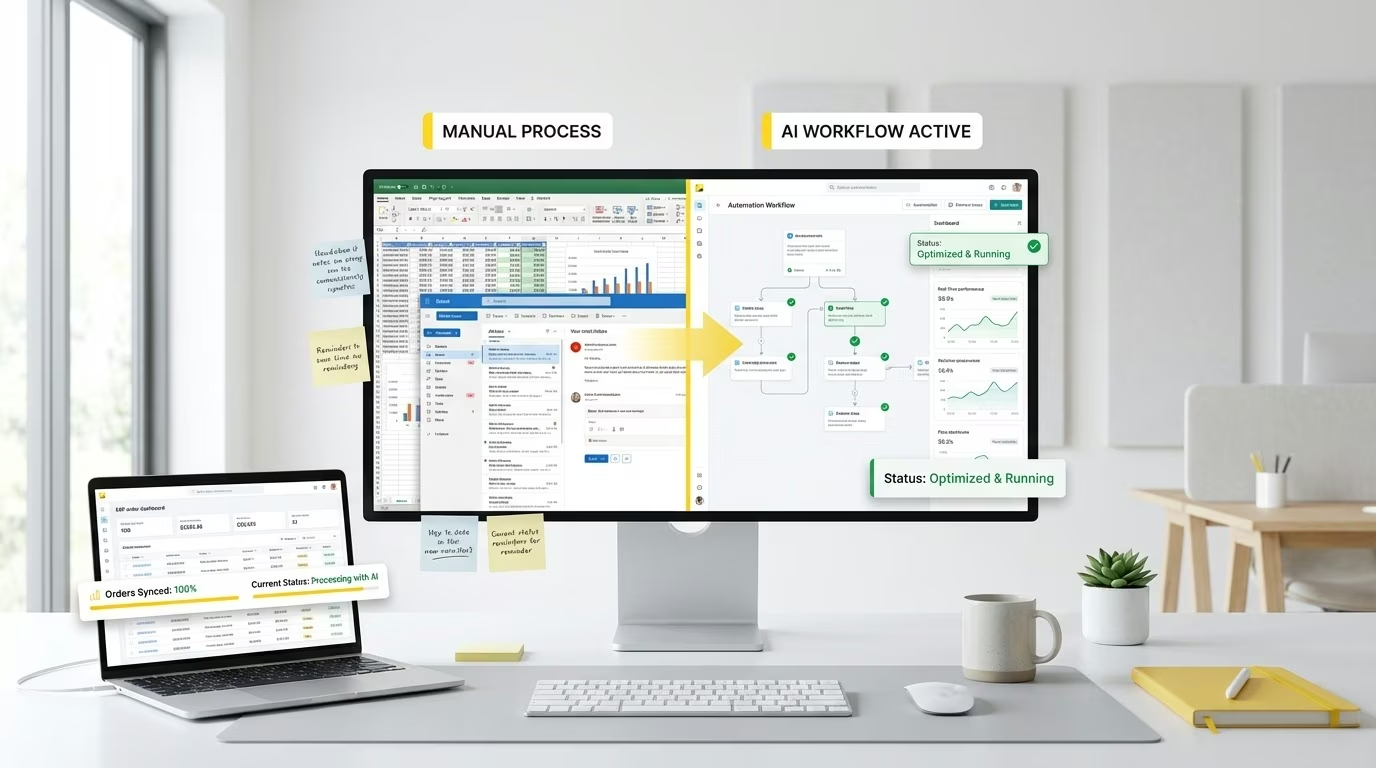
eZintegrations™ makes it possible to connect multiple sources, including ERPs, CRMs, and cloud apps without custom coding. Goldfinch AI further augments this by extracting unstructured data and turning it into actionable insights across departments.
AI is playing an increasingly important role in identifying, analyzing, and breaking down data silos. Traditional methods of data integration often struggle with scale, speed, and structure, especially when unstructured data is involved.
With tools like Goldfinch AI, organizations can extract meaningful insights from unstructured formats like PDFs, handwritten forms, and scanned documents. AI automates classification, data tagging, and validation, helping unify siloed datasets and making them usable across systems. AI doesn’t just bridge silos; it transforms isolated data into a source of competitive advantage.
Also Check out
Structured vs Unstructured Data: Comprehensive Guide 2026
Data Extraction Explained: Methods, Tools & Real-World Applications
Data lakes and data silos represent opposite ends of the spectrum. While silos restrict access and isolate data, data lakes allow for centralized storage and broad accessibility. Data silos are typically limited to one team, with structured but fragmented data. They often suffer from poor integration capabilities. In contrast, a data lake is accessible organization-wide and can store both structured and unstructured data. It supports easy integration with modern tools.
A data warehouse is a centralized and structured system for reporting and analytics. It brings consistency, governance, and analytics readiness. In contrast, data silos are isolated and often lack real-time capabilities. Data warehouses promote unified reporting whereas Data silos restrict visibility and cause inconsistencies
Different industries experience the impact of data silos in unique ways. From healthcare to retail, disconnected data causes inefficiencies and errors.
In financial services, regulatory reporting and internal audits demand consistent, real-time data. When risk, compliance, and customer service departments operate with separate records, errors occur, and transparency is lost. These inconsistencies increase the likelihood of failed audits and fines, and limit the agility required to meet new regulatory frameworks.
Retailers rely on real-time visibility for inventory, customer demand, and supply chain logistics. When systems such as point-of-sale, warehouse management, and ecommerce platforms operate in isolation, it leads to stockouts, overstocking, or delayed shipping. This not only affects revenue but also damages the brand reputation and customer satisfaction.
Manufacturing companies face challenges when data from procurement, inventory, and production systems is not synchronized. These silos can cause supply bottlenecks, delayed production schedules, and missed delivery deadlines. Moreover, a lack of unified data impairs lean manufacturing and quality control initiatives, resulting in higher operational costs.
Data silos in healthcare are among the most affected sectors. Siloed patient data across EMRs, labs, imaging systems, and insurance platforms causes a lack of coordination. This fragmentation delays diagnosis increases the risk of medical errors and creates redundant testing. The result is poor patient outcomes and higher administrative burdens.
Goldfinch AI helps by interpreting medical documents, patient histories, and insurance forms to create a unified view of each patient. With real-time access to consolidated data, care teams can make faster, more accurate decisions, enhance collaboration, and improve continuity of care.
While sometimes seen as necessary for privacy or compliance, the disadvantages almost always outweigh the benefits. Data silos reduce efficiency, transparency, and innovation.
The solution isn’t to banish all silos instantly but to create a connected ecosystem where relevant data flows seamlessly.
eZintegrations™ is a no-code integration platform designed to unify data across SaaS, APIs, databases, and cloud systems. It provides:
Goldfinch AI complements this by:
Together, these tools build a foundation for connected, intelligent enterprises.

Data silos may seem manageable today, but they become enterprise-wide threats as you scale. Whether you’re running a global supply chain or scaling your customer support, having fragmented data creates blind spots.
The good news is that you don’t have to tackle this challenge alone. Tools like eZintegrations™ and Goldfinch AI offer powerful, low-code ways to connect your data and empower your teams.
Ready to break down your silos and unlock full data visibility?
Book a free demo of eZintegrations™ today.
What are data silos?
Data silos are isolated data repositories that prevent data sharing across teams or systems.
Why are data silos problematic?
They create inefficiencies, increase costs, and limit real-time decision-making.
How can I eliminate data silos?
You can use data integration platforms like eZintegrations™ and AI tools like Goldfinch AI.
Are data silos the same as databases?
No. A database can become a data silo if it’s not integrated with other systems.
What industries face the most issues with data silos?
Healthcare, retail, finance, and manufacturing are particularly affected by siloed data.
Are data silos good or bad?
Data silos are generally bad because they block collaboration, reduce transparency, and hinder growth.


© Copyright 2026 Bizdata Inc. | All Rights Reserved
 Watch Demo
 Post on LinkedIn
 Post on Facebook
 Post on Twitter/X