 support@bizdata360.com
 +1-650-283-1644
 AI Enabled Data Integrations and AnalyticsAI Enabled Data Integrations and Analytics

Document workflow automation is no longer optional. As enterprises accelerate digital transformation in 2026, streamlining workflows has become mission critical. According to IDC reports, document challenges account for 21.3% of productivity loss, which costs businesses approximately $19,732 per information worker per year.
Tech professionals managing compliance-heavy, paper-intensive workflows are under pressure to cut costs, reduce risks, and meet rising operational demands.
If you’re buried under piles of manual paperwork, spending hours chasing approvals, or dealing with fragmented tools, document workflow automation is your competitive edge. This guide is tailored for IT leaders, automation strategists, and operations heads looking to modernize how documents flow across departments.
A document workflow is the sequence of steps a document goes through, from creation to approval, review, processing, and storage. Each workflow can be manual, semi-automated, or fully automated.
Manual workflows often involve multiple people, emails, physical forms, and version mismatches.
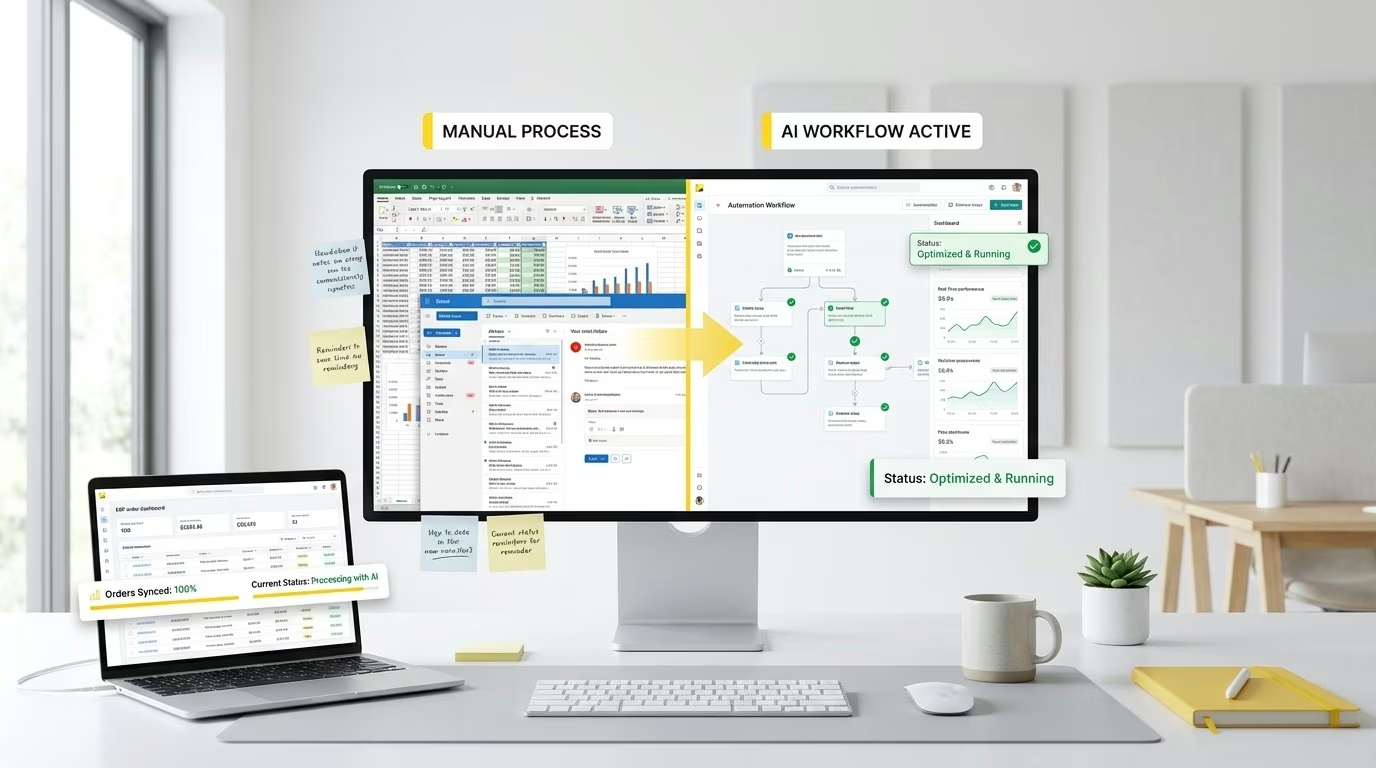
Document workflow automation is the process of using software to digitize and streamline how documents are created, approved, signed, and managed across an organization. It replaces repetitive tasks with automated rules, intelligent routing, and integrated systems.
It reduces the need for manual input, speeds up approvals, and enhances traceability.
Different businesses require different levels of automation based on their document lifecycle and complexity. Below are common types:
Automating your document processes delivers tangible business value. Here are the key benefits:
Despite the advantages, implementing document workflow automation comes with its own hurdles:

When evaluating document workflow automation platforms, look for ease of integration, scalability, and AI capabilities.
Also Check out: Intelligent Document Processing (IDP): Ultimate Guide 2026
Enterprise Document Automation with AI-Driven Workflows
To maximize ROI from your automation efforts, follow these industry best practices:
Document automation is transforming multiple industries. Here are real-world use cases:
Document workflow management refers to overseeing, optimizing, and controlling the flow of documents within a system. It encompasses monitoring, access control, auditing, and performance tracking. Unlike basic automation, workflow management adds governance and continuous improvement.
Document processing automation focuses on interpreting and extracting data from documents using technologies like OCR, machine learning, and natural language processing.
Goldfinch AI is an IDP platform tailored for this purpose, converting unstructured document content into usable data for automated workflows.
| Feature | Document Workflow | Document Management Workflow |
| Focus | Routing and task completion | Storage, retrieval, archiving |
| Tools | Workflow automation platforms | DMS like SharePoint, M-Files |
| Example | Contract approval process | Centralized document repository |
| Automation Level | High | Moderate |
The future is AI-driven, secure, and collaborative. Trends shaping 2026 and beyond:
Kickstarting your automation journey is easier than ever:
eZintegrations™ is a visual, cloud-native document workflow automation platform. It enables real-time routing, integrates with digital signature tools, and supports multi-system connections including SAP, CRM, and cloud storage.
Goldfinch AI complements it by bringing advanced IDP capabilities. It can read handwritten documents, scans, and image files to extract and structure data, making downstream automation smarter and more accurate.
Together, they deliver a complete, no-code document automation ecosystem.
Document workflow automation is essential for organizations aiming to boost efficiency, cut costs, and maintain compliance by 2026. Whether you’re a logistics firm processing thousands of shipment forms or an HR department onboarding new employees, automation can simplify and speed up your processes.
Tools like eZintegrations™ and Goldfinch AI offer scalable, no-code solutions for everything from document routing to intelligent processing. It’s time to stop wasting time on manual tasks and start automating them.
Book a free demo of eZintegrations™ today and experience intelligent automation in action.
What is the best document workflow automation platform for small businesses?
For small businesses, eZintegrations™ offers a no-code, cost-effective way to automate approvals, contracts, and digital signatures.
Can I automate document workflows without coding?
Yes. No-code platforms like eZintegrations™ enable non-technical users to build workflows visually.
How secure is document workflow automation?
Modern platforms offer encryption, access control, audit logs, and digital signature compliance (e.g., eIDAS, HIPAA).
What industries benefit most from document workflow automation?
Industries with high document volumes and compliance needs like logistics, healthcare, legal, and finance, see the most impact.
What is the difference between digital document management and document workflow automation?
Digital document management focuses on storage and retrieval. Workflow automation adds routing, approvals, and task automation.
Which is best tool for document workflow automation?
eZintegrations™ AI Document Understanding is best tool for document workflow automation


© Copyright 2026 Bizdata Inc. | All Rights Reserved
 Watch Demo
 Post on LinkedIn
 Post on Facebook
 Post on Twitter/X