Top Best Healthcare Interoperability Solutions: Guide for 2025

Top Best Healthcare Interoperability Solutions Guide for 2025


Summary:


  • Discover the latest and best healthcare interoperability solutions for 2025 
  • Understand key concepts like FHIR and data exchange in modern care systems 
  • Learn how platforms like eZintegrations™ and Goldfinch AI simplify EHR integration 
  • Explore top benefits, challenges, and future trends in healthcare interoperability 
  • Get answers to common questions about implementation, compliance, and tools 


In 2025, healthcare systems are more connected, digital, and data-driven than ever—yet nearly 70% of providers still struggle with seamless data exchange across platforms (source: HIMSS 2024 Report). With growing patient volumes, regulatory demands, and multi-system architectures, healthcare interoperability solutions are no longer optional; they are critical.


Healthcare professionals face major pain points, including fragmented EHR systems, poor data visibility, delayed diagnoses, and administrative overload. This guide is designed for tech professionals, data architects, and IT leaders in healthcare who evaluate the best ways to unify siloed systems. You’ll find real-world strategies, emerging standards like FHIR, and actionable insights into tools like eZintegrations™ and Goldfinch AI.


Let’s explore what makes an healthcare interoperability solution effective and how to choose the best one.


What Is Interoperability in Healthcare?


Interoperability in healthcare refers to the ability of various health information systems and software applications to communicate, exchange, and use patient data seamlessly across organizational boundaries. 


It includes: 


  • Transmitting electronic health records (EHRs) between providers 
  • Coordinating care across labs, specialists, and insurers 
  • Ensuring that data is both accessible and actionable 

True interoperability goes beyond simple data sharing. It enables semantic understanding, where the meaning of data remains intact across systems.


Why Is Interoperability Important in Healthcare?


Without interoperability, healthcare systems become data islands, leading to poor coordination and patient care delays. Interoperability improves clinical outcomes, enhances patient experience, and reduces redundant testing. 

Key benefits include: 


  • Faster, data-driven decision-making 
  • Seamless EHR transitions and referrals 
  • Better care coordination across facilities 
  • Improved compliance with federal regulations 


Levels of Healthcare Interoperability


There are four recognized levels of healthcare interoperability. Each represents a layer of sophistication in how systems connect and interpret health data. 

  1. Foundational: Basic data exchange without interpretation 
  2. Structural: Standardized formatting (e.g., HL7, XML) 
  3. Semantic: Consistent meaning across systems (e.g., SNOMED CT, LOINC) 
  4. Organizational: Governance, policy, and compliance alignment 

A robust interoperability strategy must address all these layers.


How to Improve Interoperability in Healthcare


Improving healthcare interoperability is not just about adopting new healthcare interoperability software. It involves strategic planning, compliance readiness, and platform flexibility. 


Steps to improve interoperability:


  • Adopt universal standards like FHIR and HL7 
  • Use API-first platforms to ensure scalable integrations 
  • Implement centralized data governance and access policies 
  • Choose platforms that support real-time sync and structured/unstructured data 


How Does Interoperability Impact Healthcare Delivery?


When done right, interoperability enhances almost every aspect of healthcare delivery. It reduces operational friction, shortens diagnosis timelines, and empowers both patients and providers with actionable data. 

It impacts: 


  • Clinical workflows: Reducing time wasted on manual data entry 
  • Patient safety: Preventing errors from incomplete records 
  • Population health: Enabling data aggregation and analytics at scale 
  • Reimbursement: Improving coding and claim accuracy 


What Is an Example of Interoperability in Healthcare?


A practical example: A patient visits a primary care physician, then is referred to a specialist, followed by lab tests at a third facility. With interoperability: 

  • The EHR from the PCP is shared with the specialist 
  • Lab results auto-sync with both providers’ systems 
  • Prescriptions and diagnostic codes flow directly into payer databases 

This reduces friction, accelerates treatment, and ensures continuity of care. 


Also Check out: Healthcare Data Integration: AI Guide & Best Practices 2025 

EHR Integration: Ultimate Guide 2025


What Is FHIR (Fast Healthcare Interoperability Resources)?


FHIR is a standardized data exchange protocol developed by HL7. It uses web-based technologies like RESTful APIs and JSON/XML to make data sharing fast, secure, and developer-friendly.


Why FHIR matters:


  • Supports mobile and cloud applications 
  • Enables real-time data sync between systems 
  • Widely adopted by EHR vendors and health networks 

Platforms like eZintegrations™ are FHIR-compatible, enabling seamless integration across diverse healthcare apps and services. 


Healthcare Interoperability Solutions


Top-tier healthcare interoperability solutions are built to connect EHRs, lab systems, imaging tools, payer platforms, and patient apps through secure APIs and automated workflows. 


Key features of effective platforms:


  • Pre-built API integrations with healthcare vendors 
  • Real-time data mapping and transformation 
  • HIPAA-compliant security and access controls 
  • Scalable to support enterprise-level deployments 


Challenges of Healthcare Interoperability Solutions


Despite the advantages, there are hurdles that organizations must overcome.


Common challenges: 

  • Legacy systems that lack modern APIs 
  • Data inconsistencies and incompatible formats 
  • High integration costs and project delays 
  • Regulatory complexity and vendor lock-in 

Solutions like eZintegrations™ and Goldfinch AI address many of these issues by offering plug-and-play, API-driven frameworks.

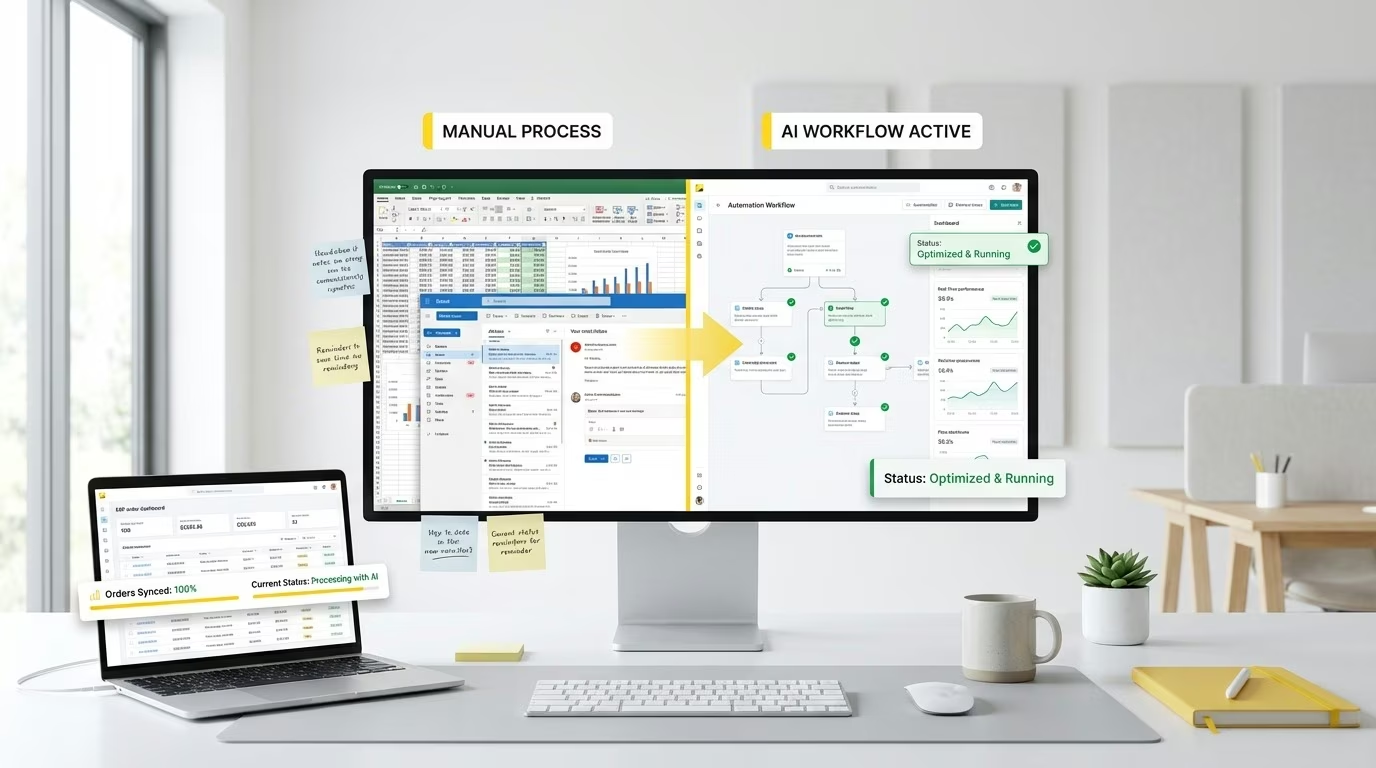
Healthcare interoperability solutions by eZintegrations and Goldfinch AI

Healthcare Interoperability Solutions Examples


To better understand the practical impact of interoperability, let’s examine some real-world examples of how solutions work in different settings. 


Example 1: Multi-specialty Hospital Network Integration


  • Challenge: Multiple departments using different EHR vendors 
  • Solution: eZintegrations™ created a unified data pipeline using FHIR and HL7 connectors 
  • Result: Reduced record duplication by upto 42% and improved cross-departmental referrals


Example 2: Structuring Unstructured Data in Rural Clinics


  • Challenge: Clinics received referrals via fax and handwritten forms 
  • Solution: Goldfinch AI digitized, extracted, and structured clinical data for ingestion into EHRs 
  • Result: Improved intake efficiency and reduced manual processing time by upto 60%


Example 3: Payer-Provider Claims Synchronization


  • Challenge: Delays in claims approval due to missing codes 
  • Solution: eZintegrations™ automated claim data mapping and ensured real-time sync with payers 
  • Result: Reduced claims rejections and accelerated revenue cycle 

These examples show how modern platforms solve real-world interoperability issues and offer measurable value.


Healthcare Interoperability Solutions USA: The Current Landscape


The U.S. healthcare market has a growing demand for robust, compliant interoperability solutions. Government initiatives like the 21st Century Cures Act have accelerated adoption. 


According to a 2024 Accenture survey, over 85% of healthcare CIOs plan to increase spending on interoperability over the next 12 months. 


Top Healthcare Interoperability Trends in the USA:


  • State-level HIE integrations 
  • Cloud-native interoperability platforms 
  • FHIR mandate compliance across systems 


AI-Powered Healthcare Interoperability Solutions


Artificial intelligence is becoming central to modern healthcare interoperability. AI can interpret unstructured data, predict patient outcomes, and automate data mapping. 


Use cases of AI in interoperability:


  • NLP for clinical notes and discharge summaries 
  • Machine learning to detect missing/inaccurate records 
  • Predictive analytics for readmission risk 

Goldfinch AI plays a key role here, enabling semantic interoperability by structuring messy PDF records, scanned lab results, and handwritten forms.


Future of Healthcare Interoperability Solutions


Looking ahead, interoperability will be shaped by smart automation, cross-border health data sharing, and increased patient control over records. 


Emerging trends:


  • Global FHIR adoption and governance alignment 
  • AI-powered interoperability engines 
  • Blockchain for data provenance and patient consent 
  • Patient-owned health data vaults 

Investing in future-proof platforms will prevent costly overhauls.


How eZintegrations™ & Goldfinch AI Offer the Best Healthcare Interoperability Solutions


eZintegrations™ is a no-code, cloud-native integration platform that supports real-time, secure data sharing across EHRs, labs, CRMs, and insurance systems. It features:

  • Drag-and-drop workflow builder 
  • 1000+ pre-built APIs via the API Marketplace 
  • FHIR, HL7, and ODATA compatibility 
  • Real-time sync with robust logging


Goldfinch AI complements this by structuring unstructured data like: 

  • Scanned discharge papers 
  • Diagnostic imaging reports 
  • Faxed forms and handwritten prescriptions 

Together, they create a unified healthcare data fabric that eliminates silos and ensures seamless interoperability.


Ready to Transform Healthcare Interoperability?


Healthcare organizations can no longer afford fragmented systems and incomplete patient records. Interoperability is now the backbone of modern, patient-centric care.
Solutions like eZintegrations™ and Goldfinch AI provide a powerful foundation to break data silos, automate workflows, and ensure compliance, making them the best healthcare interoperability solutions.  


Book a free demo of eZintegrations™ today to see how easy it is to unify your healthcare ecosystem.


FAQs


  1. What is the difference between EHR integration and interoperability?
    EHR integration connects data systems, while interoperability ensures that data is understood and used effectively across systems.
  2. Is FHIR mandatory in the USA?
    Yes, as part of the 21st Century Cures Act, most certified health IT developers must support FHIR APIs for patient access.
  3. Can small clinics benefit from healthcare interoperability solutions?
    Absolutely. Scalable solutions like eZintegrations™ support small to large practices, improving data accuracy and patient outcomes.
  4. How long does it take to implement an interoperability solution?
    Timelines vary, but platforms with pre-built APIs and no-code tools can go live within weeks.
  5. How secure are interoperability platforms?
    Top platforms follow HIPAA, SOC 2, and other healthcare security standards, offering encryption, access controls, and audit logs.