 support@bizdata360.com
 +1-650-283-1644
 AI Enabled Data Integrations and AnalyticsAI Enabled Data Integrations and Analytics

Automating clinical trial data management streamlines data capture, cleaning, and analysis, reducing errors and accelerating drug development timelines. With AI, eZintegration, and real-time monitoring, pharma companies can meet regulatory requirements faster and improve submission quality, ultimately speeding up drug approvals.
According to McKinsey Research, the average cost of developing a new drug exceeds $1 billion, with clinical trials accounting for a substantial portion of this investment. This puts immense pressure on pharmaceutical companies to streamline their data management processes and shorten time-to-market for life-saving treatments.
As Gartner notes, automation is a key enabler of digital transformation in the pharmaceutical industry. By automating clinical trial data management, companies can reduce manual errors, enhance efficiency, and improve compliance with stringent regulatory requirements.
Managing clinical trial data manually is a labor-intensive, error-prone process involving vast amounts of structured and unstructured information from multiple stakeholders and systems. Common challenges include:
For organizations running multiple trials across geographies, these challenges multiply, leading to delayed submissions and increased costs.
Automation addresses these pain points by bringing speed, accuracy, and reliability to data management. Key benefits include:

eZintegrations™ is a no-code, AI integration and automation platform that empowers pharmaceutical companies to automate their clinical trial data workflows. With eZintegrations™, you can:
Step 1: Assess Current Processes
Step 2: Choose an Automation Platform
Step 3: Integrate Data Sources
Step 4: Automate Processing and Validation
Step 5: Monitor and Optimize
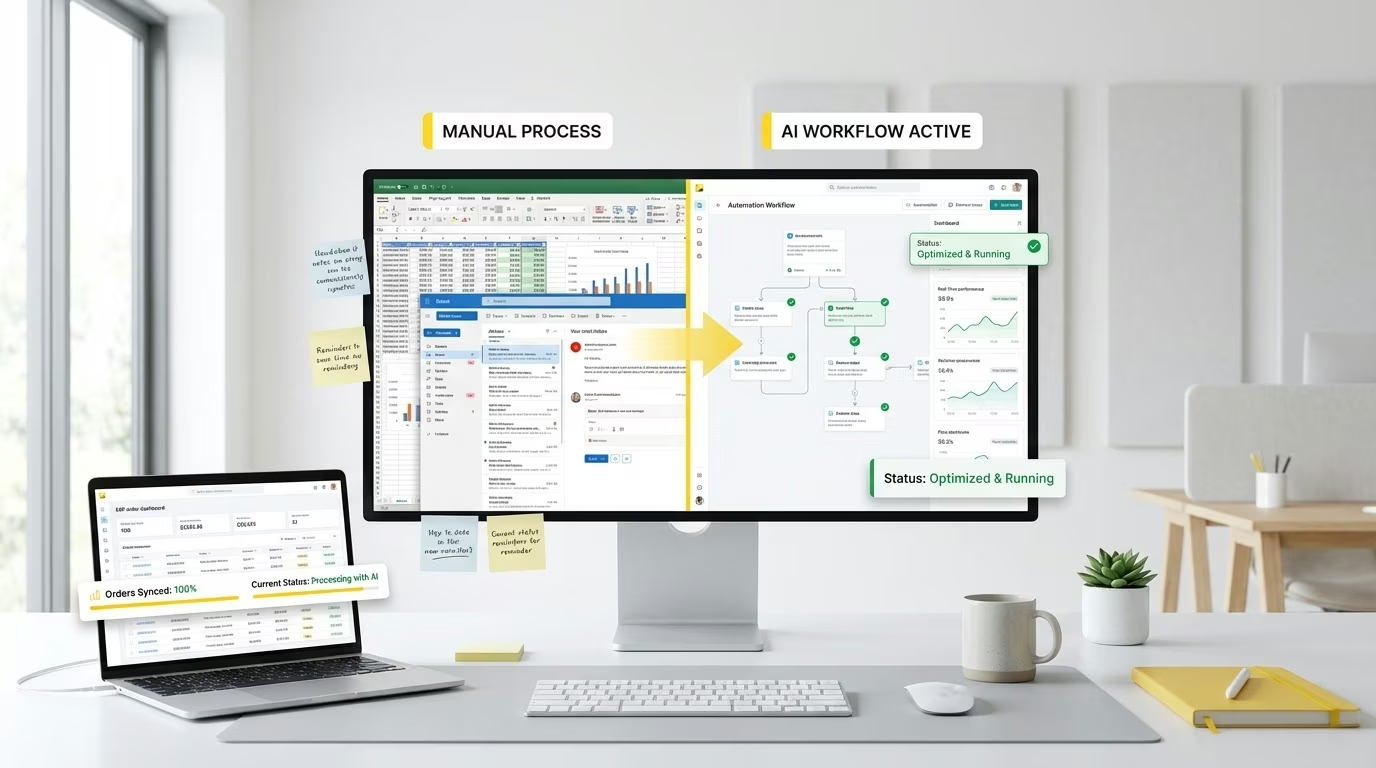
| Criteria | Manual Process | Automated Process |
| Accuracy | High error risk from manual entry | Consistent accuracy with automated validation |
| Efficiency | Weeks to months for data consolidation | Hours or days for processing large datasets |
| Compliance | Difficult to maintain up-to-date audit trails | Automatic audit logs for all activities |
| Scalability | Limited by team capacity | Can handle multiple trials simultaneously |
| Decision Speed | Delayed due to slow reporting | Real-time analytics enable faster decision-making |
Automating clinical trial data management is no longer optional for pharmaceutical companies aiming to accelerate drug approvals while maintaining high data integrity.
With eZintegrations™, organizations can:
By eliminating manual bottlenecks, companies can shorten trial timelines, reduce costs, and bring new therapies to patients faster.
Sign up for a demo to see how eZintegrations™ can transform your clinical trial operations.
Q: What is clinical trial data management?
A: Clinical trial data management refers to the process of collecting, cleaning, validating, and analyzing trial data to ensure its integrity and compliance.
Q: How can automation improve clinical trial data management?
A: Automation reduces manual errors, speeds up processing, enhances compliance, and enables real-time decision-making.
Q: What are the benefits of using eZintegrations™ for clinical trial data management?
A: Key benefits include improved data quality, greater efficiency, better compliance, and enhanced decision-making capabilities.
Q: How can I get started with automation?
A: Begin by requesting a demo of eZintegrations™ and consulting with experts to design a workflow tailored to your needs.


© Copyright 2026 Bizdata Inc. | All Rights Reserved
 Watch Demo
 Post on LinkedIn
 Post on Facebook
 Post on Twitter/X