It ensures accuracy, reduces customs delays, and prevents fines.
Standardized formatting supports multiple FTAs and trade partners.
Full traceability improves compliance and audit readiness.
Scalable automation keeps operations efficient as shipment volumes grow.
Why Automating Certificate of Origin Processing Matters for Exporters?
Exporters worldwide face growing pressure to deliver goods faster, comply with international trade rules, and keep costs low. Yet, one of the most time-consuming tasks in global trade remains the preparation and validation of a Certificate of Origin. This document certifies where a product is manufactured and is required by customs authorities to determine tariffs, duties, and trade eligibility.
The challenge is that Certificate of Origins are still often processed manually, which slows down exports and introduces costly errors. According to the International Chamber of Commerce (ICC), inefficiencies in trade documentation add up to 15% to the cost of every international shipment (ICC).
For exporters operating in highly competitive markets, this is a major obstacle. On top of that, missing or inaccurate Certificate of Origins can result in customs delays, fines, or even rejection of shipments.
This is why exporters are turning to automation solutions for Certificate of Origin processing. With AI-driven tools like eZintegrations™ AI Document Understanding, companies can extract, validate, and share certificate data instantly without human bottlenecks. The result is faster trade, fewer errors, and smoother compliance with free trade agreements (FTAs).
This blog is for exporters, logistics companies, compliance officers, and supply chain managers who want to understand how to automate Certificate of Origin processing and what benefits it brings.
What is a Certificate of Origin and Why is it Important?
A Certificate of Origin is an official trade document that confirms the country where goods were manufactured or produced. Customs authorities use it to determine eligibility for preferential tariffs under trade agreements and to enforce import regulations.
For exporters, the Certificate of Origin is not just paperwork. It is a gateway to accessing global markets at competitive rates. Without a valid Certificate of Origin:
Shipments may face delays at customs checkpoints.
Importers may be unable to claim reduced tariffs under trade agreements.
Non-compliance could trigger penalties or loss of business reputation.
Common Types of Certificates of Origin
Non-Preferential Certificates of Origin: Certify the origin of goods without linking to a trade agreement.
Preferential Certificates of Origin: Issued when products qualify for reduced tariffs under FTAs (e.g., USMCA, EU FTAs, ASEAN FTAs).
These documents often require precise details such as exporter information, product classification codes (HS codes), and compliance declarations. Handling these manually is complex, especially for high-volume exporters.
What Challenges Do Exporters Face with Certificate of Origin Processing?
Certificate of Origin preparation sounds straightforward, but exporters often face hurdles that make the process slow and risky. Manual workflows and paper-based systems add to the complexity.
Key Challenges:
Data Entry Errors: Incorrect HS codes, product details, or country of origin data lead to customs rejections.
Multiple Formats: Each trade partner or country may demand Certificate of Origins in different templates.
Compliance Pressure: Exporters must comply with rules under various trade agreements, each with specific conditions.
Delays: Manual checks slow down documentation, delaying shipments.
High Costs: Time spent correcting errors and re-submitting documents increases operational costs.
In today’s fast-moving supply chain, exporters cannot afford these bottlenecks. That is why automation has become essential.
How to Automate Certificate of Origin Processing for Exports?
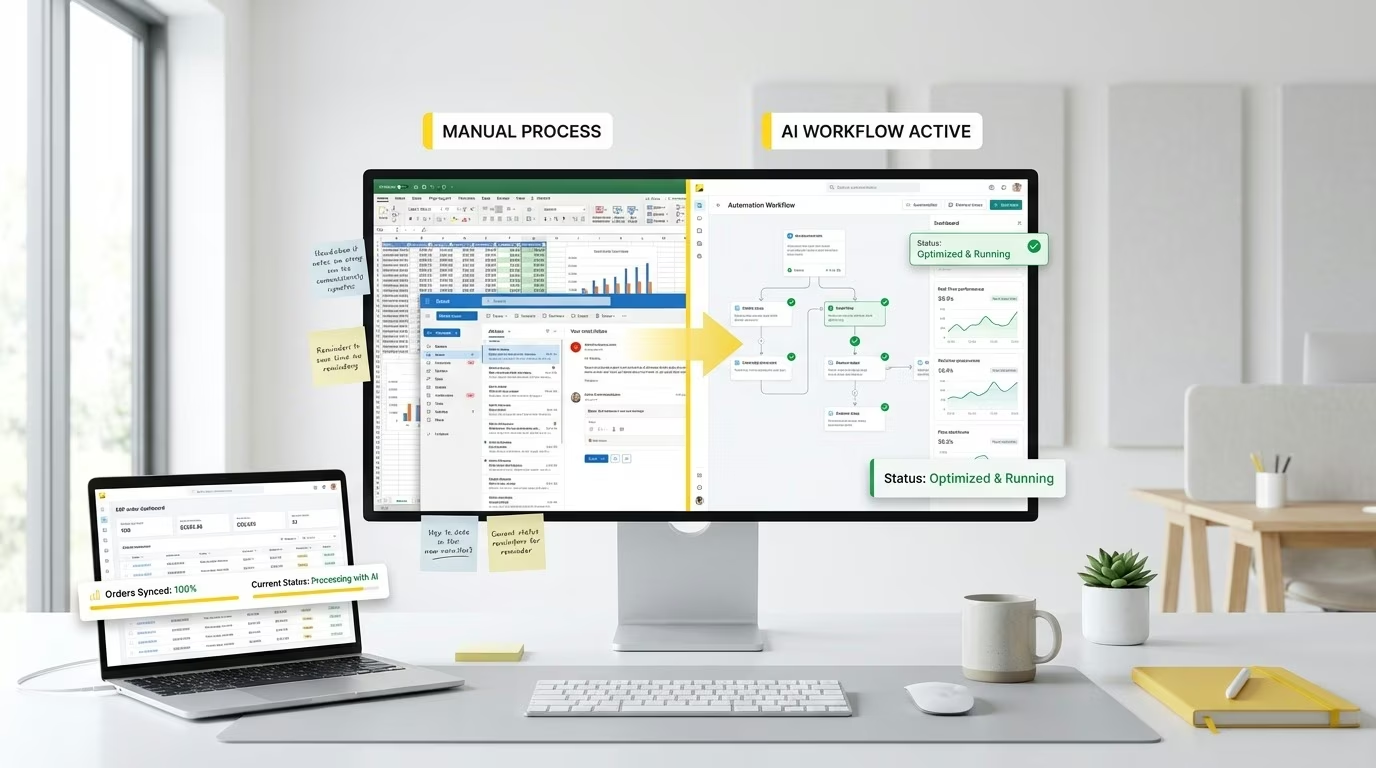
Automation in Certificate of Origin processing means replacing manual data entry, validation, and document management with AI workflows. This ensures faster, more accurate, and compliance-ready certificates.
Key Steps to Automate Certificate of Origin Processing
Digitize Document Intake- Instead of manually handling paper or scanned Certificate of Origin forms, automation tools capture and extract data instantly.AI-platforms like eZintegrations™ AI Document Understanding extract structured data from PDFs, scans, or digital forms. This eliminates manual re-keying of information.
Validate Data Against Compliance Rules- Automation ensures that product details, HS codes, and trade agreement requirements are cross-checked instantly. Rule-based engines and AI models validate origin criteria. This reduces errors that trigger customs delays.
Integrate with ERP and Trade Systems Exporters need Certificate of Origin data to flow across multiple systems such as ERP, CRM, and customs portals. eZintegrations™ integrates with ERP and supply chain applications to sync data seamlessly. This ensures one source of truth for trade documentation.
Generate Certificates in Multiple Formats- Automated tools create certificates in the exact formats required by customs authorities or trade partners. This reduces rework and ensures smooth clearance.
Automate Approvals and Submissions- Instead of emailing and waiting for manual approvals, automation workflows enable instant verification and submission. Certificates of Origin can be electronically submitted to chambers of commerce and customs authorities.
What Benefits Come from Automating Certificate of Origin Processing?
Automation transforms how exporters manage Certificate of Origins. It is not just about speeding up paperwork but about making trade more reliable and cost-efficient.
Benefits of Certificate of Origin Automation
Faster Processing: Certificates are issued in minutes instead of hours or days.
Error Reduction: AI-driven validation prevents mistakes that cause shipment delays.
Regulatory Compliance: Automation ensures adherence to trade agreements and customs rules.
Consistent Formatting: Certificates match requirements across FTAs and customs authorities.
Scalability: Handles thousands of Certificates of Origins across multiple countries without additional staff.
Cost Savings: Reduced manual work lowers administrative overhead.
Automation frees exporters to focus on growth instead of battling paperwork.
Why Use eZintegrations™ AI Document Understanding for Certificate of Origin Automation?
While many automation tools exist, eZintegrations™ AI Document Understanding stands out because it is designed for high-volume, compliance-driven document workflows.
Key Advantages
AI-Powered Data Extraction: Extracts data from scanned or digital Certificate of Origins with high accuracy.
Real-Time Integration: Connects directly with ERP, CRM, and trade systems for end-to-end automation.
Compliance-Ready: Validates trade rules, HS codes, and FTA conditions.
No-Code Setup: Exporters can configure workflows without deep IT expertise.
Multi-Format Support: Handles PDF, XML, and electronic certificate formats used globally.
Which Industries Benefit the Most from Certificate of Origin Automation?
Certificate of Origin automation is valuable across multiple industries that rely heavily on exports.
Manufacturing: Ensures product classifications and origin rules are applied consistently.
Automotive: Handles complex supply chains with multi-country parts sourcing.
Pharmaceuticals: Ensures strict compliance with export regulations.
Textiles & Apparel: Reduces errors in HS codes and origin declarations.
Electronics: Supports rapid shipments with precise documentation.
For these industries, automation is no longer optional. It is a necessity for global competitiveness.
How Does AI Make Certificate of Origin Automation Smarter?
AI adds intelligence to Certificate of Origin automation by doing more than just digitizing documents.
Predictive Validation: AI detects likely errors in HS codes or rules of origin before submission.
Learning from Past Data: AI improves accuracy by learning from past Certificate of Origin approvals and rejections.
Automated Compliance Checks: AI cross-references multiple trade agreements for eligibility.
This ensures that exporters stay compliant while speeding up documentation.
Best Practices for Automating Certificate of Origin Processing
Exporters can maximize the benefits of automation by following these best practices:
Standardize Data Entry Across Systems- Use a single data format across ERP, CRM, and trade systems.
Adopt AI-Powered Validation Tools- Automate compliance checks instead of relying on manual staff reviews.
Train Staff on Automation Tools- Ensure teams know how to use platforms effectively.
Integrate Customs and Trade Portals- Automate submissions directly to government systems.
Continuously Monitor Performance- Track metrics like error rate reduction, processing speed, and compliance score.
Which industries benefit most from Certificate of Origin automation?
Industries such as manufacturing, automotive, pharmaceuticals, textiles, and electronics gain the most by reducing manual errors and speeding up export clearance.
Automate Your Certificate of Origin processing Today!
Automating Certificate of Origin processing is no longer just an efficiency upgrade. It is a competitive advantage for exporters who want to move goods quickly, avoid costly errors, and stay compliant with trade agreements.
By leveraging AI-powered solutions like eZintegrations™ AI Document Understanding, exporters can transform Certificate of Origin processing from a bottleneck into a streamlined, value-driven workflow.
What is a Certificate of Origin in exports? A Certificate of Origin is a document that certifies the country where goods were manufactured. It is required by customs authorities to determine tariffs and trade agreement eligibility.
Why is automating Certificate of Origin processing important? Automation reduces errors, speeds up approvals, and ensures compliance with international trade regulations, helping exporters ship faster and avoid costly delays.
How does AI help in Certificate of Origin automation? AI extracts data, validates trade rules, and ensures certificates meet customs requirements, minimizing rejections and errors.
Which is the best tool/software for Certificate of Origin automation? eZintegrations™ AI Document Understanding is one of the best tools for automating Certificate of Origin processing. It offers AI-powered data extraction, real-time integration, and compliance-ready workflows.
 support@bizdata360.com
 +1-650-283-1644
 AI Enabled Data Integrations and Analytics


 Watch Demo
 Post on LinkedIn
 Post on Facebook
 Post on Twitter/X