 support@bizdata360.com
 +1-650-283-1644
 AI Enabled Data Integrations and AnalyticsAI Enabled Data Integrations and Analytics

Enterprise systems are at a turning point in 2026. The rise of AI-agentic integration trends is changing how businesses connect applications, automate workflows, and extract intelligence from their data.
Gartner estimates that the iPaaS market revenue exceeded $9 billion in 2024, rising from $7.8 billion in 2023, and forecasts it to continue growing to over $17 billion by 2028 (source). The pain point is clear: organizations have invested heavily in SaaS, ERP, and cloud-native apps, but disconnected data and fragmented workflows keep slowing innovation.
That’s why integration trends in 2026 matter more than ever. Businesses that adapt to agentic AI-driven integration gain not just operational efficiency but also the ability to build real-time, intelligent systems.
This blog highlights the 10 biggest integration trends transforming enterprise systems in 2026, and how platforms like eZintegrations™ help enterprises eliminate silos and build AI-ready workflows.
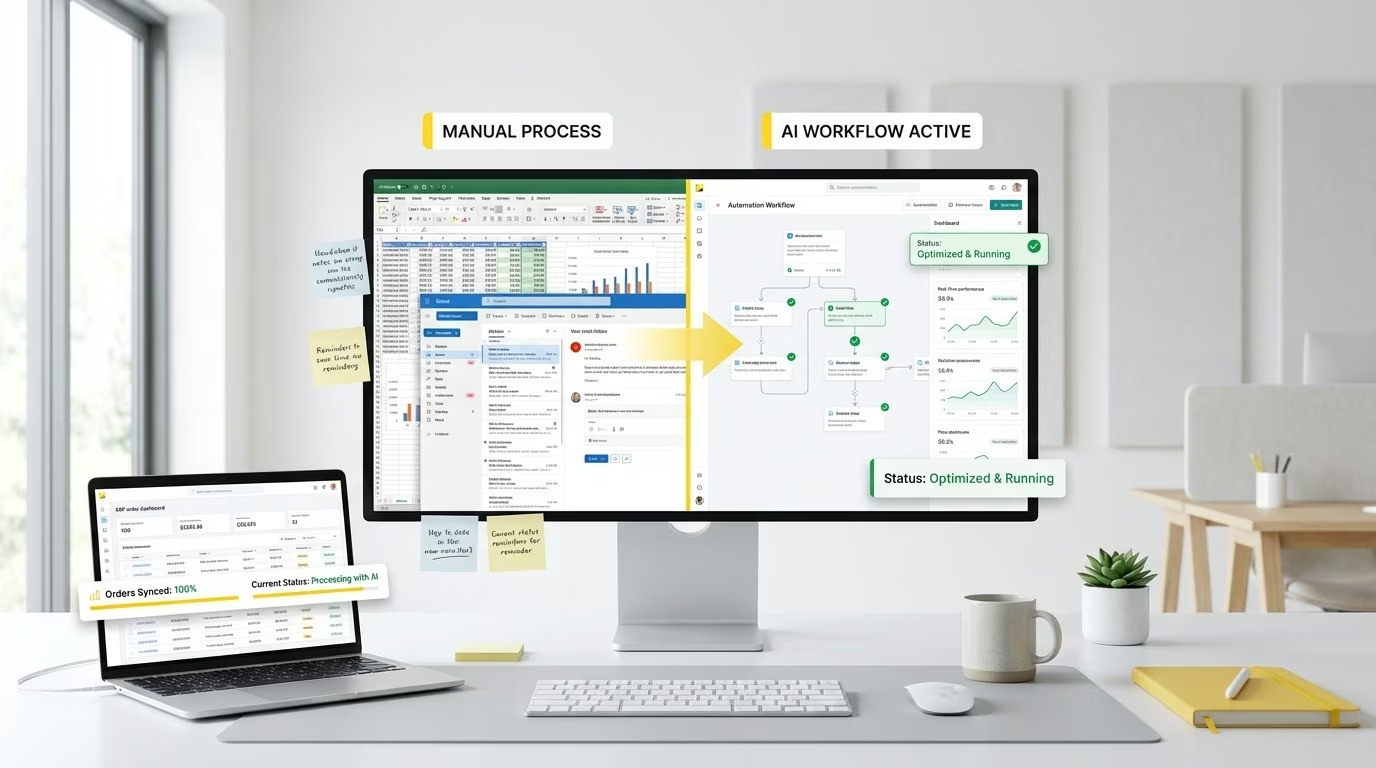
Enterprises are shifting from static integrations to AI-agentic workflows that adapt in real time. Instead of simple “if-this-then-that” rules, AI agents are learning from data, predicting needs, and orchestrating processes across systems.
For example, an AI agent can pull customer data from CRM, detect anomalies in ERP, and recommend corrective supply chain actions automatically. This level of orchestration is only possible with agentic AI embedded in integration platforms like eZintegrations™, which supports AI-driven workflows across SaaS, APIs, and data lakes.
Why it matters: Businesses no longer want just data movement. They want intelligent, adaptive integration that drives decisions.
Developers and IT teams are overwhelmed by the complexity of enterprise apps. That’s why low-code integration trends in 2026 are exploding. Platforms that let users drag-and-drop data pipelines, configure APIs visually, and build workflows without heavy coding are becoming the standard.
eZintegrations™ leads this movement by enabling both IT teams and business analysts to create integration bridges without writing code. Enterprises can reduce development cycles from months to days.
Key benefits of low-code integration:
Data remains the lifeblood of enterprises. The challenge is no longer collecting it but integrating and making it usable across platforms. In 2026, data integration trends are focused on AI readiness.
Enterprises are prioritizing:
With eZintegrations™, businesses can bring structured and unstructured data into a single workflow, enabling AI and ML models to consume clean, connected data.
Blockchain is moving beyond cryptocurrency into enterprise integration. In 2026, AI and blockchain integration trends are driving transparency in supply chains, compliance, and audit trails.
For instance, manufacturers are integrating blockchain-based product traceability with AI-driven demand forecasting. This creates intelligent, verifiable workflows. eZintegrations™ supports blockchain APIs, enabling enterprises to embed trust and traceability into their AI systems.
With enterprises using dozens of SaaS platforms, enterprise application integration trends in 2026 emphasize consolidation and interoperability. Instead of maintaining point-to-point integrations, businesses are adopting hub-and-spoke models with API marketplaces.
eZintegrations™ simplifies this by offering 1000+ prebuilt APIs in its marketplace, allowing quick connections to ERP, CRM, HR, and supply chain apps.
Pain point solved: IT no longer needs to build custom connectors from scratch, cutting costs and risks.
Manufacturers and logistics players are modernizing operations with AI and IoT. Industrial automation integration trends in 2026 focus on combining operational technology (OT) with IT systems.
Key examples include:
eZintegrations™ allows enterprises to merge IoT streams with back-end IT systems, enabling connected industry operations.
In 2026, HubSpot integration trends and ATS integration trends are growing in importance as enterprises optimize marketing and HR systems. Companies want unified views of customer journeys and recruitment pipelines without siloed data.
eZintegrations™ enables both HubSpot and ATS integrations in a no-code manner, creating seamless workflows.
Supply chains are under constant pressure from disruptions, rising costs, and demand variability. In 2026, supply chain integration trends are about building resilience with AI and real-time visibility.
Key developments include:
By connecting supply chain applications, eZintegrations™ enables predictive and adaptive supply chain workflows.
The automotive sector is adopting electrical functional testing integration trends in 2026 to handle the complexity of EV systems and autonomous vehicles. Manufacturers require AI-integrated testing systems that feed results directly into PLM and ERP systems.
By embedding testing data into enterprise workflows, eZintegrations™ helps automotive companies reduce delays and enhance quality assurance.
Security remains a top concern. Enterprises are focusing on application integration trends that embed compliance, governance, and cybersecurity into workflows.
This includes:
eZintegrations™ ensures enterprise-grade security with encrypted pipelines and compliance-ready integration bridges.
The integration trends of 2026 are not just about connecting apps but building intelligent, agentic, and resilient enterprises. From AI-powered workflows and blockchain-based transparency to low-code platforms and industry-specific automation, the future of integration is smarter and faster.
Platforms like eZintegrations™ are leading this evolution, helping enterprises eliminate silos, unify data, and create AI-ready workflows. If your business is struggling with fragmented systems and delayed decision-making, it’s time to act.
Book a free demo of eZintegrations™ today and see how intelligent integration can transform your enterprise in 2026.


© Copyright 2026 Bizdata Inc. | All Rights Reserved
 Watch Demo
 Post on LinkedIn
 Post on Facebook
 Post on Twitter/X