 support@bizdata360.com
 +1-650-283-1644
 AI Enabled Data Integrations and AnalyticsAI Enabled Data Integrations and Analytics

## TL;DR
The integration of Artificial Intelligence (AI) in Enterprise Resource Planning (ERP) systems is revolutionizing business operations, offering enhanced efficiency, accuracy, and automation. According to **Gartner**, AI in ERP can improve productivity by up to 40%.
In this post, we explore 8 real-world use cases for AI in ERP integration, featuring **eZintegrations**, and discuss how it can solve common challenges in the industry.
## Introduction
ERP systems are the backbone of modern businesses, managing everything from supply chains to customer relationships. Traditional ERP systems can be cumbersome, error-prone, and lack agility to respond to changing market conditions.
According to **McKinsey Research**, businesses adopting AI in ERP systems see a significant reduction in operational costs and improvement in decision-making. **eZintegrations** provides AI-powered ERP integration solutions that address these challenges and transform business processes.
## Challenges in ERP Integration
Traditional ERP systems face several challenges:
– **Data Silos** – Fragmented data across departments makes decision-making difficult
– **Manual Data Entry** – Increases the risk of errors and inefficiencies
– **Lack of Real-Time Visibility** – Delays in accessing insights can impact operations
– **Scalability Issues** – ERP systems may struggle to handle growing business demands
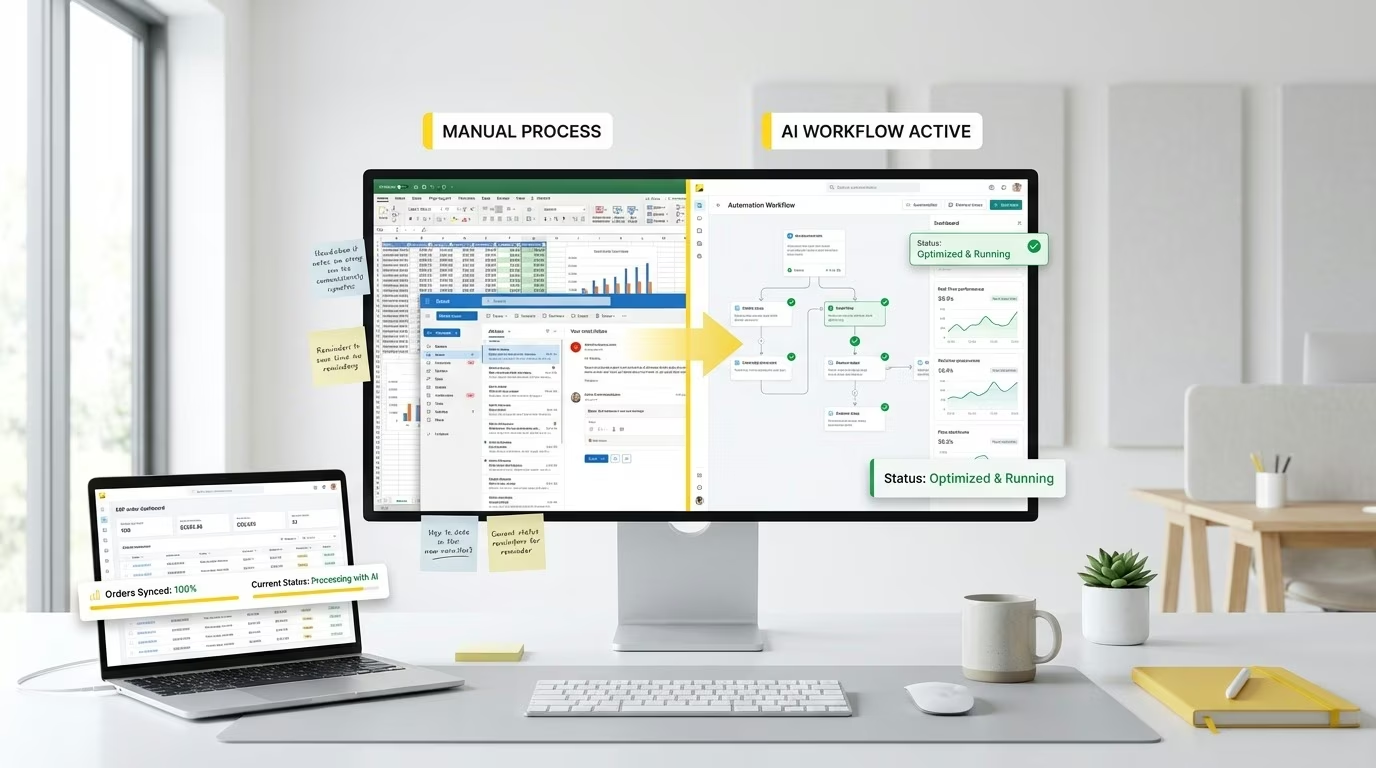
AI in ERP integration helps overcome these challenges by providing automated processing, predictive analytics, and real-time insights.
## Solutions with AI in ERP Integration
AI-powered ERP integration solutions offer:
– **Automated Data Processing and Entry** – Reduce manual work and errors
– **Predictive Analytics and Forecasting** – Improve planning and decision-making
– **Real-Time Insights and Visibility** – Access actionable data instantly
– **Personalized Customer Experiences** – Tailor interactions based on data insights
– **Improved Supply Chain Management** – Optimize inventory, logistics, and operations
## Step-by-Step Guide to Implementing AI in ERP Integration
To implement AI in ERP effectively, follow these steps:
1. **Assess Current ERP Systems** – Identify areas for improvement
2. **Define Business Goals and Objectives** – Align AI integration with strategic priorities
3. **Choose the Right AI-Powered ERP Solution** – Select a platform like **eZintegrations**
4. **Develop an Implementation Roadmap** – Plan integration phases and timelines
5. **Train Employees** – Ensure staff can use and adapt to new AI capabilities
## Benefits of AI in ERP Integration
Key benefits include:
– **Improved Efficiency and Productivity** – Automate repetitive tasks
– **Enhanced Accuracy** – Reduce errors in data and processes
– **Real-Time Insights and Visibility** – Make faster, informed decisions
– **Personalized Customer Experiences** – Improve satisfaction and loyalty
– **Optimized Supply Chain Management** – Reduce costs and delays
## Real-World Use Cases for AI in ERP Integration
Here are 8 practical examples of AI in ERP:
– **Predictive Maintenance and Quality Control** – Reduce downtime and defects
– **Automated Accounting and Financial Management** – Streamline finance processes
– **Personalized Customer Service and Support** – Deliver proactive, data-driven assistance
– **Enhanced Supply Chain Management and Logistics** – Improve efficiency and inventory management
– **HR Management and Employee Engagement** – Optimize workforce planning
– **Automated Data Processing and Entry** – Reduce manual labor
– **Real-Time Insights and Visibility** – Monitor operations effectively
– **Predictive Analytics and Forecasting** – Support strategic planning
## Conclusion
AI in ERP integration is transforming how businesses operate. By leveraging automated data processing, predictive analytics, and real-time insights, companies can streamline operations, improve decision-making, and enhance customer satisfaction.
**eZintegrations** provides cutting-edge AI-powered ERP integration solutions to help businesses harness the full potential of AI in their ERP systems.
[Learn more about eZintegrations](https://www.ezintegrations.com/demo?utm_source=website&utm_medium=blog&utm_campaign=ai_document_understanding&utm_content=8-real-world-use-cases-for-ai-in-erp-integration)
## FAQ
**Q: What is AI in ERP integration?**
A: AI in ERP integration uses technologies like machine learning and natural language processing to enhance ERP system functionality, accuracy, and efficiency.
**Q: How can AI in ERP integration improve business operations?**
A: AI automates data processing, provides predictive analytics, and offers real-time insights, improving efficiency, accuracy, and decision-making.
**Q: What are the benefits of using eZintegrations for AI in ERP integration?**
A: Benefits include improved efficiency and productivity, reduced errors, real-time insights, and optimized operations.
**Q: How can I get started with AI in ERP integration using eZintegrations?**
A: [Click here](https://www.ezintegrations.com/demo?utm_source=website&utm_medium=blog&utm_campaign=ai_document_understanding&utm_content=8-real-world-use-cases-for-ai-in-erp-integration) to schedule a demo and learn more about **eZintegrations**’ AI-powered ERP solutions.


© Copyright 2026 Bizdata Inc. | All Rights Reserved
 Watch Demo
 Post on LinkedIn
 Post on Facebook
 Post on Twitter/X