 support@bizdata360.com
 +1-650-283-1644
 AI Enabled Data Integrations and AnalyticsAI Enabled Data Integrations and Analytics

Why CIOs Must Embrace Agentic AI to Lead Enterprise Innovation by 2030?
The role of the CIO has never been under more pressure. Today, technology leaders are balancing security, cloud modernization, AI adoption, and rising business expectations. By 2030, this balancing act will look very different, thanks to the rise of Agentic AI.
Unlike traditional AI, which follows static instructions, Agentic AI takes autonomous actions, makes context-driven decisions, and adapts workflows dynamically. That level of intelligence is set to transform not just IT operations but the very role of the CIO.
The urgency is already clear. According to Gartner’s 2026 CIO Agenda, only 48% of digital initiatives meet or exceed their business outcome targets. Yet most enterprises are still struggling with disconnected data, siloed applications, and manual processes. CIOs are facing mounting pressure to turn fragmented IT ecosystems into intelligent, self-learning environments.
This blog will unpack how Agentic AI is redefining the CIO’s role, the challenges it solves, and the opportunities it opens. It is written for CIOs, CTOs, IT leaders, and digital transformation professionals who want to understand how to prepare for the decade ahead.
Agentic AI refers to AI systems that don’t just analyze data or provide recommendations but take independent action to achieve goals. These systems are “agents” that can adapt in real time, learn from changing environments, and make decisions without explicit instructions.
For CIOs, this matters because enterprises are already overwhelmed by complexity. From hybrid cloud infrastructures to API-driven applications, the IT landscape demands more than traditional automation. Agentic AI promises to cut through this complexity by handling tasks end-to-end.
Examples of Agentic AI use cases include:
The CIO has always been responsible for enabling technology, but by 2030, the expectations will shift. With Agentic AI, CIOs will no longer just maintain infrastructure and oversee IT projects. They will become:
Instead of focusing only on operational uptime, CIOs will be tasked with ensuring that intelligent systems deliver measurable business outcomes.
Before CIOs can fully embrace Agentic AI, several challenges need to be addressed. Each pain point is not just technical but also strategic:
Platforms like eZintegrations™ directly address many of these pain points by offering no-code integration, AI-driven document understanding, and a 1,000+ API marketplace that reduces complexity for CIOs.
By 2030, enterprise IT strategy will be inseparable from Agentic AI adoption. CIOs who lead this shift will focus on three pillars:
This means CIOs will need tools like eZintegrations™ to create AI data workflows that integrate seamlessly with existing systems.
Let’s explore practical scenarios where CIOs will see Agentic AI transform their organizations:
Each scenario highlights how CIOs must move from “managing IT” to orchestrating AI-driven ecosystems.
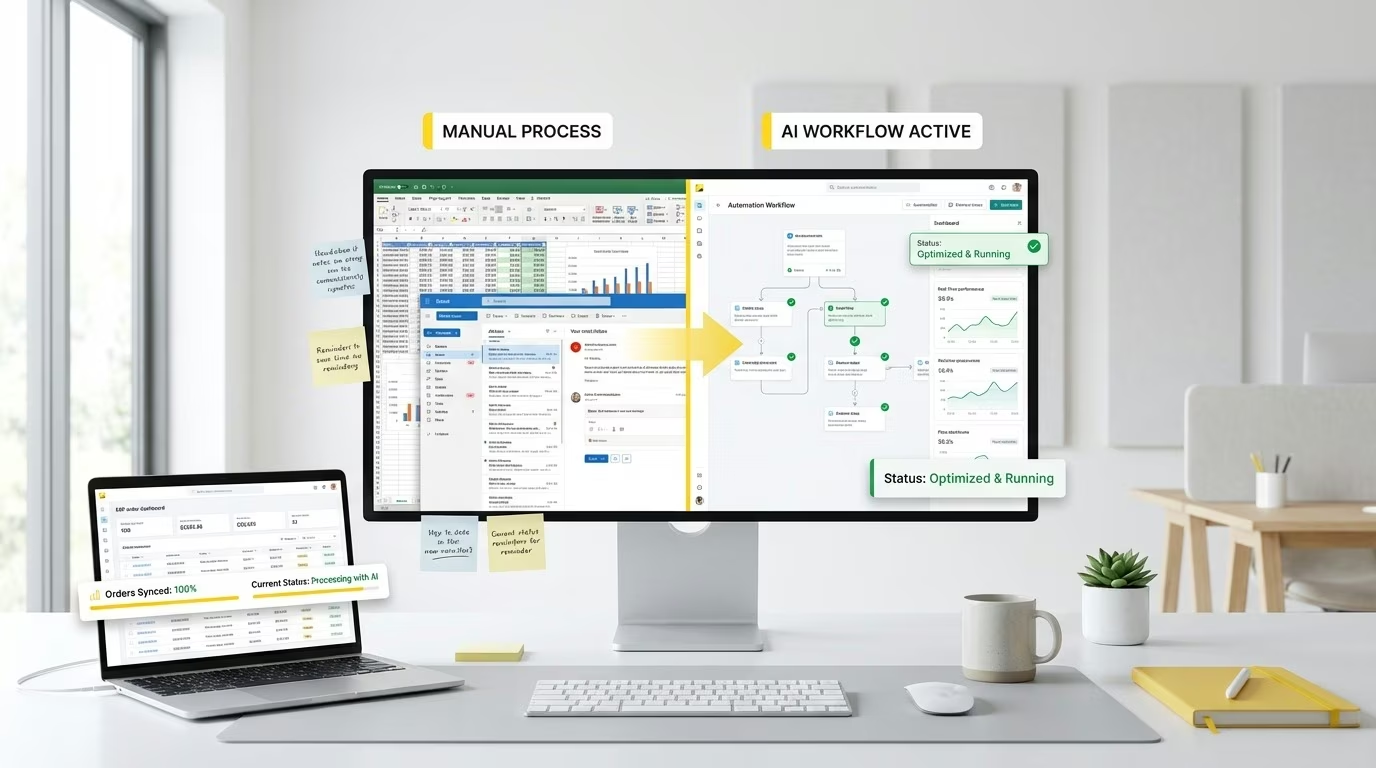
Agentic AI requires strong foundations in integration, data readiness, and workflow automation. This is where eZintegrations™ stands out:
For CIOs preparing for 2030, platforms like eZintegrations™ are not optional. They are essential to making Agentic AI deliver real value.
In the legal industry, contract review is often manual, costly, and prone to delays. With eZintegrations™ AI Document Understanding, CIOs can deploy AI workflows that:
The result is faster contract turnaround, reduced risk, and measurable efficiency gains. This type of AI-driven workflow is exactly what CIOs must implement across industries by 2030.
CIOs who want to lead in the Agentic AI era should focus on:
By 2030, Agentic AI will redefine how enterprises function and how CIOs deliver value. Technology leaders who embrace it early will transition from IT managers to AI orchestrators, guiding enterprises into a future where workflows are intelligent, autonomous, and adaptive.
If you’re a CIO or IT leader preparing for the future, the next step is clear. Start building AI-enabled workflows today with eZintegrations™. Book your free demo of eZintegrations™ today
Recommend Blogs:
How Agentic AI Will Transform Enterprise Systems Beyond 2026
10 AI-Agentic Integration Trends Transforming Enterprise Systems in 2026
AI Agent Workflow Automation with eZintegrations™ and Weaviate
11 AI Workflow Statistics Every CIO Should Know in 2026
Q1: How is Agentic AI different from traditional automation?
Agentic AI doesn’t just execute pre-coded tasks. It learns, adapts, and makes independent decisions, reducing human intervention.
Q2: What are the biggest risks for CIOs adopting Agentic AI?
The main risks include compliance violations, lack of governance, and security vulnerabilities.
Q3: Will Agentic AI replace the role of CIOs?
No, it will redefine it. CIOs will evolve into strategic AI leaders rather than being replaced.
Q4: How can CIOs get started with Agentic AI?
They can begin by modernizing their data architecture, investing in AI-ready integration platforms like eZintegrations™, and building AI governance frameworks.


© Copyright 2026 Bizdata Inc. | All Rights Reserved
 Watch Demo
 Post on LinkedIn
 Post on Facebook
 Post on Twitter/X