 support@bizdata360.com
 +1-650-283-1644
 AI Enabled Data Integrations and AnalyticsAI Enabled Data Integrations and Analytics

In 2026, the speed of software delivery is a key differentiator for competitive advantage. The challenge is managing visibility, version control, and communication efficiently across distributed teams.
Without GitHub Slack Integration, teams often face:
By integrating GitHub with Slack, companies can automate developer workflows, centralize updates, and cut communication lags. It’s not just about convenience, it’s about agility.
GitHub Slack Integration connects your GitHub repositories to Slack workspaces, enabling seamless notifications and actions directly within Slack. Teams can receive alerts for commits, pull requests, mergers, and issues all without switching apps.
In simple terms, it’s your development feed meeting your collaboration hub. Instead of toggling between GitHub and Slack, you can stay focused in one workspace.
Key functions include:
Setting up GitHub Slack Integration through eZintegrations™ takes the complexity out of managing workflows across your development and communication tools. Unlike traditional setups that rely on manual configuration or custom scripts, eZintegrations™ allows you to connect GitHub and Slack visually in just a few clicks no code required.
Here’s a step-by-step guide to help you get started:
Start by logging into your eZintegrations™ dashboard. If you don’t have an account yet, you can sign up and get your first integration bridge free for one month.
Once logged in, navigate to the Integration Builder section where you can create new data and workflow connections between systems.
In the connector library, search for GitHub and Slack. Both are available as pre-built connectors in the Bizdata API Marketplace, which includes over 1000 ready-to-use APIs.
eZintegrations™ ensures enterprise-grade security with encrypted authentication.
The platform manages tokens securely, ensuring compliance with organizational IT policies.
Once both systems are connected, configure how the integration should behave.
For example, you can create automation rules such as:
All of this can be configured using simple drag-and-drop workflows within the eZintegrations™ visual designer.
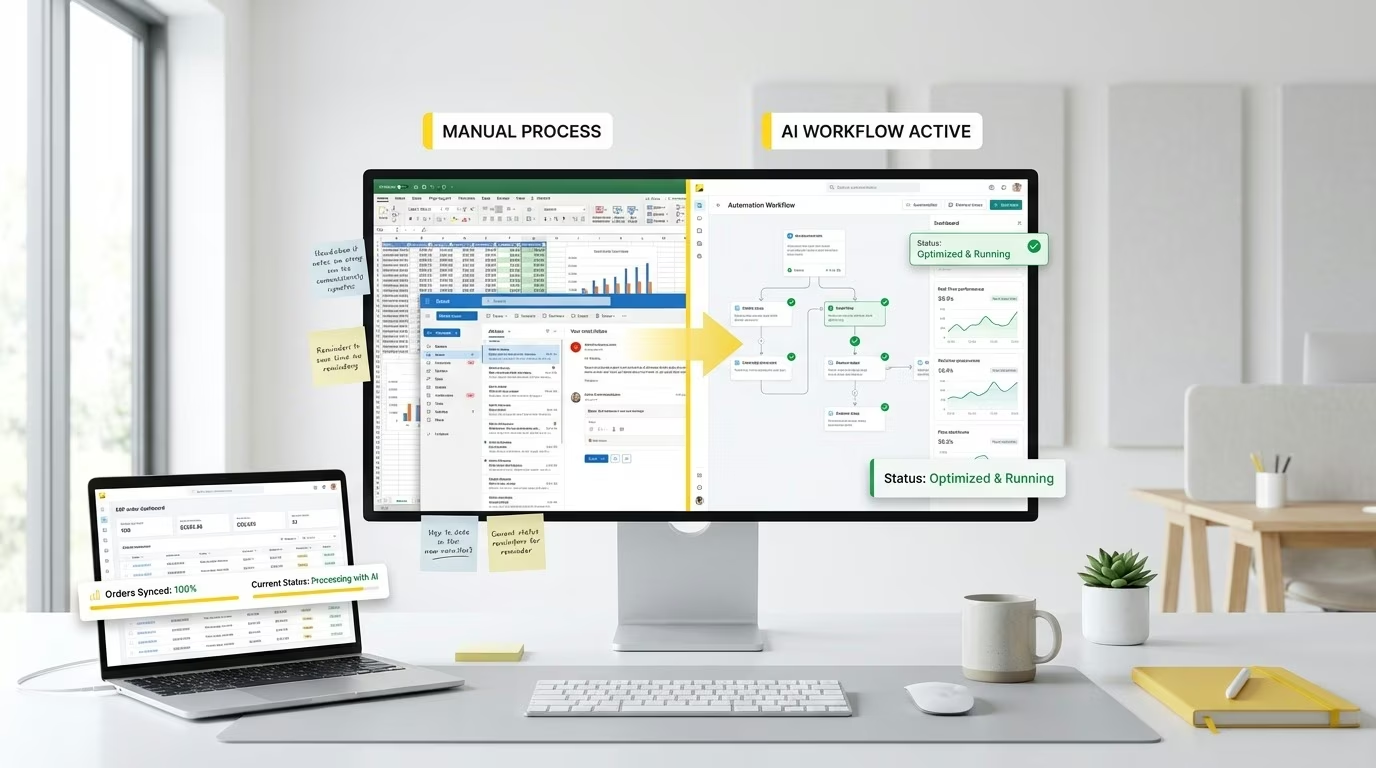
To make the integration more intelligent, enable AI Workflow Automation in eZintegrations™.
This feature uses AI to analyze event data and determine next steps automatically.
For example:
This level of automation eliminates manual monitoring and accelerates development cycles.
Before going live, run a test execution to ensure your triggers and actions are functioning correctly. eZintegrations™ provides a detailed activity log to verify data flow between GitHub and Slack.
Once verified, click Activate to start the workflow. From now on, Slack will automatically display real-time GitHub updates, commits, pull requests, and issues based on your defined logic.
The eZintegrations™ dashboard gives you complete visibility into workflow performance. You can:
This makes it easy to adapt to changing project needs or scale your integration as your team grows.
Integrating GitHub and Slack through eZintegrations™ helps enterprises go beyond simple notifications. It transforms their collaboration into a fully automated, intelligent workflow driven by AI and secured by enterprise standards.
You can connect, automate, and scale your GitHub Slack Integration in minutes, improving visibility, speed, and team alignment across every development project.
Book a Free Demo to see how easily you can build your GitHub Slack Integration through eZintegrations™.
eZintegrations™ is a no-code AI workflow automation platform that connects systems like GitHub, Slack, Jira, and more without writing a single line of code. It’s designed for enterprise teams that need scalable and intelligent workflow automation.
Here’s how eZintegrations™ enhances GitHub Slack Integration:
Example Use Case:
A US-based SaaS company using GitHub for code management and Slack for team communication automated its code deployment updates using eZintegrations™. Every time a pull request was merged in GitHub, a Slack message was triggered to notify QA and deployment teams instantly. The result was a 40% reduction in release cycle time, with zero manual coordination.
For large enterprises, GitHub Slack Integration often needs to scale beyond basic notifications. eZintegrations™ solves common challenges like:
With eZintegrations™, teams move beyond manual webhook setups to an AI-powered automation layer that understands data flows and acts intelligently.
When combined with eZintegrations™, GitHub Slack Integration becomes a business enabler rather than just a communication bridge.
Top Benefits:
To maximize efficiency and maintain clean workflows, follow these best practices:
In 2026 and beyond, AI will drive integration workflows. Platforms like eZintegrations™ are already enabling Agentic AI, AI that can interpret goals, plan tasks, and execute across systems automatically.
Imagine this scenario:
You tell Slack, “Deploy the latest stable version of our app.”
An AI workflow in eZintegrations™ understands your request, fetches the latest GitHub release, checks status in Jira, and notifies the deployment team.
That’s not futuristic; it’s happening now with AI-driven workflow automation.
GitHub Slack Integration is a cornerstone of modern software collaboration. It bridges communication gaps, keeps projects on track, and accelerates delivery cycles. But for enterprises managing complex workflows, the real power lies in extending this integration using AI and no-code automation through eZintegrations™.
Ready to make your GitHub Slack Integration smarter, faster, and scalable?
Book a free demo of eZintegrations™ today and discover how to automate your developer workflows intelligently. Book Your Free Demo today to integrate GitHub Slack Integration.
Recommend Blogs:


© Copyright 2026 Bizdata Inc. | All Rights Reserved
 Watch Demo
 Post on LinkedIn
 Post on Facebook
 Post on Twitter/X