 support@bizdata360.com
 +1-650-283-1644
 AI Enabled Data Integrations and AnalyticsAI Enabled Data Integrations and Analytics

If you work in regulated manufacturing, you know how painful managing batch records can be. Manual processes are slow, error-prone, and risky during inspections. According to industry data, adopting Electronic Batch Records can cut manual errors dramatically and accelerate batch approvals by up to 50 percent while boosting traceability and compliance readiness.
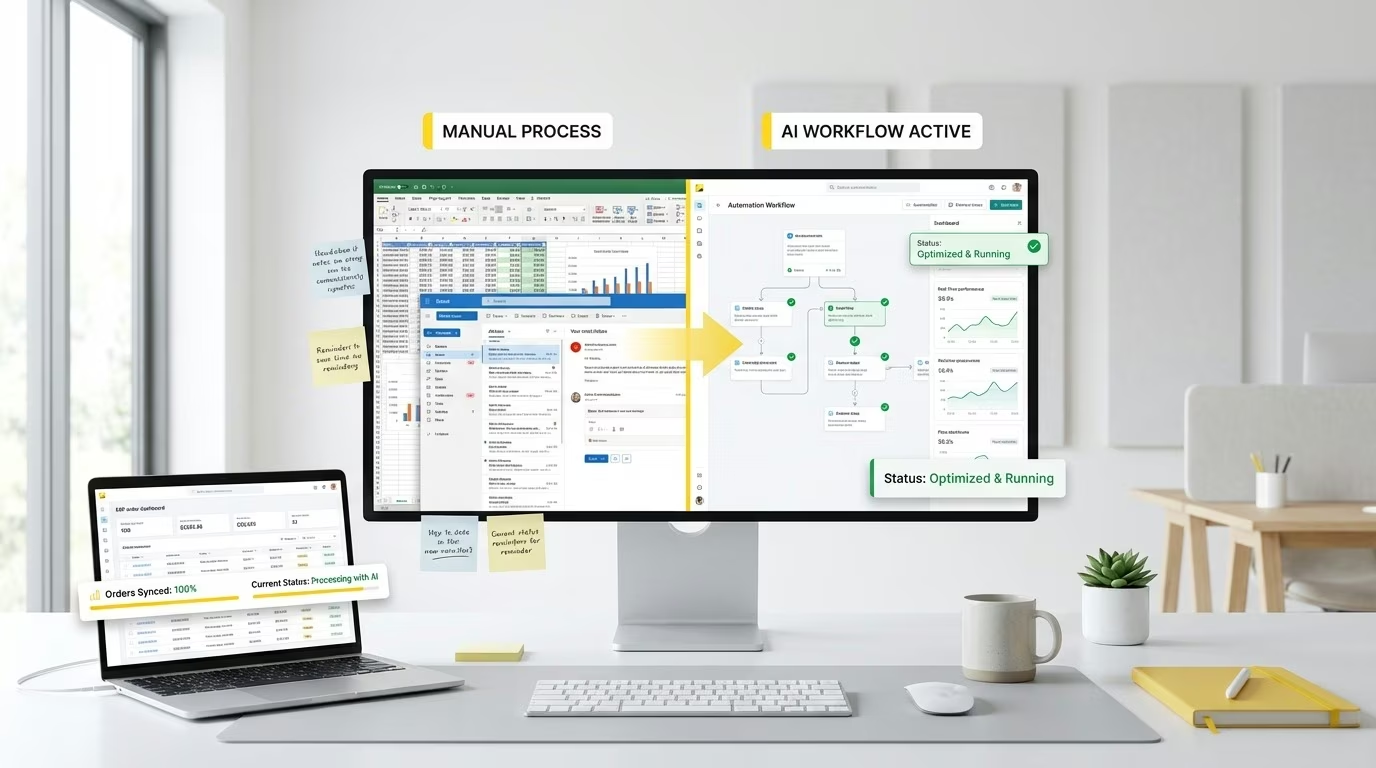
Traditional batch record workflows rely on paper, spreadsheets, and email exchanges. These approaches make audits difficult, increase compliance risk, and distract teams from meaningful work like quality improvement and process optimization. That is why organizations are turning to automated Electronic Batch Records with AI to replace repetitive manual tasks and unlock insights hidden in production data.
TL;DR | Quick Key Takeaways
Electronic Batch Records are digital versions of paper batch records that capture all information about how a product batch was made. This includes raw materials, step-by-step processing actions, quality checks, environmental data, deviations, reviews, and final release documentation.
By replacing paper with digital data, EBR systems:
These benefits are critical for manufacturers in pharmaceuticals, biologics, biotech, and other regulated industries that must comply with Good Manufacturing Practices and regulatory standards like FDA 21 CFR Part 11.
Moving from digital to AI-enhanced EBR automation is where efficiency, quality, and agility come together. AI doesn’t just store electronic records. It reads, validates, analyzes, and enriches them.
AI-powered automation layers onto EBR systems to:
For example, AI can analyze hundreds of batches of production data and identify trends that signal potential quality drifts, which helps teams act earlier than traditional review cycles would allow.
Automating Electronic Batch Records requires more than digitizing files. It requires turning batch documents into structured, validated data that can flow across systems. eZintegrations™ AI Document Understanding enables this by automating how EBRs are captured, reviewed, and approved.
With eZintegrations™ AI Document Understanding, Electronic Batch Records shift from manual documentation to an intelligent, automated workflow that improves accuracy, compliance, and operational efficiency.
Manufacturers using EBR automation see real benefits:
Solutions like eZintegrations™ AI Document Understanding take unstructured inputs, standard EBR data, and compliance rules and turn them into automated, trusted workflows. You get end-to-end support from data capture to AI-assisted review and reporting.
Manufacturers face several persistent pain points:
By automating EBR with AI, teams spend less time fixing paperwork and more time improving quality and efficiency.
Automating Electronic Batch Records with AI is not a distant vision. It is here. Companies that embrace AI and automation are seeing faster batch approvals, fewer errors, stronger compliance, and insights that fuel continuous improvement.
If you want to bring AI-driven EBR automation into your operations and unlock these benefits, explore how eZintegrations™ can make it happen. Book a quick demo today to automate your Electronic Batch Records today.
See how eZintegrations™ AI Document Understanding can transform your EBR workflows.
Recommend Blogs:
FAQ | Common Questions About Automating EBR With AI
What industries benefit most from EBR automation?
Life sciences, pharmaceuticals, biotech, and regulated manufacturers see the biggest ROI because of strict compliance and data requirements.
Does AI replace human oversight in batch records?
No. AI augments human teams by handling repetitive analysis while humans make high-value decisions.
What is required for AI to work with EBR systems?
You need clean, structured data and integration across manufacturing systems before AI can add value.
Does AI help with regulatory compliance audits?
Yes. AI can surface evidence, summarize findings, and generate audit-ready reports to support inspections.
Can small manufacturers use AI-driven EBR tools?
Absolutely. Modern platforms scale from small plants to global operations as long as data capture is standardized.


© Copyright 2026 Bizdata Inc. | All Rights Reserved
 Watch Demo
 Post on LinkedIn
 Post on Facebook
 Post on Twitter/X