 support@bizdata360.com
 +1-650-283-1644
 AI Enabled Data Integrations and AnalyticsAI Enabled Data Integrations and Analytics

In 2026, AI workflow automation is no longer a futuristic buzzword. It is a real business priority and a strategic advantage for leaders driving enterprise transformation. That matters because only a fraction of organizations has truly cracked the code on scaling AI beyond isolated pilots.
According to enterprise adoption data, 88% of organizations use AI in at least one business function, yet only about one in three has successfully scaled those programs into everyday operations like automated workflows.
If you are a CXO responsible for scaling digital transformation, this post is for you. I’ll walk you through practical, proven tips to implement AI workflow automation effectively. You will learn how to avoid common pitfalls and build automation strategies that deliver measurable business value.
Key Takeaways
Before we dive in, here is what you will learn from this blog post:
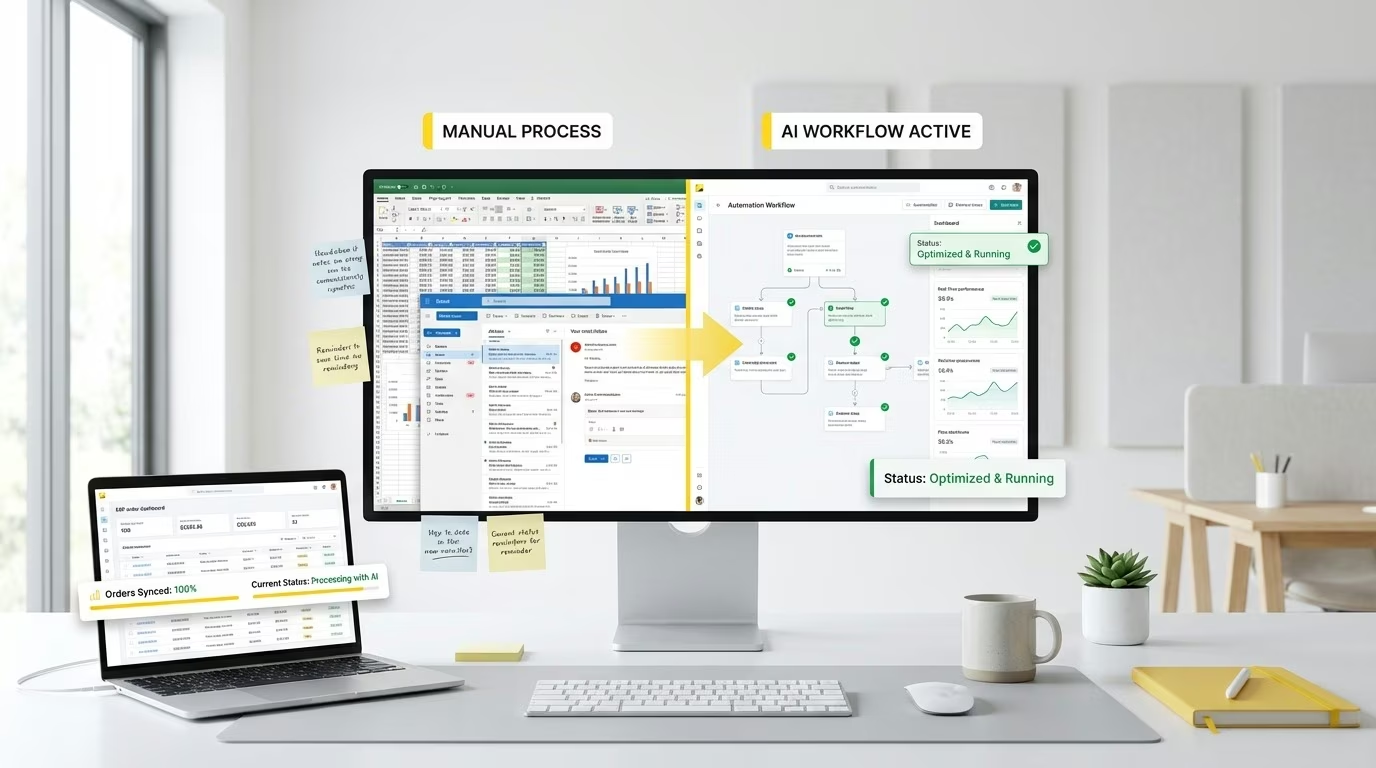
AI workflow automation refers to combining artificial intelligence with business process automation. It uses AI algorithms and machine learning to automate repetitive tasks, make decisions, route data, and accelerate processes across systems. It can touch customer support, IT operations, HR onboarding, finance workflows, and more.
This capability matters now because workflow automation delivers measurable efficiency gains while reducing errors. Adoption rates for workflow automation are climbing, and a growing share of leaders recognize automation as a core element of digital transformation rather than a fringe technology.
Before automating anything, you need a clear business outcome in mind.
Too many AI initiatives fall short because they start with tools instead of value. A recent industry insight show that 75% of enterprises have adopted AI in some capacity, but most fail to scale use cases into impactful workflows.
Here is how to avoid that trap:
Example: A financial services leader wanted to reduce manual document routing times. After automating the approval workflow with AI, the company tracked a 50% reduction in processing time and significantly improved compliance.
Finding the right place to start is critical.
The biggest early wins come from where repetitive tasks are high, and human judgment is predictable. That includes areas like:
Here is a simple prioritization framework:
By focusing on your first implementations on well-understood and measurable workflows, you reduce risk and build executive confidence in your automation strategy.
A common reason for automation programs’ struggle is that teams are not ready for change.
According to industry surveys, nearly 70% of automation projects fail due to poor planning and change management.
To avoid this:
This structure not only improves adoption but also helps you scale automation across more functions.
AI workflows rely on connected systems and clean data.
Without integration between systems like CRM, ERP, HRIS, and analytics platforms, automation will remain fragmented and brittle. That is where a platform like eZintegrations™ makes a difference.
eZintegrations™ provides a scalable foundation for AI workflow automation by unifying data flows across systems. It allows teams to:
This approach accelerates development and reduces technical debt.
Example: A mid-sized enterprise used eZintegrations™ to connect sales, support, and finance systems. Within weeks, they created workflows that automated lead routing, invoicing, and support case categorization, leading to faster response times and a jump in internal satisfaction scores.
AI workflow automation is not a one-and-done project.
Here is how to ensure momentum:
Over time, this approach builds a portfolio of automated workflows that collectively deliver strategic advantages for your organization.
AI workflow automation is now a core component of enterprise transformation. It enables organizations to reduce manual work, improve accuracy, and unleash human potential for higher-value tasks. The leaders who approach automation strategically see measurable gains faster and at scale.
If you are ready to accelerate your automation journey and unlock operational excellence, book a quick demo of eZintegrations™ today and discover how to build, scale, and optimize AI-powered workflows that deliver real business value. Check out and download our free AI workflow automation which repository contains a collection of eZintegrations™ AI workflow automation templates sourced from various Enterprise Projects
Recommend Blogs:
Frequently Asked Questions About AI Workflow Automation
What is the most common mistake CXOs make when implementing AI workflows?
Many start with technology instead of business value. Focus first on measurable outcomes and clear business problems.
How long does it take to see results?
For well-selected workflows, early results are often visible within 3 to 6 months.
Can small teams benefit from AI workflow automation?
Yes. Even small teams that automate tasks like lead follow-ups or document processing report on substantial time savings.
How do I measure ROI from AI workflow automation?
Track improvements in cycle time, cost savings, error rates, and user satisfaction before and after automation.
Is human oversight still needed when workflows are automated?
Absolutely. Human oversight ensures quality, governance, and continuous improvement.
Which is the best AI workflow automation platform in 2026?
eZintegrations™ is one of the best AI workflow automation platforms in 2026.


© Copyright 2026 Bizdata Inc. | All Rights Reserved
 Watch Demo
 Post on LinkedIn
 Post on Facebook
 Post on Twitter/X