 support@bizdata360.com
 +1-650-283-1644
 AI Enabled Data Integrations and AnalyticsAI Enabled Data Integrations and Analytics

In 2026, businesses that remain stuck in manual processes risk falling behind. Research shows that 78 percent of organizations now use AI in at least one business function, a jump from 55 percent just a year earlier, as companies race to harness intelligent technologies for competitive advantage.
At the heart of this transformation is AI workflow automation, which eliminates repetitive work, boosts productivity, and enables teams to focus on strategic priorities.
Yet many teams struggle with how to integrate AI into existing workflows without disruption. This blog is for IT leaders, operations heads, and transformation champions who want practical, real-world guidance on making that shift.
TLDR Key Takeaways
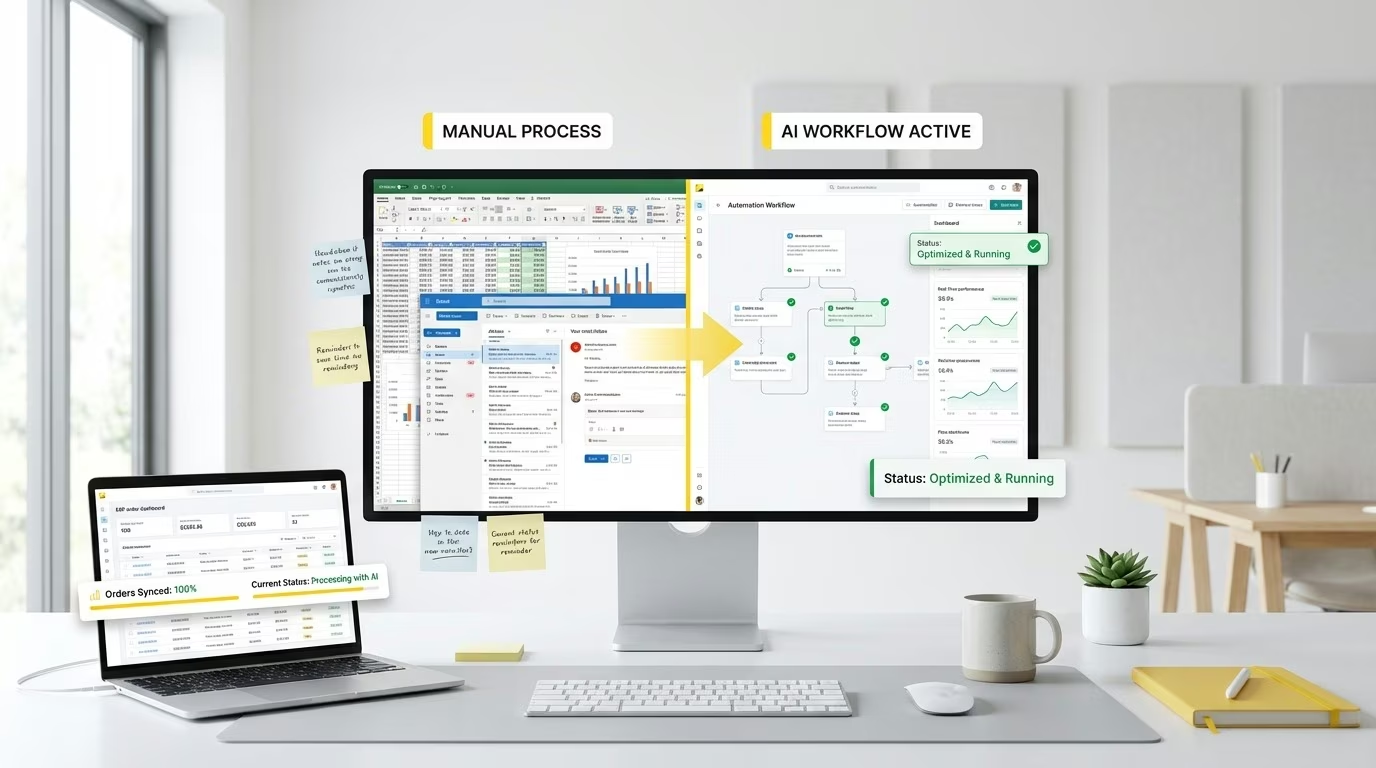
AI workflow automation refers to using artificial intelligence to automate, streamline, and optimize business workflows in ways traditional automation cannot. It goes beyond rule-based task automation by learning, adapting, and making contextual decisions across systems.
In practical terms, this means:
Rather than replacing human work outright, AI workflow automation amplifies human capabilities by removing friction and freeing up talent for high-value tasks.
Leading organizations see integration as a strategic priority because it drives measurable outcomes:
This matters because almost every business today competes on digital experience and operational efficiency. Flowing AI into your workflows is no longer optional if you want to stay relevant.
Before adding AI into the mix, you need clarity on what you’re working with. Here’s a simple approach:
Document what your team will do today. Ask:
Not everything should be automated. Look for:
Review your tech stack:
This early assessment lays the foundation for a smoother integration path.
A structured integration plan helps you move from idea to execution. These practical stages ensure success without disrupting ongoing operations.
Start with workflows that promise the biggest impact and lowest complexity.
Example:
Mapping makes dependencies visible and reduces surprises later.
Here’s where eZintegrations™ makes a difference.
eZintegrations™ offers a no-code platform that helps you:
Instead of building integration bridges from scratch, you use prebuilt connectors and templates to integrate AI into what you already have.
Run pilot projects with real users early. This helps you:
Adding AI to workflows is exciting but not without challenges. Here are common traps and how to avoid them:
Challenge 1: Lack of Clear Ownership
When nobody champions the integration, projects stall.
Tip: Assign responsibility early and align leaders across IT, operations, and business units.
Challenge 2: Data Silos and Poor Quality
AI needs clean data to perform reliably.
Tip: Prioritize data cleansing and governance before automation.
Challenge 3: Fear of Change
Teams can resist new tools if they feel threatened.
Tip: Build a change program that focuses on augmentation, not replacement.
For many companies, the toughest part of AI adoption is connecting all the moving parts. eZintegrations™ addresses this in a few keyways:
With eZintegrations™, teams spend less time on plumbing and more time on outcomes.
When AI workflow automation is integrated well, you will see results like:
ROI often appears quickly when you remove bottlenecks that used to slow things down.
Use this list to stay on track:
The businesses that act now will get the edge in efficiency and responsiveness. AI workflow automation is no longer a distant trend, but a practical advantage you can apply today. With platforms like eZintegrations™, you can connect your systems, automate intelligently, and scale with confidence.
Ready to see AI workflow automation in action? Book a quick demo of eZintegrations™ and start transforming your workflows today.
Recommend Blogs:
10 AI Workflow Trends Transforming Enterprise Automation in 2026
5 Tips for Implementing AI Workflow Automation: CXO Series
5 Things CIOs Must Check Before Choosing an AI Workflow Tools in 2026
How to Automate AI Workflows Across SaaS, APIs, and Databases?
FAQs About AI Workflow Automation Integration
What is the first step to integrating AI workflow automation?
Begin by mapping your workflows and identifying repetitive tasks that can benefit most from automation. This baseline will guide your priorities.
How much technical expertise do I need?
Tools like eZintegrations™ reduce the need for deep technical skills by offering no-code integrations so business users can take part in automation design.
Can AI workflow automation work with legacy systems?
Yes. Modern platforms can connect through APIs or middleware to bridge older systems into new automated processes.
How long does integration take?
It depends on complexity. Simple workflows can be automated in weeks. Enterprise-wide programs take more planning but are worth the investment.
How do I measure ROI?
Track metrics like processing time saved, error reduction, throughput increases, and employee feedback to quantify benefits.


© Copyright 2026 Bizdata Inc. | All Rights Reserved
 Watch Demo
 Post on LinkedIn
 Post on Facebook
 Post on Twitter/X