 support@bizdata360.com
 +1-650-283-1644
 AI Enabled Data Integrations and AnalyticsAI Enabled Data Integrations and Analytics

Automate CRM-to-ERP data flow is no longer a luxury; it’s a necessity for companies seeking growth without chaos. In an era where 82 percent of enterprises say real-time data flow between systems boosts operational efficiency and decision-making, businesses that don’t integrate risk falling behind. IBM
Yet, many companies still rely on manual exports, spreadsheets, or costly custom code to sync CRM and ERP systems. This leads to errors, frustration, and slow processes. If your sales team enters a customer in your CRM and then your operations team has to reenter that data in ERP manually, you’re losing time and money. Modern businesses need reliable automation that keeps systems in sync in real time, without writing a single line of code.
This blog is for business leaders, solution architects, and operations managers who want a clear path to automated CRM to ERP data flow without custom code. You’ll walk away with practical insights, best practices, and a solution today’s top-performing companies rely on.
Key Takeaways
Before we dive deep here’s what you’ll learn:
CRM (Customer Relationship Management) systems store customer interactions, leads, and opportunities. ERP (Enterprise Resource Planning) systems handle core operational data like orders, inventory, finance, and shipments. Both hold critical business information, but separately they create silos that block visibility and slow execution.
When you automate CRM to ERP data flow, you ensure data updates in one system instantly reflect in the other. That means sales teams see accurate inventory and order status; operations teams get correct customer data, and finance teams can close books faster with fewer errors. This level of data harmony drives efficiency and reduces risk.
Companies face several challenges when they rely on manual exports, spreadsheets, or one-off code projects:
These problems not only drain resources but also stunt growth.
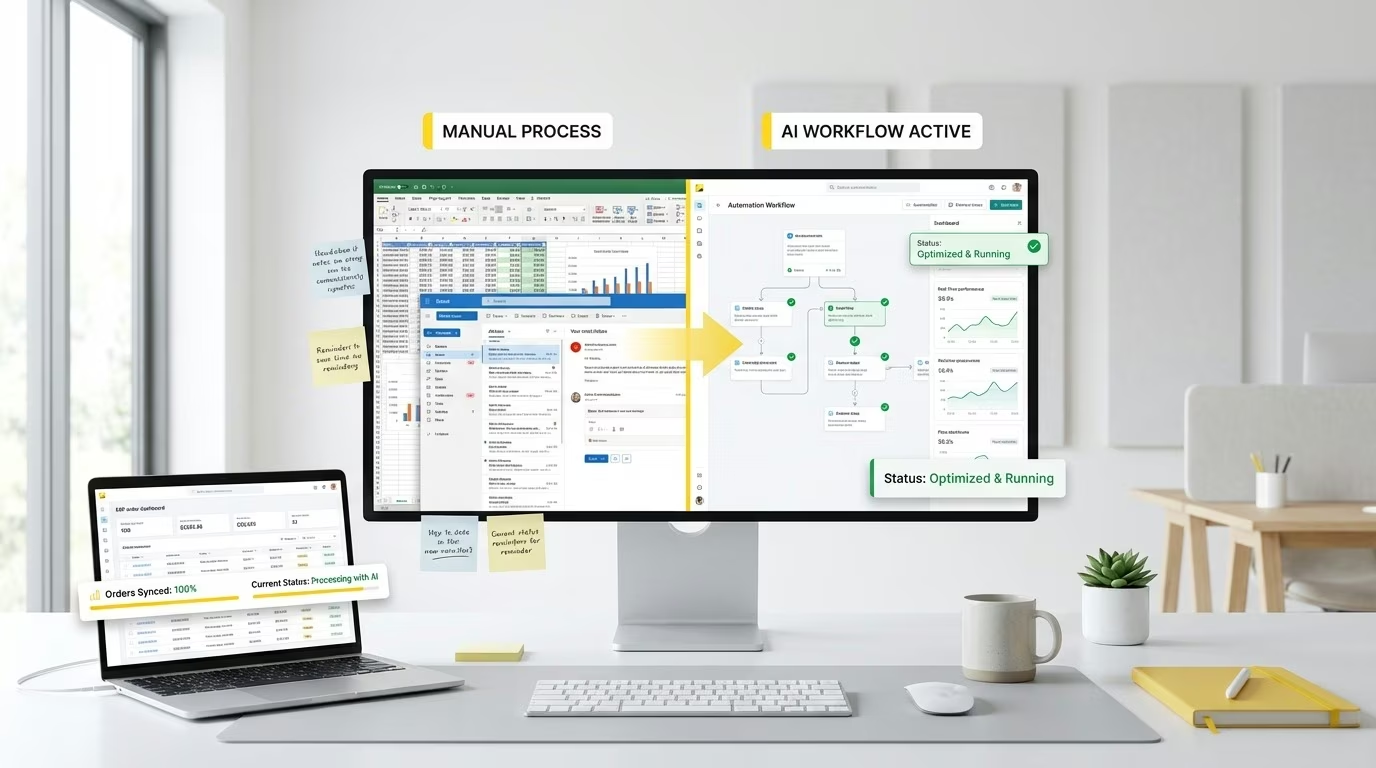
No-code automation lets business teams set up workflows with visual tools and AI-assisted mapping, without relying on developers or complex scripts. This approach:
With no-code, your CRM and ERP can stay in sync automatically, without developers updating or rewriting code every time either platform changes.
Here’s a step-by-step roadmap to help you automate without custom code:
Start by identifying the key records that should move between systems. Typical data flows include:
Having a clear picture avoids data mismatches and ensures your workflows do the right thing.
Selecting the right tool matters. Look for:
The better the platform, the faster and more reliable your automation.
With a drag-and-drop interface you:
This keeps integration simple and maintainable.
Good automation doesn’t end at the setup. Use monitoring tools to:
This approach ensures your CRM and ERP stay accurate and aligned as your business grows.
eZintegrations™ is designed for businesses that want reliable, enterprise-grade data automation without a single line of custom code. Here’s how it solves the real pain points companies face:
eZintegrations™ supports connectors for your CRM and ERP systems, whether salesforce.com, Microsoft Dynamics, NetSuite, SAP, or others. You connect systems fast and start syncing data immediately.
AI tools automatically map fields between CRM and ERP systems and standardize formats. That means less manual setup and fewer errors out of the gate.
Instead of waiting for nightly exports, eZintegrations™ keeps your systems updated in real time. When a sales order enters CRM, your ERP knows instantly. This speed improves fulfillment accuracy and customer satisfaction.
You can see live dashboards, alerts, and error logs. That gives teams confidence that workflows are running as expected.
Because everything is visual and no-code, business teams can build and adjust workflows on their own, reducing reliance on overburdened IT teams.
Customers using eZintegrations™ have seen measurable business impact:
More companies are recognizing eZintegrations™ for this reason, earning product leadership positions in industry reports for 2026.
Businesses that automate CRM to ERP data flow without custom code gain a clear advantage. They reduce manual work, improve data accuracy, accelerate processes, and free up teams to focus on strategy. Systems that do not talk to each other cost time, money, and growth.
If your operations still rely on spreadsheets or custom scripts to move data, it is time to modernize. See how effortless automation can transform your business through eZintegrations™.
Ready to streamline data flow and unlock better decisions and faster results?
Book your eZintegrations™ demo today and start automating CRM to ERP without code.
Recommend Blogs:
7 Benefits of Becoming an Autonomous Enterprise in 2026
How to Integrate Existing Workflows with AI Workflow Automation?
How to Automate AI Workflows Across SaaS, APIs, and Databases?
5 Tips for Implementing AI Workflow Automation: CXO Series
n8n vs zapier vs eZintegrations™: Which one is best for you in 2026?
FAQ on CRM to ERP Automation
What does it mean to automate CRM to ERP data flow?
Automating CRM to ERP data flow means setting up systems so that when data changes in your CRM, those changes automatically reflect in your ERP without manual steps or custom scripting.
Can I automate CRM to ERP without developers?
Yes. With modern no-code platforms like eZintegrations™, you build workflows visually without developers writing or maintaining code.
What data should be synced between CRM and ERP?
Common data sets include customer records, sales orders, inventory levels, pricing, and invoices. The exact data to sync depends on your business needs.
How fast can I go live with automation?
Using prebuilt connectors and templates, many companies go live in days rather than months.
What if my CRM or ERP updates their API?
No-code automation platforms handle API changes and retries, so your workflows stay resilient without manual recoding.


© Copyright 2026 Bizdata Inc. | All Rights Reserved
 Watch Demo
 Post on LinkedIn
 Post on Facebook
 Post on Twitter/X