 support@bizdata360.com
 +1-650-283-1644
 AI Enabled Data Integrations and AnalyticsAI Enabled Data Integrations and Analytics

Ecommerce businesses are sitting on more customer and performance data than ever before. Yet a surprising number still struggles to use it effectively. Many run into the same hidden obstacle: Ecommerce Data Silos.
These isolated pockets of information slow decision-making, fragment customer insights, and waste time teams could spend driving growth. Research shows that nearly half of marketers identify data silos as a top barrier to gaining actionable insights, and teams lose hours every week just trying to piece together disconnected data sets. Amra and Elma LLC
If you run a mid-size or enterprise ecommerce brand in the US and you feel like your operations are slower than they should be, the culprit might be data silos. In this post, we’ll explore seven common Ecommerce Data Silos that quietly eat into efficiency, explain how to spot them, and highlight how solutions like eZintegrations™ can help you break down these barriers and accelerate growth.
Key Takeaways (TL DR)
Ecommerce Data Silos are separate storage systems or tools that hold business data but do not communicate with each other. For example, your marketing platform may hold campaign data, your ecommerce platform stores order details, and your warehouse system tracks inventory. When these systems don’t talk, you get disconnected snapshots of your business rather than a comprehensive picture.
When data isn’t unified:
Unified data isn’t just nice to have. It’s essential for speed, accuracy, and growth.
A Customer Data Silo is when customer information lives in isolated systems. Marketing might have email lists and campaign stats; support might hold ticket history, and sales might track purchases. None of these systems are shared automatically with others.
Why It Matters?
With fragmented customer data, you lose the full picture of behavior and preferences. That hurts personalization and makes it difficult to tailor experiences that increase loyalty and conversions.
Signs You Have This Silo
Inventory Data Silos are common when stock and fulfillment systems aren’t integrated with your ecommerce platform or ERP. One system might say “in stock” while another shows “out of stock,” leading to inventory mismatches and lost sales.
What You’ll Notice?
Sales and marketing teams often use different tools and dashboards. When data between these systems isn’t synchronized, you lose clarity on which campaigns truly drive revenue.
Impact Of This Silo
Look for charts that don’t match, and ask teams if reporting delays or back-and-forth data pulls are slowing them down.
Analytics silos happen when analytics data from web, ads, customer behavior, and conversion funnels live in separate dashboards that don’t speak to one another.
Why It’s a Problem?
If your analytics reports take hours or days to reconcile, that’s a sign this silo may exist.
When order details are trapped in your ecommerce platform, but fulfillment updates are stored elsewhere, your warehouse team may work off outdated data.
Practical Signs
This silo occurs when product details such as pricing, descriptions, and images are managed in disconnected systems.
Typical Pain Points
Your ecommerce platform, payment provider, and accounting software need to reconcile sales, refunds, taxes, and fees. When they don’t integrate, month-end closes take longer, and finance teams spend hours validating numbers manually.
What To Watch For?
Here are clear, actionable signals that silos are affecting your business:
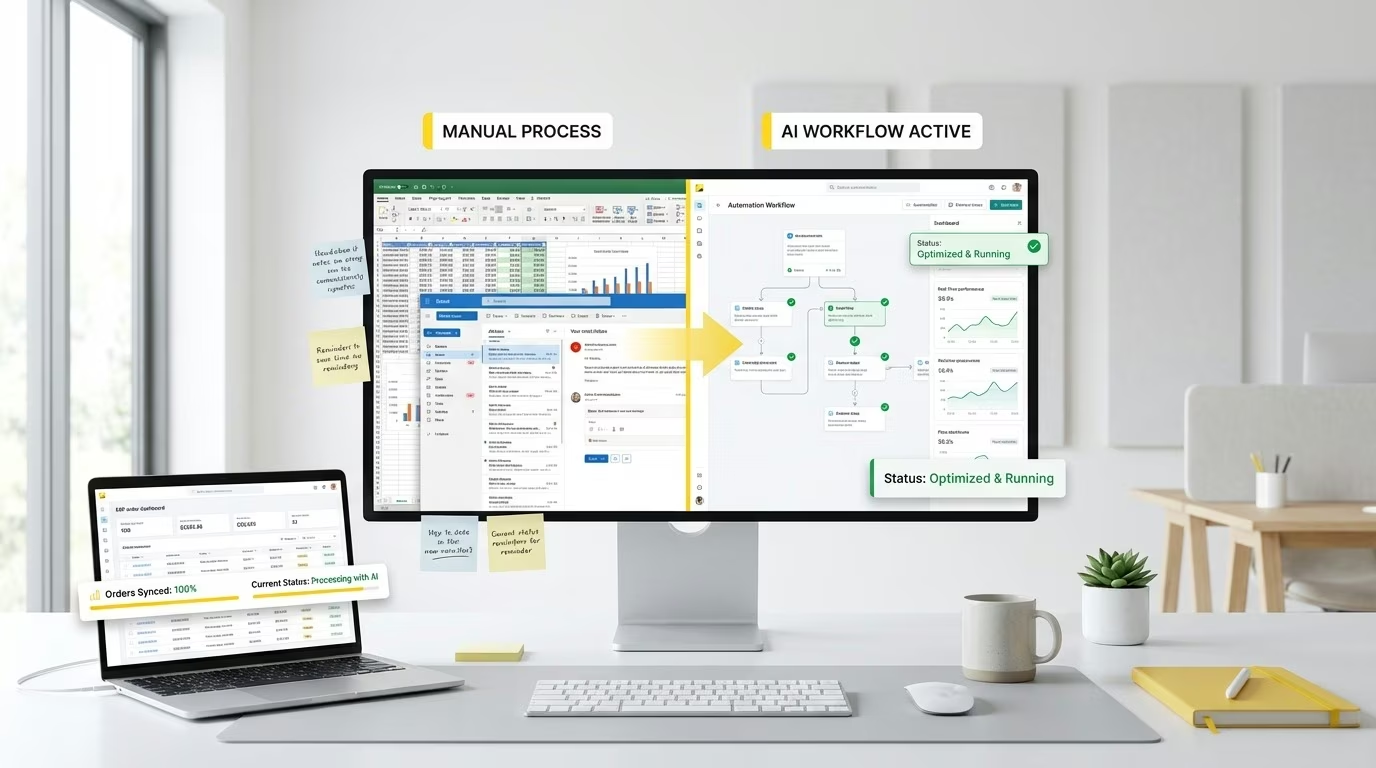
eZintegrations™ is built for teams that want reliable, real-time data without complex engineering. It connects your ecommerce stack including platforms, CRM, ERPs, ad systems, analytics, and finance tools into unified, intelligent pipelines.
Here’s what it helps you achieve:
With eZintegrations™, you stop wasting time on spreadsheets and start acting on unified insights.
Ecommerce data silos quietly drain productivity and slow growth. If you recognize any of these seven silos in your organization, tackling them should be a priority for 2026.
With intelligent data integration from eZintegrations™, you can eliminate bottlenecks, unify your data, and give teams the speed and clarity they need to thrive.
Ready to see how eZintegrations™ can transform your ecommerce data workflows? Book a quick demo today.
Recommend Resources:
AI Data Integration for E-commerce Industry Guide 2026
AI Workflow Automation for Ecommerce Industry Guide 2026
eZintegrations™ Order-to-Cash Solution for E-Commerce
Shopify to Oracle Fusion Cloud Customers
FAQs About Ecommerce Data Silos
What’s the biggest risk of having Ecommerce Data Silos?
Data silos slow down decision-making and can reduce revenue by causing stock mismatches, inconsistent customer views, and weak campaign attribution.
How quickly can I spot data silo in my business?
Look for mismatched numbers, frequent manual work, and delayed reporting. These often show up within days of reviewing team workflows.
Can small ecommerce brands benefit from fixing data silos?
Yes. Even smaller vendors see efficiency gains by centralizing data, reducing manual work, and improving customer insights.
Do commercial CRMs and ERPs fix data silos?
Not by themselves. You still need integration across systems so that each tool shares accurate information in real time.
Is unified analytics the same as fixing data silos?
Unified analytics is part of solving silos. But real solutions also unify workflows and data sources, not just dashboards.


© Copyright 2026 Bizdata Inc. | All Rights Reserved
 Watch Demo
 Post on LinkedIn
 Post on Facebook
 Post on Twitter/X