 support@bizdata360.com
 +1-650-283-1644
 AI Enabled Data Integrations and AnalyticsAI Enabled Data Integrations and Analytics

In an era where online shoppers expect seamless, ultra-responsive experiences, 77.2% of ecommerce professionals say they use AI daily and 55.3% rate their excitement for AI as high (8–10 out of 10).(Gorgias )Meanwhile, the global AI-enabled ecommerce market is projected at US $8.65 billion in 2026.(Clickpost)
For ecommerce businesses in the US, that means two things: opportunities and challenges. The opportunity is enormous: smarter automation can lift conversion, retention, and operational efficiency. The challenge is equally real: without the right AI workflow automation strategy, manual bottlenecks, data silos, and integration gaps will hold you back. That’s where AI workflow automation for ecommerce comes in.
This guide is for ecommerce operations leaders, marketing managers, IT teams and business strategists who want to understand how to apply AI-driven workflows step by step, so your business can scale without sacrificing personalization or agility. Along the way, we’ll show how the no-code AI data integration and workflow automation platform eZintegrations™ can help apply these strategies in practice.
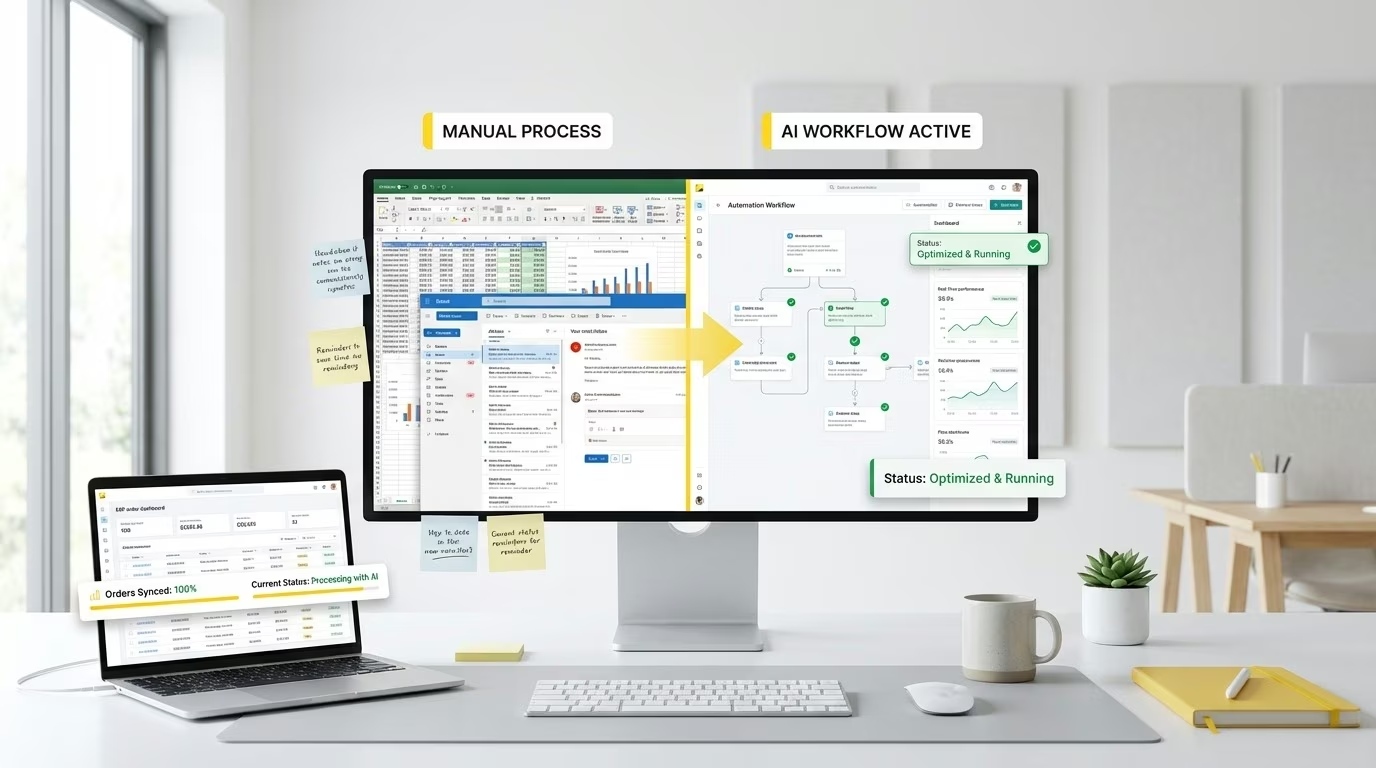
AI workflow automation in ecommerce refers to the use of artificial intelligence to manage, coordinate, and execute routine business tasks automatically. It connects data across systems, makes real-time decisions, and triggers actions without human intervention.
For example:
AI workflows link all these actions together, so decisions happen instantly and consistently, not hours later.
Ecommerce operations are fast-moving and data heavy. Manual processes simply can’t keep up with today’s pace.
Here is the key pain points that automation helps solve:
Issue Summary: Data lives in silos across different tools
Issue Summary: Too many repetitive tasks slow down teams
Issue Summary: Customers expect personalization at scale
Issue Summary: High operational costs limit scalability
In short, AI workflow automation enables ecommerce businesses to move faster, serve better, and grow smarter.
A strong strategy turns automation from a buzzword into measurable business value. Here’s how to build one.
Start by pinpointing where automation will have the biggest impact. It might be:
Clarify the business goal before selecting technology.
Document your current processes and data flows. Identify which systems are involved, where delays happen, and where human input adds little value. These are your automation opportunities.
You need a platform that makes automation simple, scalable, and secure.
eZintegrations™ is a no-code AI data integration and workflow automation platform that connects SaaS apps, SQL and NoSQL databases, and APIs. It lets teams configure complex integrations quickly and add AI-driven decision points without coding.
Build one or two high-impact automations first. Examples:
Once you see measurable results, expand to other workflows.
Set KPIs for every workflow. Track how automation affects conversion rates, customer satisfaction, and operational costs. As you collect more data, refine your workflows and scale new processes.

AI workflows can track customer behavior, predict preferences, and deliver personalized experiences in real time. For instance, when a visitor browses high-value items but doesn’t purchase, AI can trigger an offer or reminder through their preferred channel.
With eZintegrations™, you can connect your ecommerce store, CRM, and marketing platforms to create continuous personalized engagement.
Abandoned carts are one of the biggest lost opportunities in ecommerce. AI workflows can detect abandonment and instantly send a follow-up offer or even launch a live chat.
They can also automate price adjustments or recommend bundles based on buying patterns.
AI-driven workflows forecast demand, track warehouse stock, and automate reorders.
For example, when the system predicts a surge in demand for a product, it can trigger restocking and update pricing automatically. eZintegrations™ can connect your ERP, supplier APIs, and ecommerce platforms to automate these decisions.
AI workflows route tickets, detect sentiment, and trigger the right action automatically.
If a customer starts a return, AI can assess the reason, check eligibility, and process an exchange offer instantly. This reduces resolution time and keeps customers happier.
Automation doesn’t stop action; it also learns results. AI workflows feed performance data back into analytics systems, retrain models when needed, and flag anomalies for review.
eZintegrations™ is designed to help ecommerce enterprises connect and automate their data intelligently. Here’s how it helps:
With eZintegrations™, ecommerce companies can automate end-to-end workflows, reduce dependency on IT, and focus on outcomes rather than operations.
Here’s a simple roadmap to get started:
Days 0–30: Plan and Prioritize
Days 31–60: Build and Test
Days 61–90: Scale and Optimize
By the end of 90 days, your ecommerce business can have a working AI automation ecosystem running live and ready to scale.
AI workflow automation is no longer a futuristic concept for ecommerce; it’s the key to staying competitive in 2026. It connects your systems, learns data, and executes actions instantly, freeing your teams to focus on strategy instead of manual tasks.
With eZintegrations™, ecommerce companies can integrate all their systems, automate decision-making, and achieve measurable ROI faster than ever before.
If you’re ready to see what AI-powered automation can do for your ecommerce business, book a free demo of eZintegrations™ today and explore how you can build intelligent workflows that scale effortlessly.
Recommend Blogs:
AI Workflow Automation: Tools, Best Practices, Guide 2026
AI Data Integration for E-commerce Industry Guide 2026
10 AI Workflow Trends Transforming Enterprise Automation in 2026
eZintegrations™ Order to Cash Solution for E-commerce Demo
Q1. Is AI workflow automation only for large ecommerce companies?
No. Even mid-sized and growing online retailers can benefit from automating repetitive tasks and improving personalization with the right no-code tools.
Q2. What systems can I connect with eZintegrations™?
You can connect to most SaaS apps, databases, and APIs, including ecommerce platforms, CRMs, ERPs, analytics tools, and marketing systems.
Q3. Can AI workflows improve customer experience?
Yes. By automating personalized communication, order tracking, and returns, AI workflows make every interaction faster and more relevant.
Q4. What should I automate first?
Start with high-impact, low-risk processes such as abandoned cart recovery, inventory updates, or order fulfillment notifications.
Q5. How do I ensure my AI workflow stays accurate?
Regularly review data quality, monitor results, and adjust workflows or models as needed. eZintegrations™ makes it easy to monitor and update workflows continuously.


© Copyright 2026 Bizdata Inc. | All Rights Reserved
 Watch Demo
 Post on LinkedIn
 Post on Facebook
 Post on Twitter/X