 support@bizdata360.com
 +1-650-283-1644
 AI Enabled Data Integrations and AnalyticsAI Enabled Data Integrations and Analytics

In 2026, global data generation is expected to surpass 180 zettabytes, with enterprises contributing a significant share through operational systems, customer interactions, IoT devices, and regulatory records.
Yet, while businesses collect massive volumes of data, up to 80% of it goes unused, cluttering systems, increasing storage costs, and posing compliance risks. As data privacy regulations like GDPR, CCPA, and India’s DPDP Act tighten and industry mandates become more complex, organizations face mounting pressure to store, manage, and retrieve historical data efficiently.
Without a clear data archival strategy, businesses risk data sprawl, legal exposure, and operational inefficiencies. This guide explores how to build a future-ready data archival strategy in 2026 that balances retention, compliance, cost, and accessibility using modern technologies like cloud storage, AI, and blockchain.
In the digital era, organizations generate massive volumes of data daily. Much of this data becomes inactive over time but must be preserved for compliance, analysis, or future reference. Data archival is the process of moving such inactive data from active systems to long-term storage. This helps free up space in production systems while ensuring the archived data remains secure and accessible.
Understanding the various types of data archival can help organizations choose the best approach for their needs. Archival methods differ based on data structure, storage location, and application use cases.
Examples help illustrate how organizations across industries use data archival strategies. From regulatory compliance to system optimization, real-world scenarios show why archival is a strategic priority.
A well-structured archival strategy doesn’t just reduce clutter—it enhances business performance and lowers risk. Companies gain numerous operational and strategic advantages from properly archiving their data.
Establishing a structured archival process ensures that data is consistently and securely moved, stored, and retrieved. A good archival process balances data lifecycle management with organizational goals.
Following best practices ensures your data archival efforts are efficient, secure, and aligned with industry standards. These practices also make the strategy sustainable and easier to scale.
A well-defined data archival strategy is the foundation of effective long-term data governance. It acts as a blueprint that guides how organizations store, secure, and retrieve data over time. With rising regulatory demands and ever-growing data volumes, a thoughtful archival approach helps organizations reduce storage costs, maintain compliance, and ensure data remains accessible when needed.
An effective data archival strategy answers key questions:
Here are the core components every archival strategy should include:
Define how long each type of data needs to be retained based on regulatory, legal, and business requirements. For example:
Retention timelines help avoid unnecessary storage costs and reduce legal risk by ensuring timely data disposal.
Archival solutions should integrate seamlessly with your operational systems (ERP, CRM, databases, cloud platforms) to automate data identification and migration. This reduces manual work and ensures relevant data is archived in real-time or on schedule.
Choose storage systems that scale with your data growth while providing enterprise-grade security. Options may include:
Data must be encrypted both in transit and at rest, with redundant backups for disaster recovery.
Your archival strategy must reflect the compliance needs of your industry—whether HIPAA, SOX, GDPR, or CCPA. Ensure your systems can:
Archived data is only useful if it’s accessible when needed. Define:
Role-based access, MFA (multi-factor authentication), and detailed audit trails help prevent unauthorized use while maintaining accountability.
Data archival is becoming mission-critical for businesses due to exponential data growth and increasing compliance pressure. IDC estimates global data creation will reach 175 zettabytes by 2026. Much of this data, such as logs, records, and historical transactions, must be retained for years or even decades.
As businesses digitize more operations, retaining data for legal, strategic, and analytical purposes becomes vital. Archival systems must evolve to handle diverse data types, meet evolving laws, and support fast retrieval.
Bizdata Vault has proven its value across multiple industries by enabling secure, compliant, and scalable data archival. Here’s how different sectors are using it to solve critical data challenges:
A leading hospital network integrated Bizdata Vault to manage long-term patient records. The platform enabled seamless data access across departments while maintaining full HIPAA compliance. This improved both clinical decision-making and operational workflows, ultimately enhancing patient care.
A multinational banking institution deployed Bizdata Vault to protect and archive sensitive transactional data. With enterprise-grade encryption and adherence to financial regulatory standards, the bank achieved stronger data integrity and increased customer trust in its data governance practices.
A prominent law firm adopted Bizdata Vault for managing extensive case files and eDiscovery archives. The solution’s AI-powered search and secure document handling improved discovery timelines and ensured compliance with stringent legal data retention requirements.
A national retail chain used Bizdata Vault to archive historical sales, customer profiles, and inventory data. This facilitated advanced trend analysis, optimized stock management, and supported data privacy efforts aligned with consumer protection laws such as CCPA and GDPR.
A major telecom provider implemented Bizdata Vault to archive billions of call detail records and subscriber data. The platform’s scalable architecture and compliance-ready framework helped them meet industry regulations while managing exponential data growth efficiently.
Modern technologies are reshaping data archival strategies by addressing longstanding challenges in scale, security, and intelligence.
Cloud-based archival solutions offer elastic scalability, cost-efficiency, and global access. They reduce infrastructure overhead, enable seamless disaster recovery, and support hybrid storage strategies for better business continuity.
AI/ML enhances data archival through automation and intelligent insights. These technologies allow for:
Blockchain introduces immutable and verifiable data records—crucial for industries with strict compliance mandates. Its distributed ledger system ensures:
Together, these technologies are pushing the boundaries of traditional archival by making systems more adaptive, secure, and intelligent. Organizations leveraging cloud, AI/ML, and blockchain can gain a significant edge in managing their growing data footprints with confidence.
Let me know if you’d like a visual matrix or comparison chart for easier content scanning on your blog.
“The integration of AI and ML in data archival isn’t just about efficiency; it’s about transforming data into a dynamic asset. We’ve implemented machine learning algorithms that not only categorize data more effectively but also predict future storage needs, allowing for smarter resource allocation. The key has been customizing these solutions to fit our unique data landscape.”
“In the current regulatory environment, data archival is no longer just a technical task; it’s a legal necessity. We’ve had to be proactive in understanding laws like GDPR and CCPA, ensuring that our archival systems meet compliance standards. Regular training and a compliance-first approach in our archival strategy have been crucial.”
“Looking ahead, I anticipate blockchain playing a major role in data archival, especially for its ability to provide secure, immutable records. Additionally, as quantum computing becomes more accessible, we can expect significantly faster data processing capabilities, which will revolutionize how we handle large-scale data archival.”
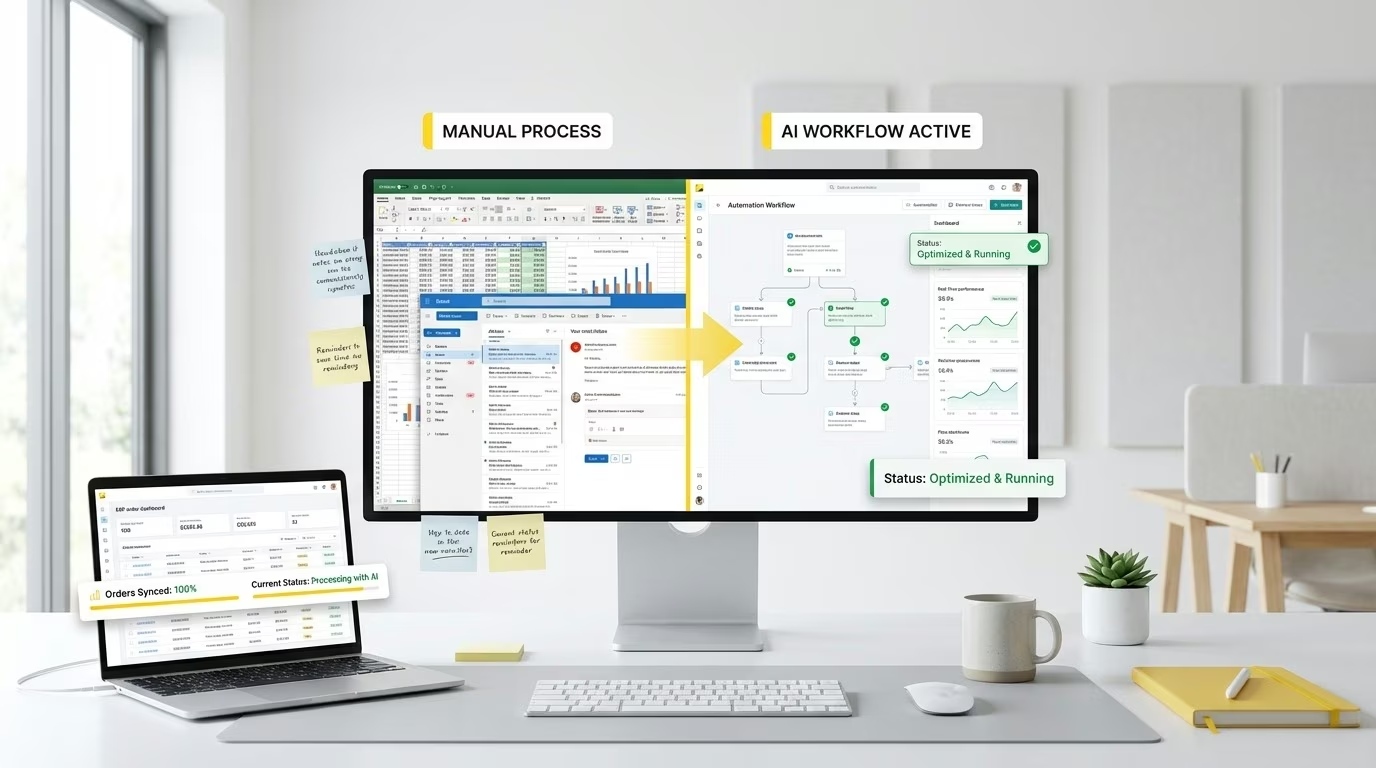
Modern data archival requires intelligent automation and seamless integration across systems. eZintegrations™ and Goldfinch AI are purpose-built to meet these needs through their advanced, no-code platforms.
eZintegrations™:
As data volumes continue to surge, mastering data archival is critical for regulatory compliance, operational efficiency, and strategic decision-making. Each industry has unique requirements, and organizations must adopt tailored strategies to meet them.
Emerging technologies like cloud, AI, ML, and blockchain are transforming how businesses store, secure, and access data. Solutions like Bizdata Vault enable organizations to stay ahead by offering scalable, intelligent, and compliant archival capabilities. By investing in the right tools and practices, businesses can future-proof their data management in 2026 and beyond.
Implementing a robust data archival strategy is crucial for organizations aiming to manage data growth effectively, ensure compliance, and optimize system performance. Leveraging advanced solutions like eZintegrations™ and Goldfinch AI can significantly enhance your archival processes.
Ready to optimize your data archival strategy? Book a free demo of eZintegrations™ today!
What is data archival?
Data archival is the process of moving inactive data to a separate storage system for long-term retention, ensuring compliance and preserving historical records.
How does data archival differ from backups?
While backups are for disaster recovery and short-term data restoration, archives are for long-term storage and compliance purposes.
What are common data archival methods?
Methods include cloud-based storage, on-premises solutions, and hybrid approaches, depending on organizational needs.
Why is a data archival strategy important?
A well-defined strategy ensures efficient data management, compliance with regulations, and cost-effective storage solutions.
How can eZintegrations™ and Goldfinch AI assist in data archival?
They provide automated integration and intelligent data analysis tools, streamlining the archival process and enhancing data accessibility.


© Copyright 2026 Bizdata Inc. | All Rights Reserved
 Watch Demo
 Post on LinkedIn
 Post on Facebook
 Post on Twitter/X