 support@bizdata360.com
 +1-650-283-1644
 AI Enabled Data Integrations and AnalyticsAI Enabled Data Integrations and Analytics

The pressure to move faster, smarter, and leaner has never been greater. Businesses are generating massive amounts of data daily, yet most of it is underutilized. According to Gartner, organizations fail to use up to 97% of the data they collect for decision-making (Gartner).
This wasted potential creates inefficiencies, manual bottlenecks, and missed opportunities. That’s where Data Automation steps in. By automating how data is collected, processed, and analyzed, companies can unlock efficiency gains, reduce costs, and empower employees to focus on strategy instead of repetitive tasks.
This blog is for business leaders, IT decision-makers, and operations managers who want to understand how data automation can transform workflows in 2026. We’ll break down the benefits, real-world examples, and the role of platforms like eZintegrations™, a leading solution enabling AI-powered data workflows.
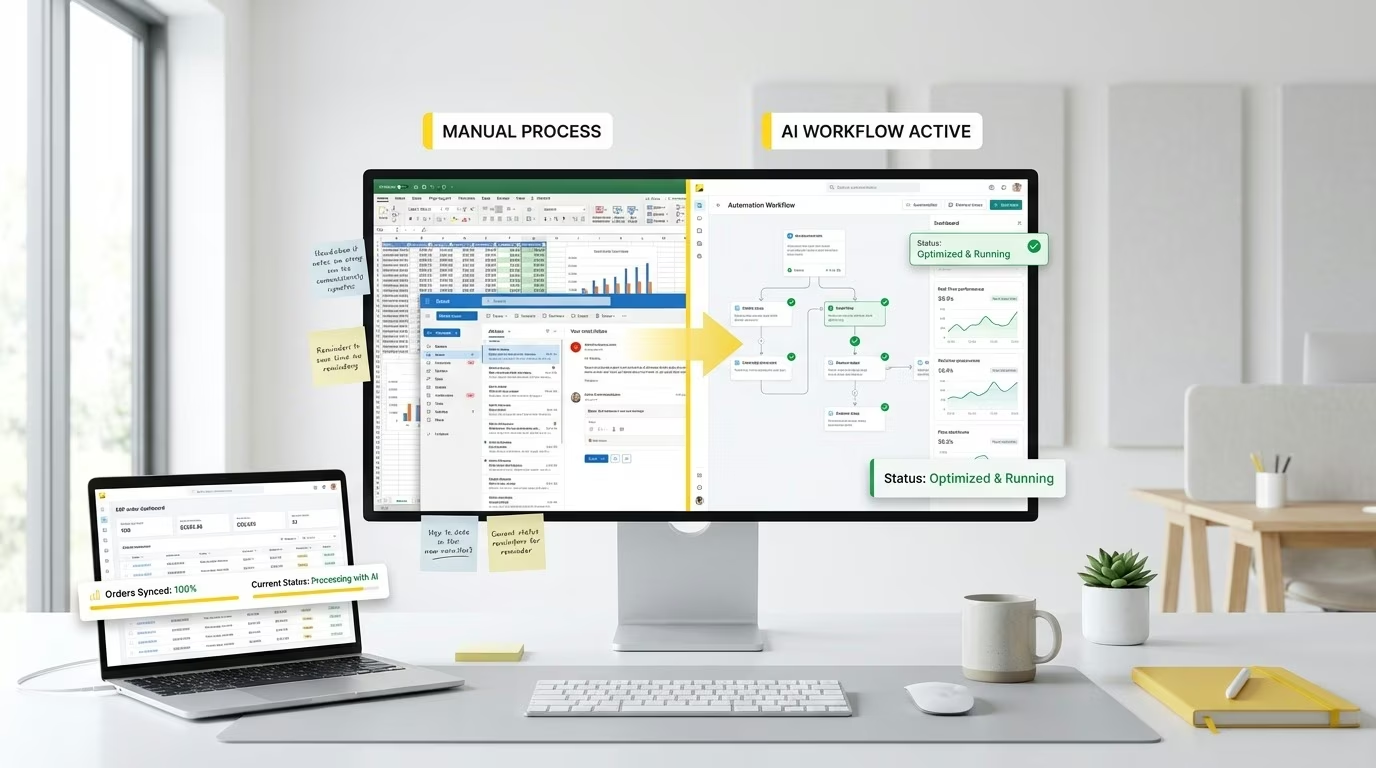
Data Automation is the process of using technology to automatically collect, clean, transform, and integrate data across systems without manual intervention. Instead of teams spending hours reconciling spreadsheets or manually uploading files, automation handles the heavy lifting.
In 2026, the definition has evolved further. With AI-powered data automation software, companies are not just moving data but also understanding it, extracting insights, and making predictions instantly.
Businesses today cannot afford inefficiency. Manual data handling slows growth, increases errors, and prevents scalability. In fact, employees waste up to 40% of their time on repetitive manual tasks (Source)

Implementing data automation tools and platforms comes with measurable benefits:
Let’s look at some data automation examples across industries:
These scenarios are powered by data automation platforms like eZintegrations™, which eliminate silos and bring agility.
In 2026, AI-driven data automation software is taking the spotlight. AI enables systems to:
This shift from simple data transfer to intelligent automation is reshaping industries.
eZintegrations™ is a no-code, AI-powered data automation platform designed to simplify complex workflows.
Here’s how it helps businesses:
This means your team can automate order management, financial reconciliation, or compliance checks in days instead of months.
One of the biggest challenges in data automation is handling unstructured information like contracts, invoices, patient records, or compliance documents. Manual review not only slows processes but also creates risks of errors and compliance gaps. This is where eZintegrations™ AI Document Understanding makes a measurable difference.
The platform goes beyond traditional OCR or NLP tools. It uses AI workflows to automatically extract, structure, and validate data from scanned files, PDFs, and other unstructured formats. This ensures that critical business information flows seamlessly into your ERP, CRM, or analytics systems without human intervention.
By embedding AI document understanding into workflows, businesses save time, reduce risks, and gain actionable insights from documents that previously required manual effort. This transforms data automation from simple movement of information to true intelligent automation.
When evaluating data automation software, consider:
Several trends are shaping the next wave of process and data automation:
As we move deeper into 2026, data automation is no longer a luxury; it’s a necessity for survival and growth. Companies that embrace automation will see massive efficiency gains, better compliance, and stronger competitive advantage.
Platforms like eZintegrations™ are enabling businesses to build AI-driven workflows that eliminate silos, speed up operations, and prepare for the future of intelligent automation.
Ready to see how data automation can transform your business? Try eZintegrations™ for free or Book a free demo of eZintegrations™ today and take the first step toward a more efficient, data-driven future.
Q1. What is source data automation?
Source data automation ensures data is captured accurately from the first point of entry, reducing errors downstream.
Q2. What are the benefits of data automation?
It reduces costs, increases accuracy, improves speed to insight, and frees employees from repetitive tasks.
Q3. What are some data automation examples?
Examples include syncing Amazon orders to ERP, automating payment reconciliation, and structuring patient records.
Q4. Which industries benefit most from data automation?
Healthcare, finance, retail, supply chain, and manufacturing see the biggest impact due to data volume and compliance needs.
Q5. What is the best data automation software in 2026?
eZintegrations™ stands out as a leading AI-powered data automation platform for its no-code interface, API marketplace, and AI-driven workflows.
Q6. What is data automation?
Data Automation uses technology to collect, clean, transform, and integrate data across systems without manual effort.


© Copyright 2026 Bizdata Inc. | All Rights Reserved
 Watch Demo
 Post on LinkedIn
 Post on Facebook
 Post on Twitter/X