 support@bizdata360.com
 +1-650-283-1644
 AI Enabled Data Integrations and AnalyticsAI Enabled Data Integrations and Analytics

Imagine closing a deal in minutes instead of days. No printing, no scanning, no manual follow-ups. That is what powerful automation between DocuSign and Salesforce can deliver.
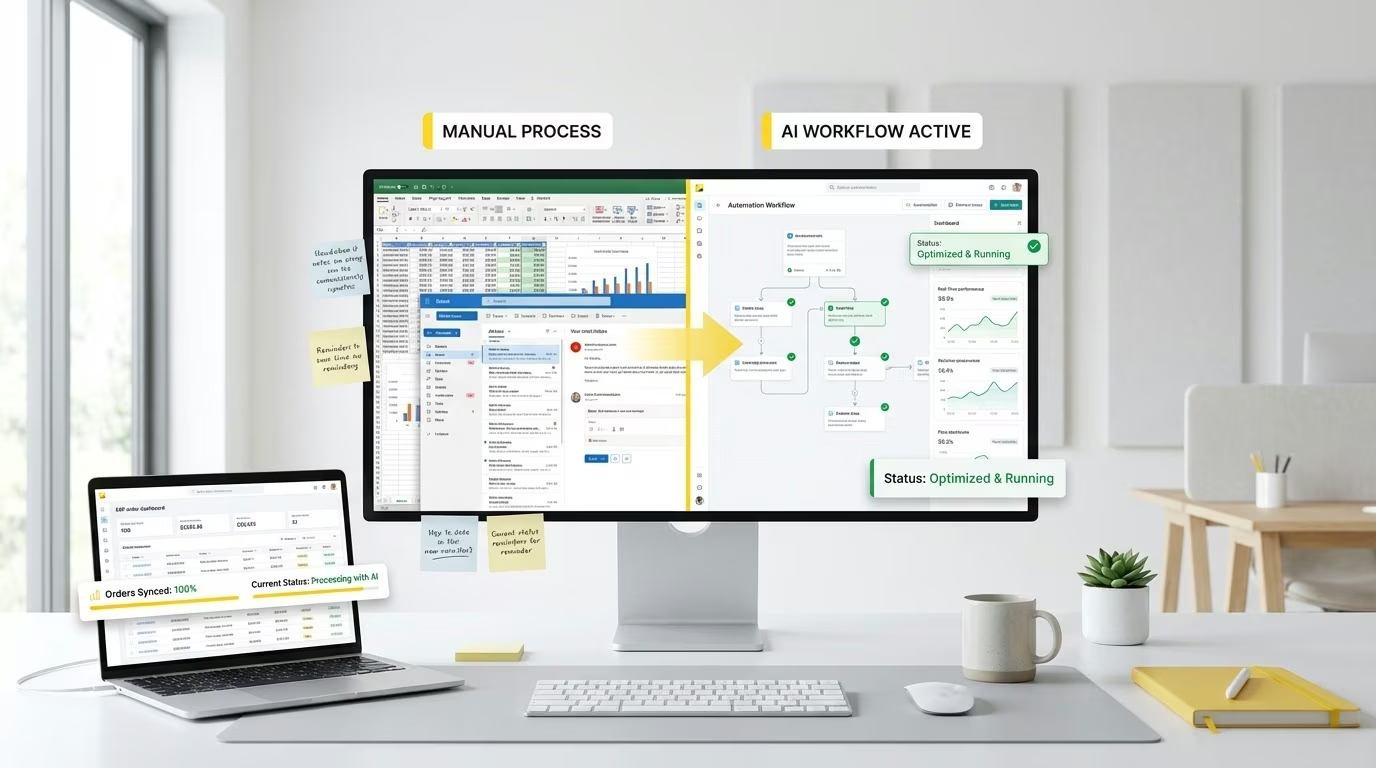
In 2026, U.S. businesses are doubling down on automation. In 2026, 60 percent of U.S. firms have already deployed automation to replace manual workflows, and large organizations push that number close to 85 percent. (Source) . This shift shows that paper-based contracting is becoming a competitive bottleneck.
When your CRM (Salesforce) and your e-signature platform (DocuSign) are integrated, your teams can close deals faster, reduce manual errors, and improve compliance. The DocuSign Salesforce integration is no longer optional. It is now essential for B2B organizations that want to stay ahead in 2026.
This guide explains why integration matters, how to set it up, common challenges, and how eZintegrations™ helps U.S. businesses automate securely and intelligently.
The DocuSign Salesforce integration connects your CRM with your e-signature system, so users can send, track, and store agreements directly from Salesforce.
You no longer need to leave the Salesforce to initiate or monitor contracts. Everything happens within your CRM.
You can install “DocuSign for Salesforce” directly from the Salesforce AppExchange.
The modern buyer expects speed and transparency. Manual contract processes slow that down.
Without integration, sales teams often deal with:
In the Forrester-commissioned “Total Economic Impact (TEI)” study of DocuSign CLM, organizations reported a 90% reduction in contract generation time. (Source)
In 2026, with AI-assisted contract intelligence and tighter Salesforce integration, businesses can deliver seamless digital experiences and stay audit-ready.
Before setting up the connection, invest time in proper planning.
DocuSign’s 2026 updates are reshaping how businesses manage agreements.
DocuSign Iris adds smart contract analysis. It detects high-risk clauses and obligations directly inside Salesforce records.
Agentforce brings native DocuSign actions into Salesforce automation flows. You can trigger signature events or compliance checks without coding.
New conditional routing and document intelligence make workflows more dynamic and adaptable to complex enterprise rules.
These upgrades make your integration more intelligent, faster, and compliant with modern digital contracting standards.
A U.S.-based financial services firm was struggling with slow contract turnaround times.
Results:
Here are practical ways to get the most out of your DocuSign Salesforce integration:
eZintegrations™ is a no-code AI data integration and workflow automation platform that makes connecting Salesforce and DocuSign effortless.
Key Advantages:
With eZintegrations™, your team can deploy DocuSign Salesforce integration faster, with lower risk and higher reliability.
The DocuSign Salesforce integration is no longer a technical enhancement. It is a business enabler that drives faster deal closures, cleaner compliance, and smarter customer engagement.
By adopting intelligent integration tools like eZintegrations™, U.S. enterprises can move from manual workflows to intelligent contract automation that scales.
If you are ready to modernize your contract process, book your free demo of eZintegrations™ today and see how easy digital transformation can be.
Recommended Salesforce Solutions:
Salesforce and NetSuite
Salesforce and Snowflake
Salesforce and HubSpot
Salesforce and Jira
Salesforce and Xero
Salesforce and Microsoft Teams
Q1. What does DocuSign Salesforce integration do?
It allows users to send, sign, and track agreements directly within Salesforce, eliminating manual document handling.
Q2. Is coding required for setup?
Not necessarily. Most configurations can be done with DocuSign templates and Salesforce Flow.
Q3. How secure is this integration?
Both Salesforce and DocuSign use enterprise-grade encryption, role-based access, and full audit trails.
Q4. What if envelopes fail or API errors occur?
You can use error alerts, retry logic, and integration monitoring tools like eZintegrations™ to manage exceptions.
Q5. Can it scale for enterprise use?
Yes. With proper planning and API management, the integration supports large-scale document automation.


© Copyright 2026 Bizdata Inc. | All Rights Reserved
 Watch Demo
 Post on LinkedIn
 Post on Facebook
 Post on Twitter/X