support@bizdata360.com
 +1-650-283-1644
 AI Enabled Data Integrations and AnalyticsAI Enabled Data Integrations and Analytics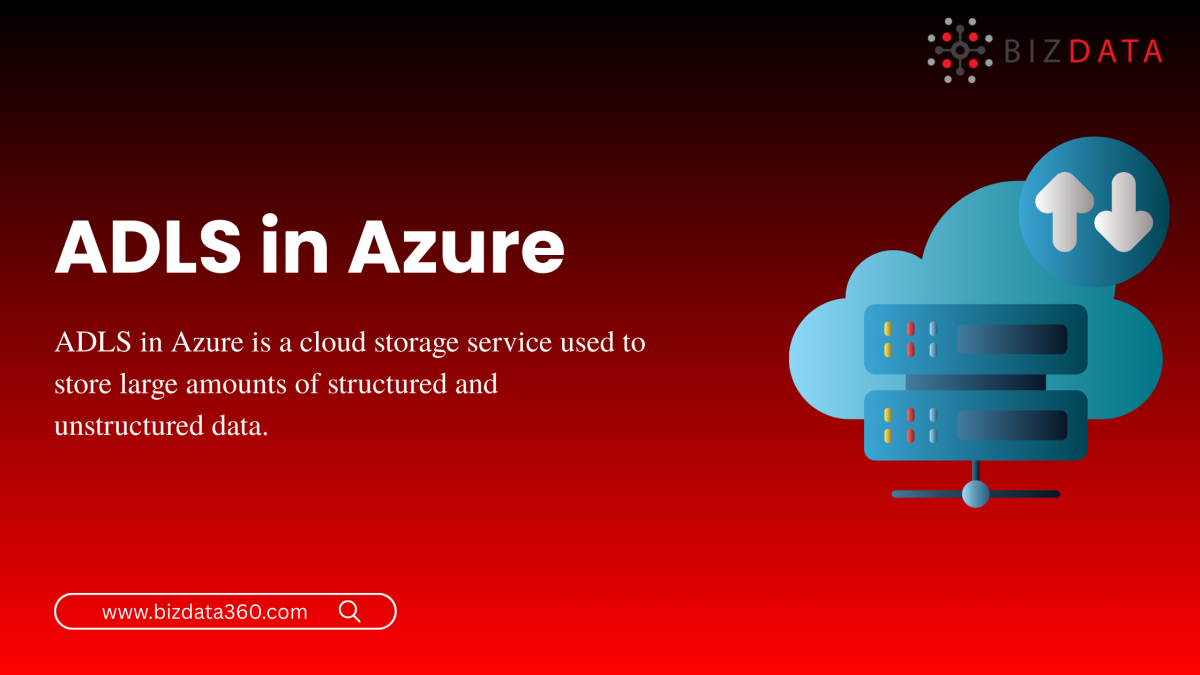
 By athakur •
2 min read
By athakur •
2 min read
ADLS in Azure is a cloud storage service used to store large amounts of structured and unstructured data. It supports analytics, AI, and large-scale processing.
Teams use ADLS to keep raw and processed data in one secure location. It helps simplify analytics and machine learning work. It also supports large data volumes without performance limits.
A healthcare provider loads patient records, claims files and device logs into ADLS. Analysts access this data to build compliance reports and predictive models. ADLS keeps the data organized and ready for downstream use.
Is ADLS a data lake?
It is a storage service used to build and manage data lakes.
Can ADLS handle unstructured files?
Yes, it supports logs, text, images, and many file types.
Does ADLS work with analytics tools?
Yes, it connects with Spark, Databricks, Synapse and similar systems.
ADLS is Azure’s storage layer for managing large analytics and AI datasets.
ADLS often works with AI workflow tools like eZintegrations™ to support data movement and automation. It fits naturally into larger AI data workflows across enterprises.


© Copyright 2026 Bizdata Inc. | All Rights Reserved
 Watch Demo