 support@bizdata360.com
 +1-650-283-1644
 AI Enabled Data Integrations and AnalyticsAI Enabled Data Integrations and Analytics

As hybrid cloud adoption continues to surge, many U.S. enterprises face a common challenge: how to integrate cloud and on-premises data seamlessly without disrupting operations. According to Statista, 72% of organizations worldwide have adopted a hybrid cloud model as of 2026, up from 63% in 2023. This rise shows how essential hybrid environments have become yet integrating them remains one of IT’s toughest tasks.
Most companies juggle multiple SaaS tools, legacy ERP systems, and siloed databases. Data duplication, mismatched formats, and latency make it hard for teams to get a unified view of business performance. Without a seamless integration strategy, analytics suffer, decision-making slows, and costs climb.
This guide breaks down how modern enterprises can bridge this gap efficiently and why eZintegrations™ is becoming the go-to no-code AI integration platform for hybrid cloud ecosystems.
Integration between cloud and on-premises systems connects data, applications, and processes across different environments. It ensures smooth communication between SaaS platforms (like Salesforce or Workday) and local enterprise systems (like Oracle, SAP, or SQL databases).
For instance, a manufacturer might store production data on-premises but rely on a cloud CRM for sales. Integrating these ensures both systems share accurate inventory and customer details in real-time.
The modern enterprise is distributed. Teams rely on cloud apps for collaboration, while sensitive workloads still run on internal servers. Without integration, these systems operate in isolation.
Key pain points enterprises face:
Hybrid integration helps businesses achieve balance, leveraging the scalability of the cloud while maintaining the control of on-premises infrastructure.
Creating a seamless bridge requires both a strategy and the right technology stack. Here’s how enterprises can approach it:
Start by mapping where your data lives, which systems are cloud-based, which remain on-premises, and how they connect. Identify critical data flows such as:
This assessment highlights integration gaps and potential performance bottlenecks.
There are several ways to connect hybrid environments. The best choice depends on your data architecture and performance goals.
eZintegrations™ follows the API-led, no-code approach, enabling businesses to connect any cloud or on-prem system through an intuitive drag-and-drop interface.
Real-time synchronization ensures that every system reflects accurate data instantly. This is critical for scenarios like order management or supply chain tracking, where delays can impact operations.
eZintegrations™ supports real-time and event-based integration, ensuring data consistency across ERPs, CRMs, and analytics platforms without downtime.
As hybrid environments expand, so do security risks. Enterprises must apply consistent data policies across all systems.
Best practices include:
eZintegrations™ supports enterprise-grade security with token-based authentication, encryption, and audit logging.
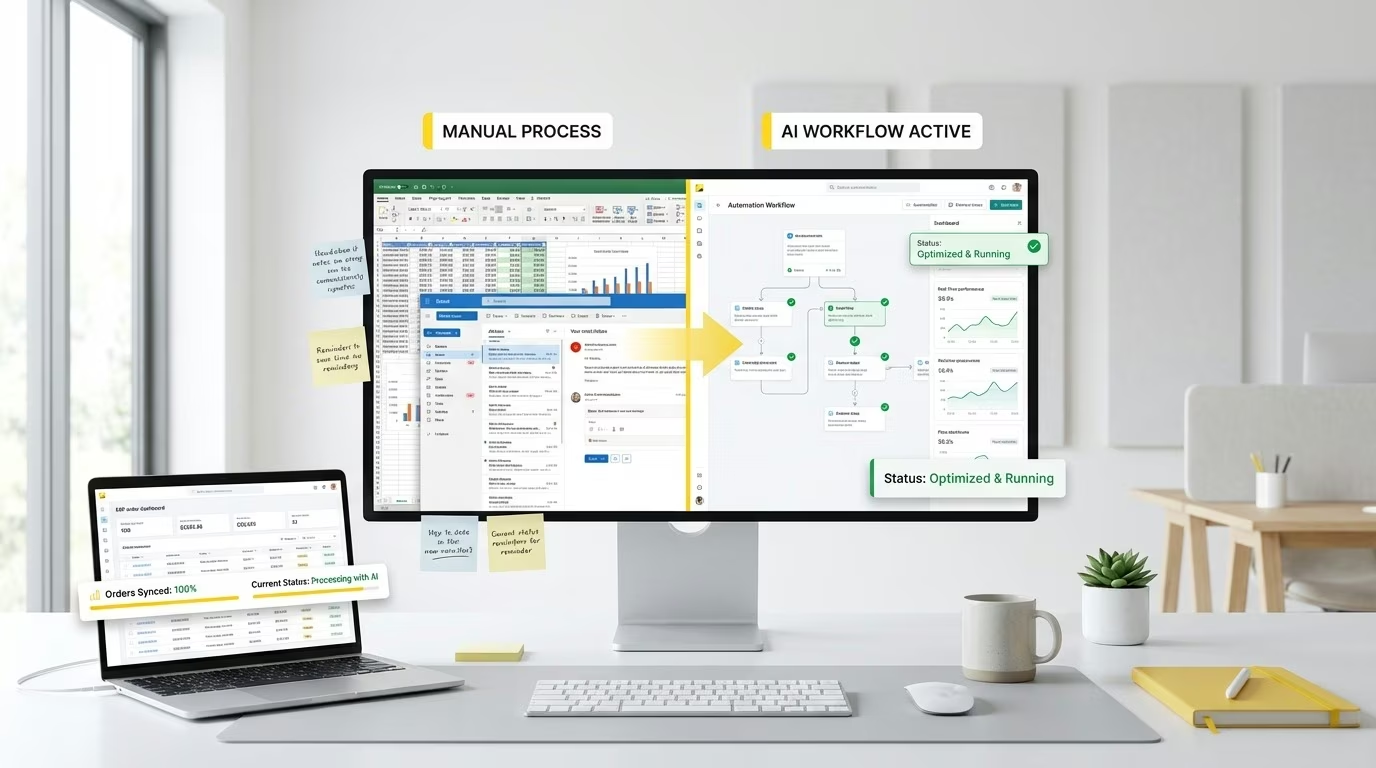
AI-driven integration can handle complex data transformations and automate repetitive workflows. With eZintegrations™ AI Data Workflows, users can extract, clean, and move data intelligently across systems, saving hours of manual work.
For example, a healthcare provider can automate patient data updates from on-prem EHR systems to cloud analytics dashboards without writing a single line of code.
Continuous monitoring ensures integration of health and performance. Businesses should track:
eZintegrations™ provides built-in monitoring dashboards, helping IT teams troubleshoot in real-time and ensure optimal performance.
A U.S.-based retailer was running into delays between its store inventory (on-prem SQL) and its e-commerce platform (cloud-based). Data mismatches caused out-of-stock errors and lost sales.
By implementing eZintegrations™, the company:
The result was smoother operations, fewer customer complaints, and faster decision-making.
eZintegrations™ is a no-code AI data integration and workflow automation platform that connects cloud and on-prem systems effortlessly. It supports:
The platform helps enterprises unify their data pipelines while reducing integration time from months to days.
The next phase of integration will be AI-first. As organizations adopt more automation, integration platforms will evolve into autonomous AI agents capable of predicting and resolving data flow issues automatically.
According to some predictions, 65% of global enterprises plan to automate their data integration processes by 2026. Businesses that adopt intelligent integration early will have a significant edge in agility, analytics, and innovation.
In today’s data-driven landscape, enterprises can’t afford disconnected systems. Seamless integration between cloud and on-premises environments isn’t just a technical need; it’s a competitive advantage.
eZintegrations™ makes that possible with no-code configuration, AI workflow automation, and enterprise-grade security. Whether you’re connecting ERP, CRM, or analytics systems, the platform delivers the flexibility and speed of modern businesses’ demand.
Ready to unify your hybrid data ecosystem? Book a free demo of eZintegrations™ today and see how effortless integration can be.
Recommended Blogs:


© Copyright 2026 Bizdata Inc. | All Rights Reserved
 Watch Demo
 Post on LinkedIn
 Post on Facebook
 Post on Twitter/X