 support@bizdata360.com
 +1-650-283-1644
 AI Enabled Data Integrations and AnalyticsAI Enabled Data Integrations and Analytics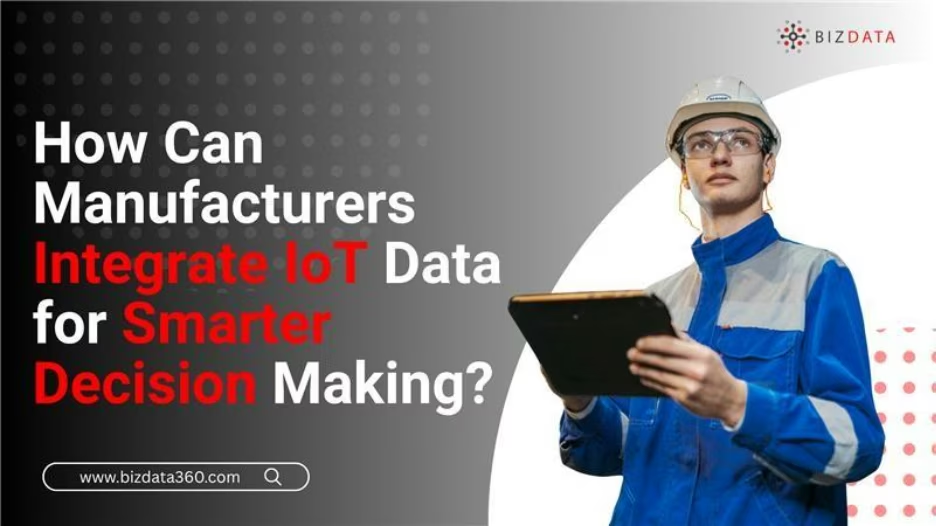

Manufacturing today runs on data. Every connected machine, sensor, and asset generates insights that can reshape operations. Yet most U.S. manufacturers still face a familiar problem: disconnected IoT data, outdated analytics, and slow decisions.
The global IoT in manufacturing market is worth USD 0.49 trillion in 2026, projected to reach USD 1.51 trillion by 2030 (Mordor Intelligence). Despite this growth, 62% of manufacturers admit they lack full integration between IoT systems and enterprise data platforms (Ubisense).
This blog breaks down why integrating IoT data is essential for smart manufacturing, how to do it effectively, and how eZintegrations™, a no-code AI data workflow platform helps manufacturers achieve it.
IoT, or the Internet of Things, refers to a network of connected physical devices such as sensors, machines, and equipment that collect and share data over the internet.
In manufacturing, IoT connects factory assets like production lines, energy meters, and logistics systems, enabling real-time monitoring and automation. By integrating this IoT data, manufacturers gain deeper visibility into operations, improve efficiency, and make smarter, data-driven decisions.
Integrating IoT data means creating a seamless flow between machines, sensors, and business systems like ERP or SCM. It allows manufacturers to:
When systems talk to each other, insights turn into actions like scheduling maintenance automatically or rerouting production before a failure.
IoT sensors reveal what’s happening on the shop floor, but isolated data can’t drive action. Integration provides complete visibility across machines, production, and logistics so leaders can make informed decisions instantly.
Linking sensor data with maintenance records enables early fault detection. Predictive analytics can schedule service before breakdowns, cutting downtime, and repair costs.
Energy and resource-tracking sensors help reduce waste and improve efficiency. Research shows IoT monitoring can cut downtime by 22% and boost resource use by 15 % (arXiv).
Legacy systems and modern IoT devices often speak different languages. Integration unites them into a single source of truth, eliminating manual data movement and decision delays.
Here are some best practices for U.S. Manufactures:
Integrating IoT data can be complex when manufacturers deal with multiple data sources machines, sensors, production systems, and cloud platforms, all speaking different data languages.
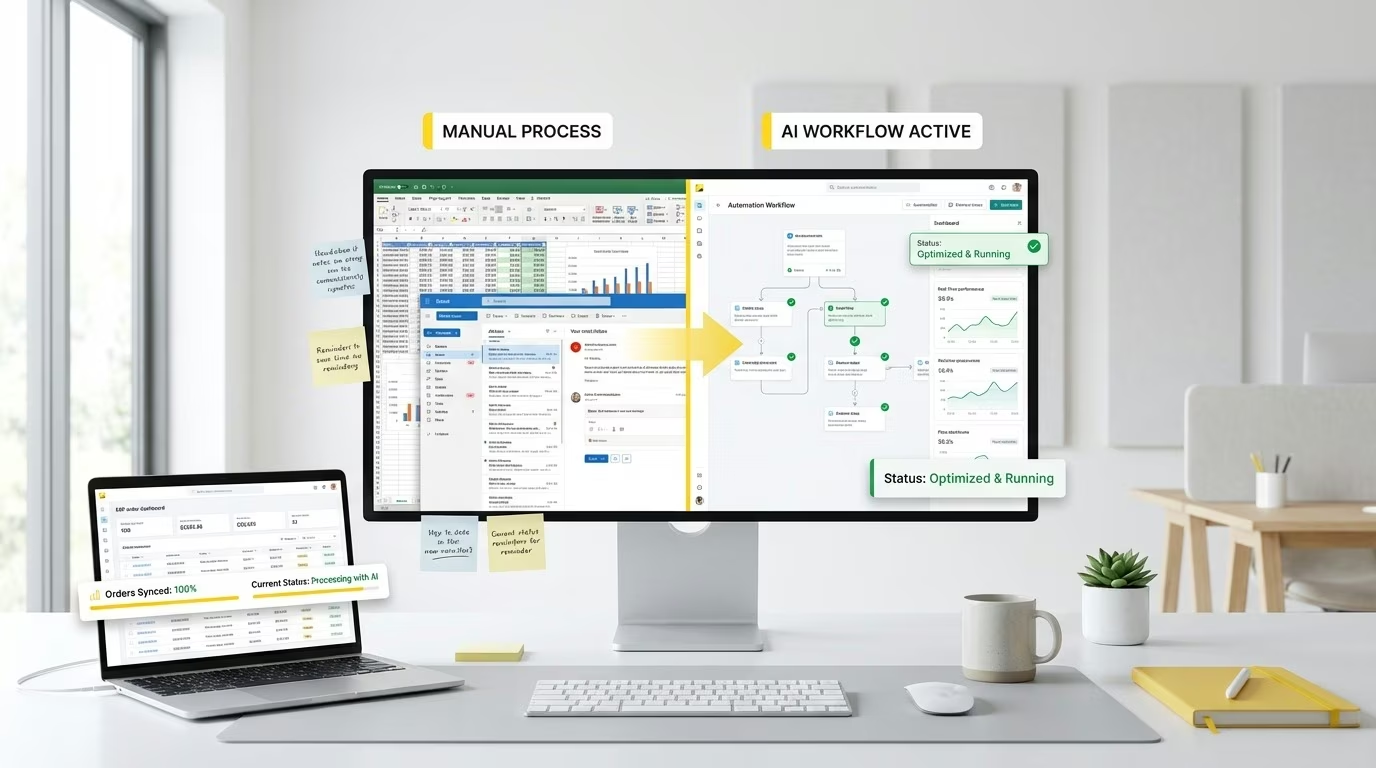
eZintegrations™ simplifies this by creating a unified AI data workflow that connects every device and system without coding. It helps enterprises convert raw IoT data into real-time insights that drive better decisions.
Here’s how manufacturers can use eZintegrations™ to integrate IoT data for smarter decision-making:
Start by connecting all IoT-enabled machines, sensors, and enterprise systems such as ERP, MES, CRM, and SCADA through eZintegrations™.
Benefit: Seamless connectivity across every manufacturing endpoint without any custom coding.
Once connected, eZintegrations™ allows you to automate data collection, validation, and synchronization between systems.
Benefit: Reduced manual effort, fewer data errors, and faster time-to-insight.
The platform’s AI-driven data workflow engine standardizes and enriches IoT data, helping teams analyze trends across production, energy use, and machine performance.
Benefit: Real-time operational visibility that supports predictive maintenance and performance optimization.
eZintegrations™ bridges IoT data with AI and machine learning tools for deeper insights.
Benefit: Smarter, data-driven decisions backed by AI-ready IoT data pipelines.
Every integration within eZintegrations™ is governed by strong encryption, user-based access controls, and audit trails.
Benefit: Complete trust and transparency in your IoT data ecosystem.

A U.S. electronics manufacturer struggled with frequent equipment failures and slow maintenance coordination. Using eZintegrations™, they connected vibration and temperature sensors to their ERP and supply-chain systems through drag-and-drop workflows.
Results within six months:
The no-code platform lets engineers integrate sensors, databases, and APIs in days not months, turning IoT data into predictive decisions.
For U.S. manufacturers, integrating IoT data is the foundation for smarter, faster, and more sustainable decisions. It transforms raw data into real business value by reducing downtime, optimizing energy use, and improving product quality.
If you’re ready to see how eZintegrations™ can connect your shop-floor data with enterprise systems and help you make smarter decisions, book a free demo today.


© Copyright 2026 Bizdata Inc. | All Rights Reserved
 Watch Demo
 Post on LinkedIn
 Post on Facebook
 Post on Twitter/X