 support@bizdata360.com
 +1-650-283-1644
 AI Enabled Data Integrations and AnalyticsAI Enabled Data Integrations and Analytics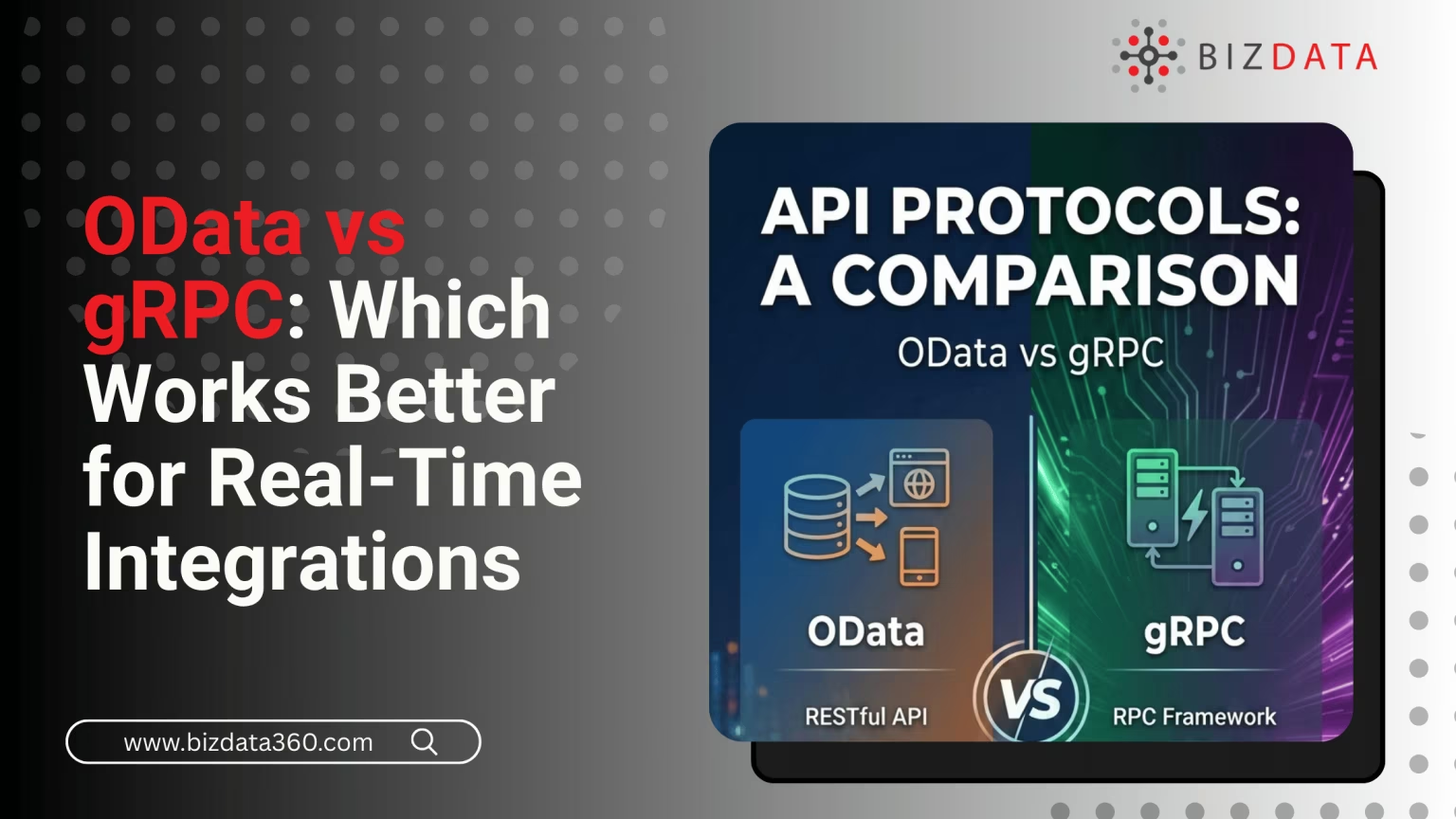

Real-time integrations are no longer optional. They are the backbone of how modern businesses move data between systems, applications, and AI workflows. The debate around OData vs gRPC has intensified as companies push for faster APIs, real-time analytics, and AI-driven automation across their tech stack.
According to real-time data integration market research, the global real-time data integration market size reached USD 13.4 billion in 2024 and is projected to grow at a 12.7% CAGR through 2033, reflecting strong demand for real-time data capabilities in enterprise digital initiatives.
Yet many teams struggle with the same pain points. APIs are fast but hard to scale. Data models break across systems. Engineering teams spend months maintaining custom integrations. Choosing the wrong protocol early often leads to performance bottlenecks or integration to sprawl later.
This blog is written for IT leaders, architects, and product teams in the US who want a practical, experience-driven comparison of OData vs gRPC. You will learn how each works, where each fits best, and how modern AI data workflow platforms like eZintegrations™ remove the risk of choosing one over the other.
TL;DR Key Takeaways
OData, or Open Data Protocol, is a standardized protocol built on HTTP and REST principles. It is designed to make data easily discoverable, queryable, and interoperable across systems.
OData is widely used in enterprise ecosystems, especially in ERP, CRM, and SaaS platforms, where structured business data needs to move reliably between systems.
OData exposes data as resources with a standardized metadata layer. This metadata allows client systems to understand the data model without custom documentation.
In real-time integrations, OData supports near real-time data access through HTTP requests, filters, pagination, and change tracking.
Key characteristics include:
Microsoft reports that OData is used across thousands of enterprise applications, including Dynamics 365 and Azure services
gRPC is a high-performance remote procedure call framework developed by Google. It uses HTTP/2 and Protocol Buffers to enable fast, binary communication between services.
Unlike OData, gRPC is not focused on data querying. It is designed for speed, efficiency, and tightly coupled service communication.
gRPC defines service contracts using Protocol Buffers. These contracts enforce strict schemas and enable bi-directional streaming between systems.
In real-time environments, gRPC shines where milliseconds matter, such as microservices, streaming data pipelines, and AI inference workflows.
Core strengths include:
According to Google Cloud, gRPC can reduce payload sizes by up to 60 percent compared to JSON-based APIs
Source:
Understanding the architectural differences is critical before deciding which protocol fits your integration strategy.
OData is data-centric. It focuses on exposing and querying business entities like customers, invoices, and orders.
gRPC is service-centric. It focuses on calling methods and executing actions between tightly coupled systems.
OData is designed for interoperability across vendors, tools, and platforms.
gRPC prioritizes performance and efficiency, often at the cost of human readability and ease of debugging.
OData allows flexible queries and evolving schemas.
gRPC enforces strict contracts, which improves reliability but requires coordinated updates across services.
For many enterprises, especially in regulated industries, integration is more about consistency and governance than raw speed.
OData fits naturally into enterprise data landscapes where multiple systems need access to shared data models.
Key Reasons Enterprises Choose OData
OData simplifies long-term integration maintenance by reducing custom code and documentation overhead.
Benefits include:
A Forrester study highlights that standardized APIs reduce integration maintenance costs by up to 30 percent
When speed and efficiency are non-negotiable, gRPC becomes the preferred option.
This is especially true in environments built around microservices, event-driven architectures, and AI workloads.
When gRPC Is the Better Choice
gRPC performs best in scenarios where systems communicate frequently and predictably.
Common use cases include:
Netflix engineering teams have shared that gRPC significantly improves internal service communication efficiency.
Ease of development and long-term scalability are often overlooked during protocol selection.
Developer Experience Comparison
OData benefits from widespread tooling, browser support, and human-readable responses.
gRPC requires specialized tooling and deeper technical expertise, especially for debugging.
Scaling Across Teams and Systems
OData scales well across diverse teams and vendors.
gRPC scales efficiently within controlled environments where teams follow shared contracts.
According to Stack Overflow’s Developer Survey, REST-based APIs remain more widely adopted than RPC frameworks.
Choosing between OData vs gRPC should not force you into a rigid architecture. This is where eZintegrations™ changes the equation.
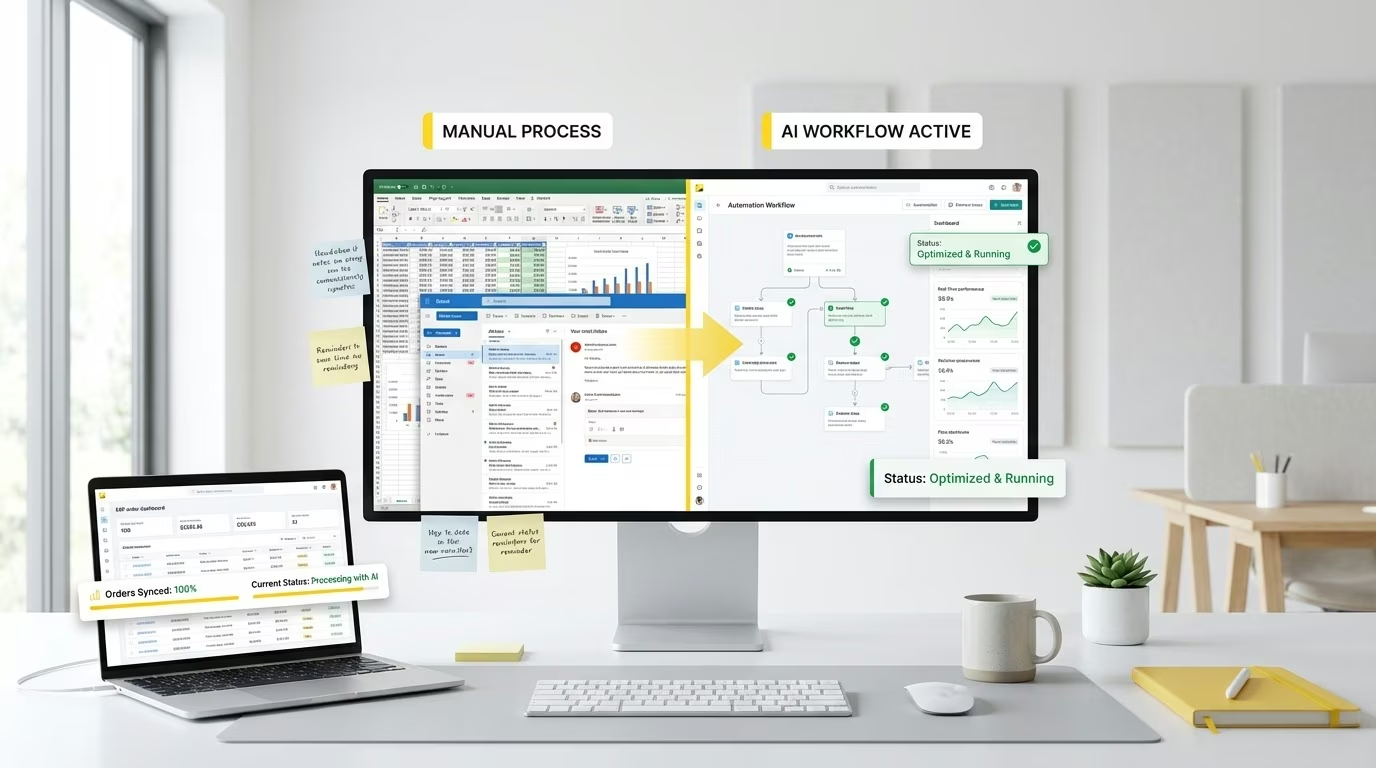
eZintegrations™ is a no-code AI data integration and workflow automation platform designed to support multiple protocols without locking teams into one approach.
eZintegrations™ enables enterprises to:
One US-based SaaS company used eZintegrations™ to unify CRM data exposed via OData with internal gRPC services powering real-time recommendations. This reduced integration build time from months to weeks while improving data consistency across teams.
There is no universal winner in the OData vs gRPC debate. The right choice depends on your business priorities.
Choose OData If:
Choose gRPC If:
Use Both If:
This hybrid approach is increasingly common in US enterprises adopting AI and automation at scale.
The real question is not OData vs gRPC. It is how fast your business can adapt without rewriting integrations every year.
Enterprises that win in 2026 and beyond focus on flexibility, governance, and speed together. They use the right protocol for the right job and rely on platforms that remove complexity.
If you want to future-proof your real-time integrations, enable AI workflows, and reduce integration debt, eZintegrations™ gives you that foundation. Book a free demo of eZintegrations™ and see how US enterprises build real-time, AI-ready integrations without locking themselves into one protocol.
Recommend Blogs:
FAQs: OData vs gRPC Explained for AI and Real-Time Integrations
Is OData real-time?
OData supports near real-time access through HTTP and change tracking, but is not designed for ultra-low-latency streaming.
Is gRPC better than REST?
gRPC is faster and more efficient, but harder to debug and less interoperable than REST-based protocols like OData.
Can OData and gRPC be used together?
Yes. Many enterprises use OData for data access and gRPC for internal service communication.
Which is better for AI workflows?
gRPC is ideal for real-time AI inference, while OData works better for feeding structured training and reporting data.
How does eZintegrations™ help with protocol complexity?
eZintegrations™ abstracts protocol differences and enables AI-driven workflows across OData, gRPC, and other APIs without custom code.


© Copyright 2026 Bizdata Inc. | All Rights Reserved
 Watch Demo
 Post on LinkedIn
 Post on Facebook
 Post on Twitter/X