 support@bizdata360.com
 +1-650-283-1644
 AI Enabled Data Integrations and AnalyticsAI Enabled Data Integrations and Analytics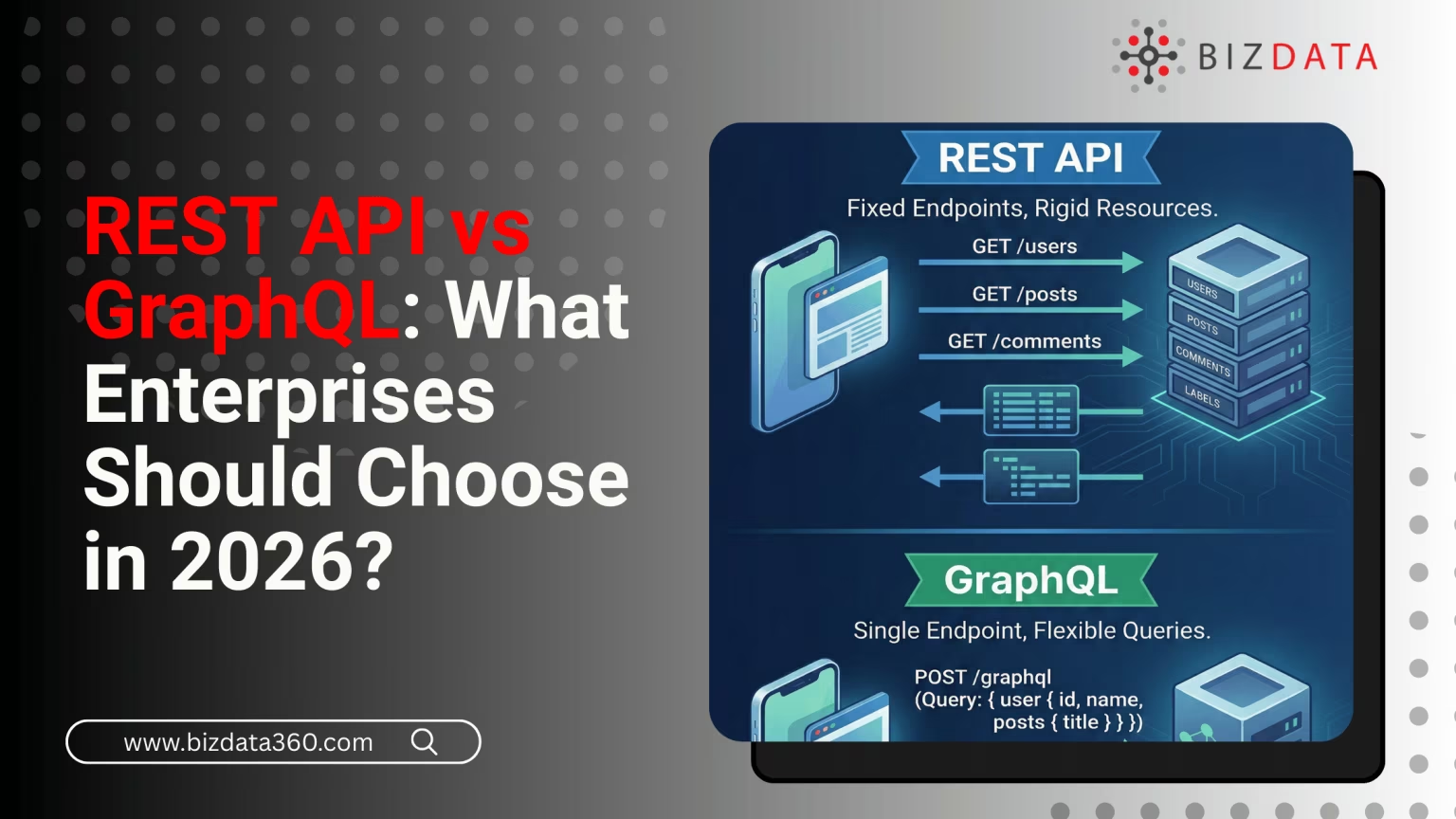

REST API vs GraphQL isn’t just a buzz topic in developer circles. It’s a strategic choice that shapes how enterprises build scalable, efficient, and modern digital systems. In 2026 and heading into 2026, REST APIs still lead with widespread use, but GraphQL adoption is accelerating fast enterprise usage is growing more than 340 percent since 2023, and nearly half of new API projects now consider GraphQL first. JSON Console
If you’re responsible for architecture decisions, digital product strategy, or integration platforms in an enterprise, understanding the practical differences, strengths, and trade-offs between REST and GraphQL could make or break performance, developer productivity, and long-term agility.
This post digs deep into REST API vs GraphQL, explains the differences, answers the key question about what enterprises should choose in 2026, and shows how solutions like eZintegrations™ help bridge gaps and deliver real value.
Key Takeaways
A REST API (Representational State Transfer) follows a resource-oriented architecture built on standard HTTP methods (GET, POST, PUT, DELETE). It’s simple, predictable, and supported everywhere—making it the go-to choice for decades.
Enterprises value REST for:
GraphQL is a query language and runtime that lets clients request exactly what they need in a single call. It moves away from fixed endpoints and instead uses a schema where clients define their data requirements.
GraphQL strengths include:
According to industry data, GraphQL usage is on the rise, with more enterprises adopting it for data-heavy applications and mobile backends.
Why Is REST Still Dominant in Enterprises?
REST isn’t ancient; it keeps evolving with toolchains and best practices that address modern API needs.
GraphQL’s adoption is accelerating because:
Nearly half of the new API projects say they’re considering GraphQL as the primary option.
Here’s a clear comparison covering the most relevant factors enterprises care about today:
REST API vs GraphQL Differences
REST API
GraphQL API
Both models have unique strengths. REST offers stability and predictability. GraphQL gives flexibility where many clients want customized views on the same dataset.
Instead of “GraphQL is better than REST,” the smarter question is when to use each:
Use REST When
Use GraphQL When
In many enterprises, the best choice is not one or the other but a hybrid architecture that uses both where they fit best.
Performance depends on use cases.
GraphQL excels when:
REST excels when:
Benchmarks show GraphQL can reduce bandwidth use and speed complex queries, but simple REST endpoints are still faster for straightforward data fetches.
gRPC is another API option often compared with REST and GraphQL:
Each has its place. Enterprises often use combinations depending on architecture requirements.
Enterprises face real pain points when managing APIs:
That is where eZintegrations™ shines:
With eZintegrations™, enterprises can focus on delivering value instead of wrestling with API complexity.
Different platforms have unique API ecosystems:
Choosing the right API impacts performance, developer experience, and time to market.
From SEO and data strategy perspectives:
Both technologies help eZintegrations™ deliver faster, more responsive digital experiences.
In 2026, the REST API vs GraphQL choice won’t be about picking one winner. It’s about understanding your enterprise needs and using the right tool for the job. REST remains the backbone for many systems, and GraphQL is a powerful complement for data-rich and flexible API needs.
eZintegrations™ brings together the best of both worlds and helps you build adaptable, performant, and secure API ecosystems. If you’re ready to streamline your integrations and unlock better data connectivity, book a quick demo of eZintegrations™ today.
Recommend Blogs:
Frequently Asked Questions (FAQ)
What is the main difference between REST API vs GraphQL?
REST is resource-oriented with fixed endpoints. GraphQL is query-centric and flexible, letting clients request just what they need.
Does GraphQL replace REST?
Not completely. Enterprises often use both depending on project needs.
Is GraphQL faster than REST?
It depends on the context. For complex data, GraphQL can reduce data transfer, but REST may respond faster for simple calls.
What are the pain points GraphQL solves?
It eliminates over-fetching and supports dynamic queries across complex data relationships.
Is REST easier to implement than GraphQL?
Generally, yes, because REST leverages common HTTP patterns and requires less upfront schema design.


© Copyright 2026 Bizdata Inc. | All Rights Reserved
 Watch Demo
 Post on LinkedIn
 Post on Facebook
 Post on Twitter/X