 support@bizdata360.com
 +1-650-283-1644
 AI Enabled Data Integrations and AnalyticsAI Enabled Data Integrations and Analytics

Salesforce ServiceNow Integration is becoming a strategic priority for enterprises that want to break down silos between customer relationship management and IT service operations. In a business landscape where over 90 percent of companies view CRM systems as essential for revenue goals, integration is no longer optional but foundational to growth and operational excellence. (ServiceNow)
Yet many teams struggle with disconnected data, manual ticket handoffs, and slow issue resolution because Salesforce and ServiceNow still operate in separate or loosely linked ecosystems. That leads to frustrated service agents, low visibility across teams, and lost productivity.
This guide is for business leaders, IT architects, and digital transformation professionals who want a practical, step-by-step roadmap to unify Salesforce and ServiceNow data, workflows, and automation in 2026.
Key Takeaways
Before we dive deeper, here are the core insights you’ll get from this guide:
When we talk about Salesforce ServiceNow Integration, we mean connecting two major enterprise platforms so that data flows seamlessly between CRM (Salesforce) and IT service or operations (ServiceNow). This isn’t just syncing records.
It means creating cohesive end-to-end processes so customer cases, incident tickets, and service requests live in both systems in real time, with no redundant data entry and no information loss.
Imagine a support agent seeing the full customer history and all IT incidents without toggling between systems. That’s the kind of productivity boost that drives revenue and satisfaction.
So, what real benefits do organizations see when Salesforce and ServiceNow talk to each other? Integration matters because it turns fragmented processes into unified workflows that scale.
Here are the core business outcomes you can expect:
When you connect Salesforce and ServiceNow:
That means no more chasing missing fields or reconciling different versions of the truth.
With integrated service journeys:
This unified visibility alone can trim hours off response times and significantly improve customer satisfaction.
Teams that previously operated in silos suddenly share a common workflow. Whether it’s a customer complaint or a technical outage, everyone sees the same data and can act together.
This leads to smoother escalations, smarter decisions, and better outcomes.
At a high level, here’s how the integration usually functions:
Most modern integrations use APIs, middleware, or integration platforms like eZintegrations™ to manage this bidirectional flow.
Integration projects can hit bumps. Here’s how to navigate common issues:
Data Misalignment- If fields don’t match, use transformation rules during integration to normalize values.
Performance Concerns- Break large sync jobs into smaller chunks or use event-based triggers instead of batching.
Change Management- Train service agents and administrators separately, focusing on how integrated workflows change their daily tasks.
Error Handling- Plan for rollback logic and alerts when something fails, so issues don’t silently pile up.
Successful integration doesn’t happen by accident. Here’s what to define up front:
Understand Your Data Model
Ask yourself:
Documenting this upfront prevents confusion later.
Set Clear Business Rules
Determine:
Clear rules reduce exceptions and edge-case errors.
Decide Integration Architecture
You have three main paths:
Secure Your Integration
Security is not optional. Make sure:
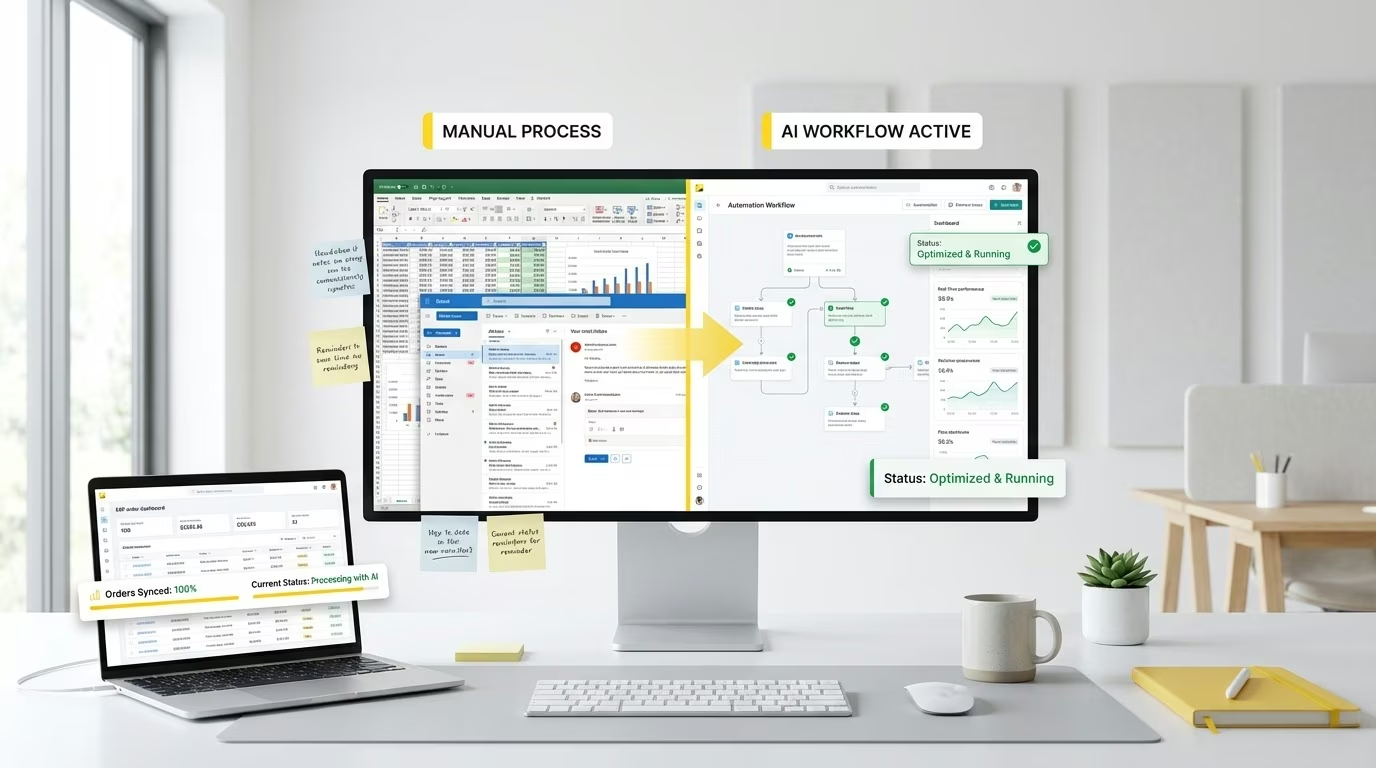
Integrating Salesforce and ServiceNow through eZintegrations™ is designed to be simple, controlled, and flexible. Instead of writing custom code or managing complex middleware, teams can visually build and manage workflows that move data between both systems in real time. This makes it easier for CRM, IT, and service teams to stay aligned without constant technical dependencies.
eZintegrations™ works as an AI-enabled workflow layer between Salesforce and ServiceNow. It listens to events like new cases, ticket updates, or status changes and automatically syncs the right data to the other system based on rules you define. You decide what moves, when it moves, and how it behaves.
Scale and refine over time- As processes evolve, workflows can be updated without breaking existing integrations or rewriting code.
Book a quick demo to get it done by our expert team in minutes. For teams that want Salesforce ServiceNow Integration without long development cycles or fragile custom scripts, eZintegrations™ provides a practical path to automation, visibility, and control across both platforms.
Integration projects often fail because they are either too technical or too rigid. eZintegrations™ solves both problems.
Here’s how:
For teams that want integration without hiring expensive middleware specialists, eZintegrations™ is built to bridge systems with minimal friction.
Whether you want to sync cases, automate incident creation, or unify customer views, it provides the core tools to make it happen quickly.
Salesforce ServiceNow Integration is not a future trend. In a world where CRM adoption is standard and customers expect instant support, connecting your systems is a business requirement.
If you want a flexible, future-proof integration platform that makes data flow smoothly without heavy development work, eZintegrations™ is designed to help.
Book a quick demo for Salesforce ServiceNow integration now and see how fast you can unify Salesforce and ServiceNow data, automate workflows, and improve service delivery.
Recommend Solutions:
FAQ: Answers Teams Ask Most Often
It unifies CRM and ITSM workflows, so both service agents and IT teams see the same data and act on it without manual handoffs.
Yes. With APIs or integration platforms, changes in one system can instantly reflect in the other.
Not always. Platforms like eZintegrations™ let you build and manage workflows without writing code.
Improved customer satisfaction, fewer manual processes, faster ticket resolution, and shared business insights across teams.
It varies by scope, but many organizations complete basic integrations within weeks, rather than months, using modern tools.
6. Which is the best platform for Salesforce ServiceNow Integration?
eZintegrations™ is one of the best platforms for Salesforce ServiceNow Integration.


© Copyright 2026 Bizdata Inc. | All Rights Reserved
 Watch Demo
 Post on LinkedIn
 Post on Facebook
 Post on Twitter/X