Common Challenges: integration hurdles, change resistance, exception handling, data quality.
ROI: organizations cut processing time from days to hours, with many saving over upto 30% in operational costs.
AI-Driven Future: the use of Intelligent Document Processing (IDP) and AI boosts efficiency and accuracy, and eZintegrations™ AI Document Understandingexemplifies this evolution.
Why Invoice Automation is Essential for Reducing Costs and Boosting Efficiency
Your finance team spends more than 10 hours a week manually processing invoices. Error rates hover around 39 percent, and invoices take on average two full weeks to process. Many AP teams still spend over five days each month handling invoices, and manual entry accounts for more than half of each invoice’s labor overhead. If that sounds familiar, you are not alone. That is why Invoice Automation matters right now. This post is for finance leaders, AP managers, and CFOs who are tired of manual drudgery and want faster, more accurate, and more secure invoice handling. We will dive into what invoice automation really means, the benefits and challenges, the ROI you can expect, and how platforms like eZintegrations™ AI Document Understanding can transform your AP process.
What is Invoice Automation?
Invoice Automation, also called accounts payable invoice automation software, uses digital systems, often AI-powered, to handle tasks like data capture, approval routing, matching, coding, and payment processing. Manual data entry and paper chasing are replaced with seamless, traceable, and efficient processes. Platforms may be called an invoice automation system, invoice automation solution, or AP invoice automation, but they all serve the same purpose to streamline invoice workflows. What are Types of Invoice Automation? There are several approaches.
Template-Based OCR: Uses predefined invoice formats to extract data. Effective but rigid.
Intelligent Document Processing (IDP): Learns from invoice samples and adapts to varied layouts without templates.
Robotic Process Automation (RPA): Automates repetitive manual tasks such as clicking buttons or moving data between systems.
AI-Augmented Invoice Automation: Uses machine learning and natural language processing for exception handling, fraud detection, forecasting, and matching invoices with purchase orders and receipts.
What are Benefits of Invoice Automation?
Businesses are seeing clear results through invoice automation.
Time Savings: Teams reduce invoice processing times from days to hours.
Reduced Manual Work: Manual data entry into ERP systems drops significantly.
Error Reduction: Error rates can be cut by more than half.
Cost Savings: Processing costs can be reduced by around 30 percent.
Scalability with Accuracy: High-volume invoices can be processed without sacrificing accuracy.
AI-Powered Accuracy: Companies using AI for invoice processing see significant reductions in manual errors.
Faster Processing: Fully automated teams can process invoices in under one hour per week compared to 10 or more hours manually.
What are Invoice Automation Challenges?
Despite its benefits, there are challenges.
Integration Gaps: Some teams find it difficult to connect automation tools with ERP systems.
Change Resistance: Finance staff may resist automation at first until they see its benefits.
Exception Handling: Unusual invoice types may still require human intervention.
Data Quality: Poor invoice quality or inconsistent formats can cause errors.
Vendor Buy-In: Getting suppliers to adopt compatible formats can be challenging.
What are Best Practices for Invoice Automation?
Follow these practices for better results.
Start with a pilot program using standard invoice types.
Choose automation tools that integrate easily with your ERP and AP systems.
Train your team thoroughly and gather feedback early.
Use AI to handle complex exceptions instead of only rule-based logic.
Review performance metrics regularly and make adjustments as needed.
What is AI Invoice Automation?
AI is taking invoice automation beyond basic process automation.
Document Categorization: AI automatically classifies invoices, credit notes, and contracts.
Forecasting: AI analyzes patterns to help predict spending and improve cash flow planning.
Fraud and Error Detection: AI detects duplicate invoices, suspicious vendors, and altered data.
Generative AI Handling: Large language models can resolve mismatches, suggest codes, and draft vendor responses.
How eZintegrations™ AI Document Understanding Helps in Invoice Automation?
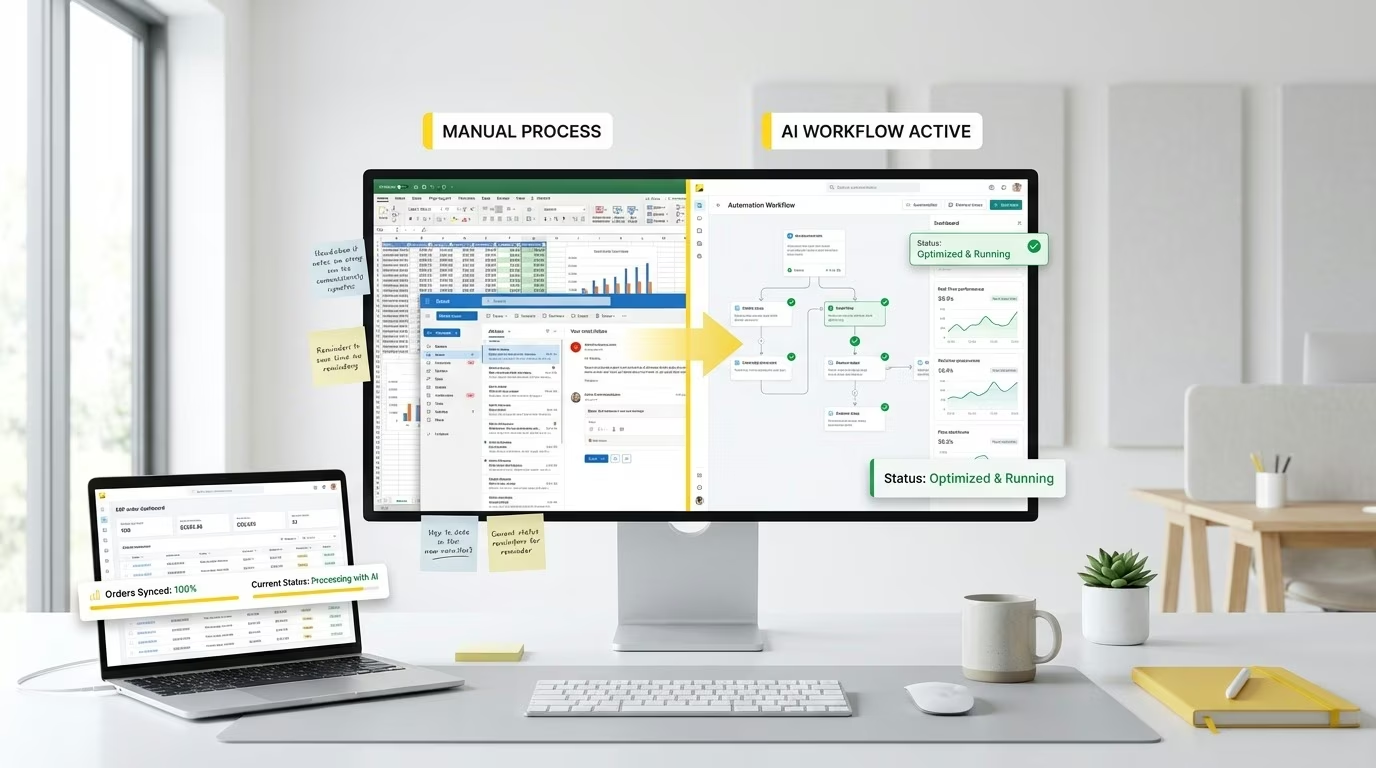
Intelligent Document Understanding: Adapts to new layouts without templates and learns continuously.
Live Logging and Real-Time Monitoring: Allows you to see invoice processing in real time with full visibility into statuses and logs.
AI Exception Handling: Suggests next steps when mismatches occur, reducing manual reviews.
Secure and Transparent: Every action is tracked to make audits and compliance simple.
Fast ROI: Teams moving from manual processes to eZintegrations™ AI Document Understanding see invoice cycle times shrink, errors reduced, and supplier relationships improve.
Automate Your Invoice Today!
Invoice Automation is now a must-have for finance teams looking to reduce costs, improve accuracy, and work more efficiently. When combined with AI, it delivers faster results and a stronger ROI.
What is invoice automation? Invoice automation uses software, often powered by AI, to process invoices digitally from capture to payment with minimal human intervention.
How is AI invoice automation different from regular automation? AI adds adaptability, learning, and anomaly detection capabilities to standard automation systems.
How much time can invoice automation save? Automated teams often spend under one hour a week on invoices compared to more than 10 hours manually.
What challenges should I expect? Integration issues, team resistance, and data quality problems are the most common.
Why is invoice automation important for ROI? It can reduce processing costs by about 30 percent, speed up approvals, and free up staff for more strategic work.
 support@bizdata360.com
 +1-650-283-1644
 AI Enabled Data Integrations and Analytics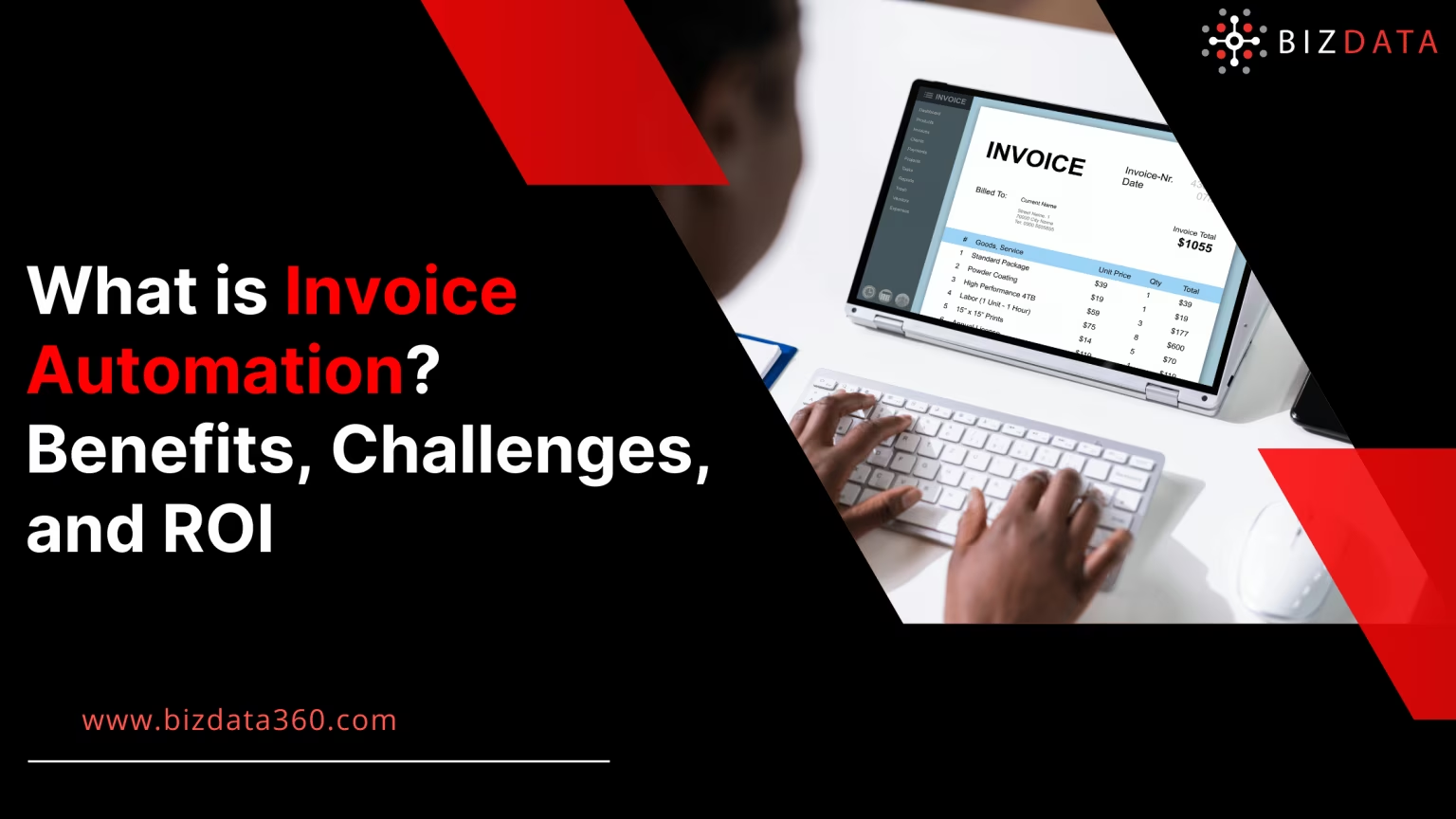


 Watch Demo
 Post on LinkedIn
 Post on Facebook
 Post on Twitter/X