 support@bizdata360.com
 +1-650-283-1644
 AI Enabled Data Integrations and AnalyticsAI Enabled Data Integrations and Analytics

Salesforce Integration is no longer just a luxury for enterprises; it is a critical requirement for any organization that aims to operate efficiently, precision, and scalability. According to a 2026 Forbes article, many organizations are now navigating a sprawling “SaaS mess,” where IT teams may spend over one-third of their time maintaining custom integrations costing anywhere from $5,000 to $20,000 per connection. Integration defects can take up to thirteen days to resolve
In this guide, we will explore everything you should need to know about Salesforce Integration in 2026, from understanding its architecture and capabilities to mastering best practices and harnessing AI-driven tools like eZintegrations™ and Goldfinch AI. We will also cover common use cases such as Concur Salesforce Integration, HubSpot Salesforce Integration, and Jira to Salesforce Integration, making sure you find actionable, authoritative answers to your questions.
Salesforce Integration is the practice of connecting your Salesforce CRM with external platforms and data sources. In a world where businesses operate across ERP, SaaS, marketing, HR, and collaboration platforms, integrating Salesforce ensures that vital information can move between platforms reliably and securely.
Modern Salesforce Integration is about more than just making connections. It is about aligning data across platforms, ensuring accuracy, enriching profiles, and leveraging AI for actionable insights. In today’s competitive digital environment, it gives businesses a distinct edge, allowing them to operate as a unified, intelligent enterprise.
Salesforce Integration is powered by different architecture patterns, each suited for a specific purpose. The architecture you choose determines how data flows across platforms and how your enterprise can adapt to growing complexity.
Modern platforms utilize:
Each approach has its benefits. Choosing the right one depends on your organization’s data volume, complexity, and long-term scalability needs.
Salesforce Integration is more than a link between platforms. It is a robust ecosystem of capabilities that enable seamless connections across SaaS platforms, ERP instances, marketing platforms, and more. These capabilities empower businesses to streamline their digital backbone and reduce costly delays caused by fragmented data.
With these capabilities, businesses can operate within a highly connected, intelligent ecosystem.<
Salesforce Integration is critical because it empowers teams to operate in a single, trusted environment where every piece of data can be leveraged for growth. Without seamless connections, businesses struggle with duplicated efforts, delayed reporting, and lost opportunities.
Modern businesses are highly fragmented, relying on platforms for marketing, sales, ERP, customer service, collaboration, and more. Integration ensures these platforms can:
In 2026 and beyond, Salesforce Integration is an essential investment for any enterprise looking to operate efficiently, make data-driven decisions, and stay competitive.
An Application Programming Interface (API) is the bridge that allows platforms like Salesforce and ERP, SaaS, or marketing platforms to talk to each other. APIs define the protocols and data structures that enable seamless connections across platforms.
In the context of Salesforce Integration:
APIs are the foundation upon which platforms like eZintegrations™ build seamless connections, making Salesforce an intelligent and connected ecosystem.
Salesforce Integrations can be classified into four core types, making it easier for enterprises to select the right approach based on their needs:
Each approach serves a distinct purpose within the enterprise, making it essential for decision-makers to understand their benefits and constraints.
Salesforce Integration operates by connecting platforms through APIs and leveraging middleware platforms like eZintegrations™ for seamless data orchestration. The process involves:
Modern platforms like eZintegrations™ enable businesses to implement these steps quickly, reliably, and with intelligent AI support, making the process highly accessible for even complex multi-platform environments.
There are several common patterns used in Salesforce Integration, and choosing the right one depends on how data needs to move across platforms:
Each of these patterns provides a foundation for making intelligent and resilient connections across the enterprise.
Salesforce Integration delivers a range of benefits that can transform how enterprises operate. When implemented correctly, it allows businesses to:
With these benefits, businesses can operate with precision, efficiency, and scalability.
Modern enterprises utilize Salesforce Integration across departments, making it one of the most versatile tools available. Common scenarios include:
Each scenario showcases how seamless connections can enable a more productive and resilient digital ecosystem.
While the benefits of Salesforce Integration are compelling, it doesn’t come without its challenges. Some common obstacles that organizations face include:
Modern platforms like eZintegrations™ and Goldfinch AI help overcome these challenges by providing intelligent error detection, automated data enrichment, and seamless connectivity across platforms.

For successful Salesforce Integration, it is vital to adopt best practices:
With best practices in place, businesses can build highly resilient, future-ready platforms.
Modern Salesforce Integration relies on platforms that can enable seamless connections across SaaS platforms, ERP instances, and databases. Here are the best tools:
With platforms like eZintegrations™ and Goldfinch AI, Salesforce Integrations can evolve from routine connections to intelligent, AI-driven ecosystems.
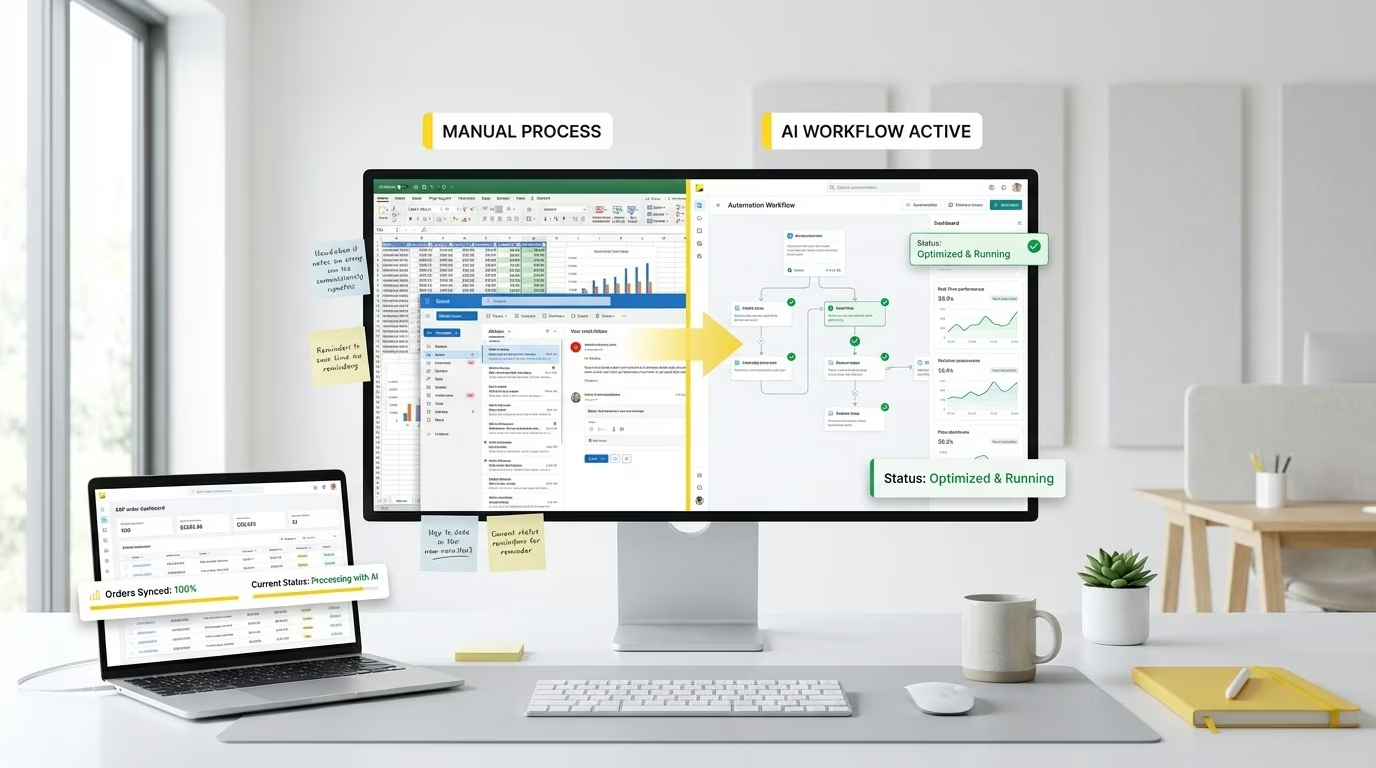
Modern enterprises now utilize automation platforms within Salesforce Integration, making repetitive tasks a thing of the past. These platforms enable:
With platforms like eZintegrations™ combined with Goldfinch AI, automation goes beyond simple connections; it becomes an intelligent, self-improving data ecosystem.
Salesforce Integration is powered by APIs, and understanding the differences between SOAP and REST is vital. For most businesses, REST APIs are ideal for modern SaaS connections, making platforms like eZintegrations™ highly relevant for 2026 and beyond.

eZintegrations™ has emerged as one of the best platforms for making Salesforce Integration seamless, intelligent, and highly customizable. It empowers enterprises to:
With eZintegrations™, businesses can operate as a connected enterprise, making their Salesforce CRM the central hub for intelligent, AI-driven connections.
Salesforce Integration is the key to making enterprise platforms smarter, more connected, and more productive. In 2026 and beyond, platforms like eZintegrations™ and Goldfinch AI enable seamless connections across SaaS platforms, ERP instances, and marketing platforms, making AI-driven connections the new standard for enterprise success.
If you are a technical professional looking to revolutionize your Salesforce Integration strategy, it is time to experience the future with eZintegrations™.
Book a free demo of eZintegrations™ today and unlock seamless connections across platforms like Concur, HubSpot, NetSuite, Mailchimp, Jira, RingCentral, Zoom, Calendly, QuickBooks, and more.
What is Data Integration? AI & Real-time Solutions, Guide 2026
SaaS Data Integration in 2026: Best Practices, Tools, and Trends
AI Data Integration Explained: Smarter, Faster Automation for 2026
Q1. What is Salesforce Integration?
Salesforce Integration connects Salesforce with platforms like ERP, SaaS, and marketing platforms, making data available across platforms.
Q2. What are common Salesforce Integrations?
Common integrations include Concur, HubSpot, Mailchimp, Marketo, Zendesk, Jira, QuickBooks, RingCentral, Calendly, and Docusign.
Q3. What are the best practices for Salesforce Integration?
Best practices include focusing on data quality, choosing platforms like eZintegrations™ and Goldfinch AI, and building error detection and alerting into every workflow.
Q4. What is the difference between REST and SOAP APIs?
REST uses JSON and is ideal for mobile platforms, while SOAP is XML-based and better suited for legacy enterprise platforms.
Q5. How can eZintegrations™ help with Salesforce Integration?
eZintegrations™ provides no-code connections, AI enrichment, error detection, and seamless connections across platforms.
Q6. What programs integrate with Salesforce?
Salesforce integrates with tools like HubSpot, Mailchimp, NetSuite, Jira, QuickBooks, Zoom, and more.


© Copyright 2026 Bizdata Inc. | All Rights Reserved
 Watch Demo
 Post on LinkedIn
 Post on Facebook
 Post on Twitter/X