 support@bizdata360.com
 +1-650-283-1644
 AI Enabled Data Integrations and AnalyticsAI Enabled Data Integrations and Analytics

Automation is now mission critical. Enterprises face constant pressure to connect systems, unify data, and reduce manual workflows. Yet, the path to seamless integration isn’t easy.
According to Marketsand Markets, the global integration platform-as-a-service (iPaaS) market is projected to grow from $9.6 billion in 2024 to $22.9 billion by 2028, driven by enterprises adopting cloud-first, AI-driven operations.
But here’s the problem: most organizations are still burdened by:
MuleSoft, has been a go-to choice for large enterprises. Yet, MuleSoft pricing, its reliance on certified developers, and Salesforce-centric architecture make it a heavyweight option with limited agility.
That’s why many IT leaders are asking: Is MuleSoft still the right choice in 2026, or is it time to switch to eZintegrations™?
MuleSoft is a Salesforce-owned software company that provides an integration platform for connecting applications, data, and devices. Its most popular product is the MuleSoft Anypoint Platform, which allows businesses to design, build, and manage APIs.
MuleSoft enables:
MuleSoft has become a trusted name in integration, especially for large organizations adopting Salesforce MuleSoft solutions. However, its complexity has also created demand for more user-friendly, AI-driven platforms.
The MuleSoft logo is instantly recognizable and associated with API-led integration leadership. Its brand credibility stems from being part of Salesforce and its long history in enterprise middleware.
Yet brand recognition doesn’t automatically translate to the best business fit. Many organizations now need lightweight, affordable, AI-enabled solutions, areas where MuleSoft lags behind competitors like eZintegrations™.
To successfully deploy MuleSoft, businesses often need MuleSoft training and certification programs for IT staff.
This training-heavy requirement adds to MuleSoft’s Total Cost of Ownership, making it less attractive for companies with lean IT teams.
MuleSoft pricing is based on cores or vCores, which can escalate quickly as integration workloads expand.
For SMBs and mid-market companies, MuleSoft pricing often makes it financially unviable.
The MuleSoft Anypoint Platform is the core of MuleSoft’s offerings. It provides:
While robust, Anypoint requires specialized expertise and is more middleware-heavy than modern no-code integration tools like eZintegrations™.
MuleSoft APIs are central to its architecture. The platform allows businesses to build APIs for applications and systems to communicate.
MuleSoft also provides an Identity Provider (MuleSoft IDP) for secure authentication and role-based access. These features ensure compliance but add to platform complexity.
System integrators like Deloitte often recommend MuleSoft as part of their enterprise middleware blueprint.
While effective for global enterprises, this blueprint:
Smaller organizations often find this approach misaligned with their need for agile, AI-ready automation.
MuleSoft competitors include:
Among these, eZintegrations™ stands out by combining data integration with AI workflows, something MuleSoft and others do not natively offer.
eZintegrations™, developed by Bizdata, is a cloud-based, no-code AI data integration, Workflow automation platform designed to meet modern automation needs.
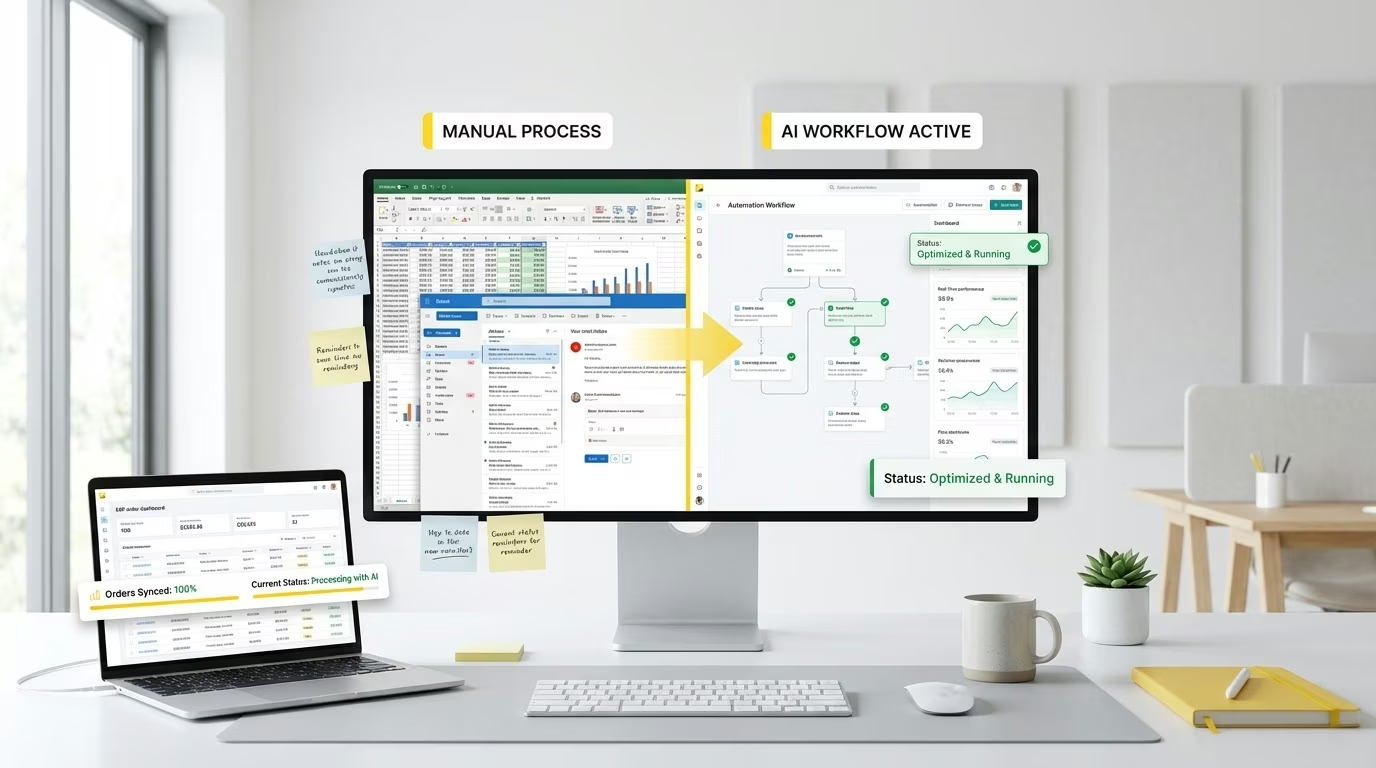
Unlike MuleSoft, which is middleware-centric, eZintegrations™ is designed for AI-first enterprises looking to move faster and at a lower cost.

A global healthcare provider needed to automate patient record management.
The result was a 70% reduction in manual data entry time and compliance-ready automation without the heavy overhead of MuleSoft.
The choice between MuleSoft vs eZintegrations™ depends on your organization’s size, budget, and automation goals.
MuleSoft is powerful but comes with high costs, complexity, and vendor lock-in. eZintegrations™ is designed for the modern enterprise, offering no-code, AI-powered, and affordable workflows that deliver faster results.
Book your free demo of eZintegrations™ today and see how your business can automate smarter.
Recommend Reading:
10 AI-Agentic Integration Trends Transforming Enterprise Systems in 2026
7 Top Data Integration Challenges & Solutions for Enterprises in 2026
AI Workflow Automation: Tools, Best Practices, Guide 2026
Q1: What is MuleSoft used for?
MuleSoft is used for API-led integration, connecting applications, data, and devices across enterprise systems.
Q2: Is MuleSoft expensive?
Yes. MuleSoft pricing is high due to licensing, training, and consulting costs.
Q3: What are MuleSoft competitors?
Competitors include eZintegrations™, Dell Boomi, SnapLogic, and Workato.
Q4: How is eZintegrations™ different from MuleSoft?
eZintegrations™ is no-code, AI-powered, faster to deploy, and more cost-efficient than MuleSoft.
Q5: Does eZintegrations™ support Salesforce integration?
Yes, eZintegrations™ integrates Salesforce along with ERP, CRM, SaaS, APIs, and databases.


© Copyright 2026 Bizdata Inc. | All Rights Reserved
 Watch Demo
 Post on LinkedIn
 Post on Facebook
 Post on Twitter/X