 support@bizdata360.com
 +1-650-283-1644
 AI Enabled Data Integrations and AnalyticsAI Enabled Data Integrations and Analytics

Enterprise Data Workflows are at the heart of how modern businesses move, process, and act on information. Yet many organizations still rely on manual or semi-automated processes that drain time, inflate costs, and slow decision-making.
Research shows that companies that fully adopt workflow automation can reduce operational expenses by 10% to 50% and cut error rates dramatically compared to manual workflows. This matters because cost pressure is intensifying, and data workloads continue to grow across finance, HR, supply chain, and operations teams.
In this blog, you will learn how to automate enterprise data workflows to lower costs, improve throughput, and free teams to focus on value-added work. We will explain what enterprise data workflows are, why automation matters, the key steps in automating them, and how eZintegrations™ helps enterprises achieve these outcomes with less friction.
TLDR Key Takeaways
Before we dive deeper here are the essentials:
Enterprise Data Workflows describe the flow of data across systems like ERPs, CRMs, databases, APIs, and reporting tools. These workflows orchestrate how information is collected, transformed, validated, and delivered to downstream processes. In many enterprises, these steps are fragmented and rely on spreadsheets, manual handoffs, or custom scripts.
Manual approaches to data pipelines cause several common pain points:
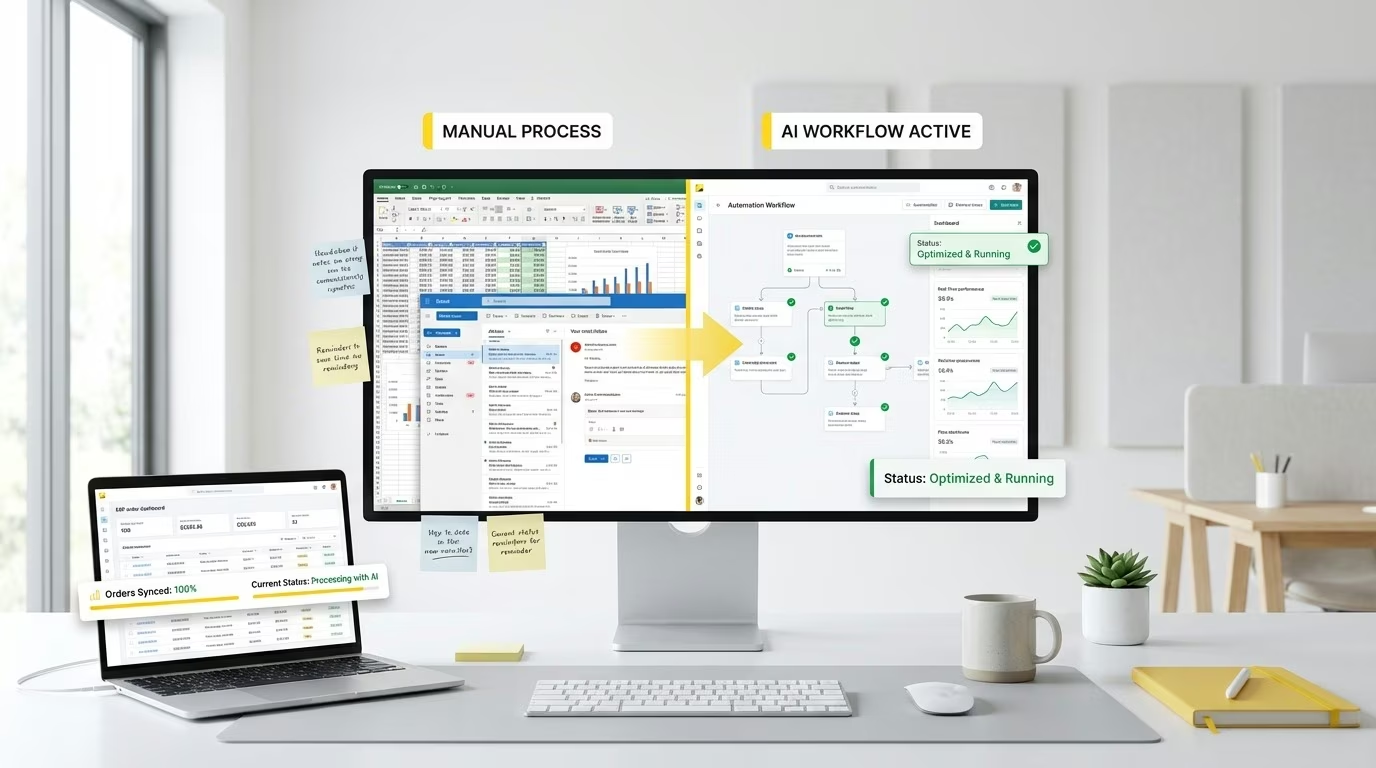
Automation changes this by building repeatable, reliable paths, so data flows without human intervention, with real-time checks built in.
Transforming how data flows through your business lowers operational costs in multiple ways:
Automation Reduces Manual Work and Errors
Automating repetitive activities like data extraction, transformation, and routing eliminates the need for costly manual effort. Manual data tasks not only take time but also introduce mistakes that require rework and lead to higher costs. Enterprises that implement workflow automation see measurable drops in error rates and labor costs.
Faster Turnaround and Operational Efficiency
Automated workflows operate around the clock and complete tasks faster than humans. This accelerates downstream processes, such as reporting, compliance checks, and analytics, which means teams spend less time waiting and more time acting on insights.
Scalability Without Proportional Headcount Growth
As data volumes grow, manual processes require more staffing and overhead. Automated workflows scale effortlessly because they process data reliably whether it is hundreds of records or millions, keeping costs in check even as demands increase.
Better Compliance and Lower Risk
Automated workflows enforce rules and audit trails inherently. This reduces the cost of compliance audits and minimizes financial risk due to errors or missed processes.
ROI from Automation Investments
According to industry research, businesses investing in workflow automation report returns that include significant cost savings and productivity gains within the first year.
The journey from manual to automated workflows can feel overwhelming. Here is a step-by-step approach to guide you:
Before automation, you must understand where delays and costs occur. Map out existing data workflows and highlight:
This gives you a baseline for improvement.
Not all automation tools are created equally. Modern approaches include:
Automation depends on good connectivity. You need systems to share data reliably and in real time.
This is where eZintegrations™ shines. It provides prebuilt connectors to ERPs, CRMs, databases, cloud apps, APIs, and more, unifying data flows without writing code. You can build workflows visually and deploy them rapidly.
Start with high-impact workflows that involve key systems like finance or customer platforms. Test them thoroughly and ensure they handle exceptions gracefully. Automation tools with visual monitoring help teams observe workflow health and performance.
Once workflows are live, collect performance metrics and error logs. Use analytics to refine automation logic, improve performance, and expand automation to other areas.
eZintegrations™ is designed to accelerate enterprise automation by bringing together data integration, AI workflows, and system orchestration in a no-code platform.
Here’s how it helps:
For example, an enterprise using eZintegrations™ can automate the process of ingesting invoices from multiple sources, converting them into structured data, and routing them into financial systems without human intervention. This not only cuts the time to process billing data but also reduces errors and labor costs.
eZintegrations™ also includes AI Document Understanding which turns unstructured documents like PDFs, contracts, and emails into actionable data that flows into workflows automatically
Here are concrete ways enterprises are benefiting from automation:
In each case, automation reduces repetitive touchpoints, lowers turnaround time, and cuts labor costs.
Enterprise Data Workflows are too critical and too costly to leave manual processes. Automation can unlock measurable cost savings while improving reliability and speed. If your organization is still wrestling with delayed data flows, error-prone reporting, or escalating operational costs, the time to act is now.
See how eZintegrations™ can automate your enterprise data workflows and cut costs with AI, no code, and real-time insights.
Download Free Workflows for Your Enterprise.
Book a quick demo today and start transforming your workflows.
Recommend Blogs:
FAQs About Enterprise Data Workflow Automation
What is an enterprise data workflow?
It is a series of steps that move and process data across systems and teams to deliver insights or take action.
How much can automation reduce operational costs?
Research indicates companies can realize between 10% to 50% reductions in operational costs with workflow automation initiatives
Is automation only for IT teams?
No. Modern automation platforms allow business users to build and manage workflows without needing deep technical skills.
Can automation handle unstructured data like PDFs?
Yes. AI-powered platforms such as eZintegrations™ include tools to extract structured data from unstructured sources automatically.
How do I measure the success of automation?
Key metrics include reduced processing time, error rate reduction, lower labor costs, and improved process throughput.


© Copyright 2026 Bizdata Inc. | All Rights Reserved
 Watch Demo
 Post on LinkedIn
 Post on Facebook
 Post on Twitter/X