In today’s digital ecosystem, integrating data between legacy systems and SaaS apps has become more than a technical necessity; it’s a strategic advantage. Over 62% of U.S. organizations still depend on legacy software systems even as they adopt modern SaaS platforms (Saritasa, 2026). Meanwhile, the data integration market is set to double from $15.18 billion in 2024 to $30.27 billion by 2030. This rapid growth shows one thing: connecting old and new systems is now essential for agility, data accuracy, and decision-making. For CIOs, IT leaders, and marketing managers, mastering this integration means transforming complexity into opportunity.
TL;DR – Key Takeaways
Legacy systems still dominate enterprise IT and create major data silos.
Integrating legacy and SaaS apps improves visibility, automation, and ROI.
The process requires clarity on what systems you have, why you’re integrating, and how you’ll implement it.
Use standardized data models, iPaaS solutions, and strong governance.
eZintegrations™ simplifies integration with no-code connectors, hybrid workflows, and real-time monitoring.
What Does It Mean to Integrate Data Between Legacy Systems and SaaS Apps?
To integrate data between legacy systems and SaaS apps means creating a seamless flow of data between older on-premises software (like legacy ERP or CRM) and modern cloud applications (like Salesforce, HubSpot, or Workday). Key goals include:
Maintain consistent data across systems.
Enabling real-time updates and unified reporting.
Eliminating manual data entry and errors.
Powering cross-department automation and insights.
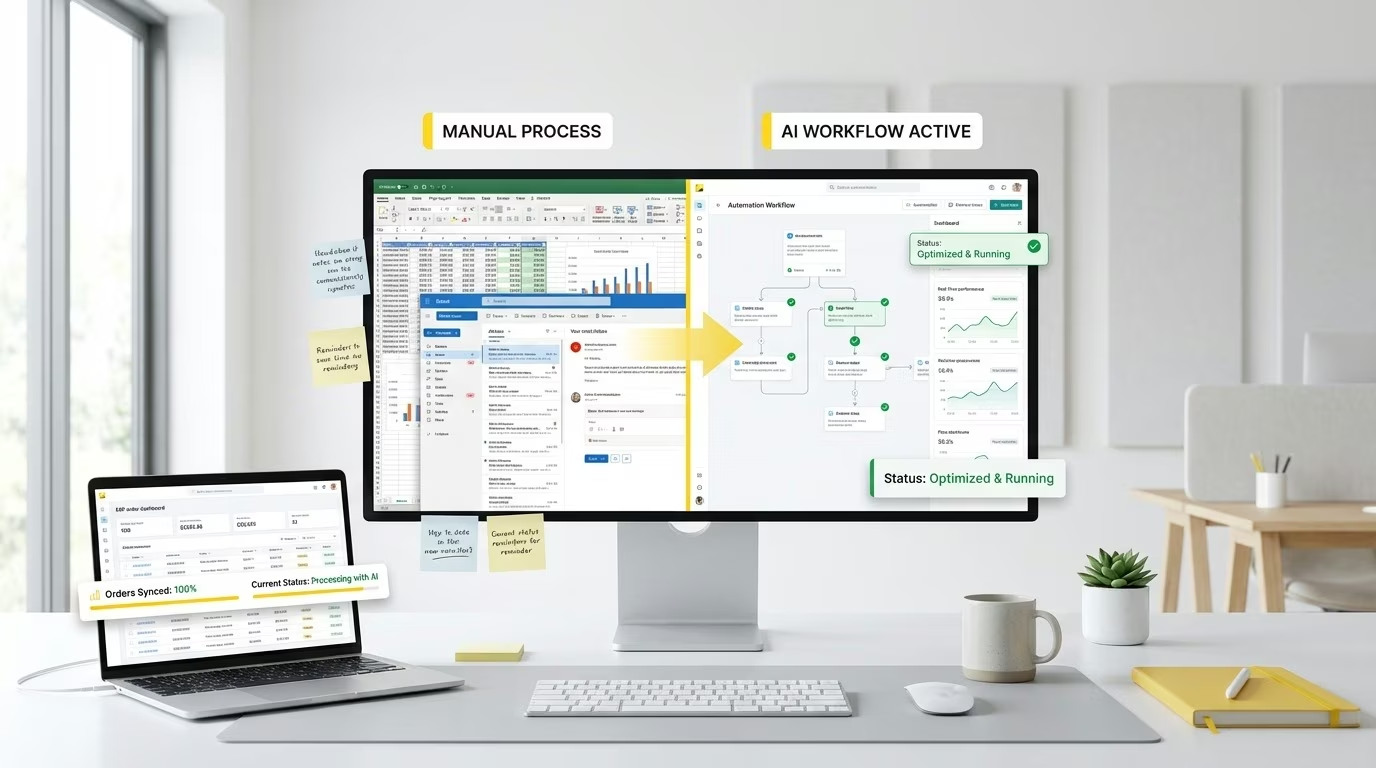
Example: When an order is created in your legacy ERP, it automatically updates your SaaS CRM and triggers a customer’s success workflow in the cloud.
>Why It’s Important to Integrate Legacy Systems and SaaS Apps?
Legacy systems create silos and risks
95% of organizations struggle with integration due to outdated systems (Adalo, 2026).
Legacy systems lack scalability, API compatibility, and modern security standards.
They slow down workflows, cause data duplication, and limit collaboration.
SaaS adoption is skyrocketing
The average enterprise now manages 250–500+ applications (OneIO, 2026).
Without integration, cloud adoption leads to even more data fragmentation.
Unified data fuels better decisions
Integrated systems enable a single source of truth, improving reporting accuracy, customer experience, and operational efficiency.
How to Integrate Data Between Legacy Systems and SaaS Apps: Step-by-Step?
Step 1: Assess What You Have and Why It Matters Before any integration, understand your current setup.
List all legacy and SaaS systems in use.
Identify which data sets overlap.
Define the business outcomes you want (for example: faster order processing, real-time dashboards, fewer manual steps).
Pinpoint pain points like missing APIs, manual imports, or inconsistent data.
Step 2: Define a Clear Integration Strategy A strong strategy starts with “Why”. What is driving the need? Include these elements:
Scope: Which systems or workflows to prioritize.
Approach: Choose between full migration, hybrid, or incremental integration (Netguru, 2026).
Architecture: Pick between point-to-point, middleware, or iPaaS.
Governance: Ensure compliance, version control, and auditability.
Step 3: Design the Integration Architecture Integration design defines how systems will communicate. Consider:
APIs and Connectors: Some legacy systems need custom adapters.
Data Mapping: Align field names and formats across systems.
Real-time vs Batch: Choose the right mode for each process.
Security: Apply encryption, role-based access, and monitoring.
Scalability: Design to support future SaaS expansion.
Step 4: Execute and Test the Integration Best practices:
Start small with a pilot project.
Use sandbox environments for testing.
Validate data accuracy and performance.
Roll out gradually across departments.
Monitor results and refine workflows.
Step 5: Govern, Maintain, and Optimize Integration is an ongoing process, not a one-time project. Maintain success by:
Prebuilt Connectors: Connect over 1000 APIs and applications instantly.
Unified Workflow Engine: Build hybrid data workflows with drag-and-drop simplicity.
AI Data Mapping: Automatically transform and clean data for consistency.
Real-time Monitoring: Get visibility into every data flow.
Enterprise Security: Encrypted transfer, audit trails, and role-based controls.
Hybrid Architecture: Works across on-prem and cloud environments.
With eZintegrations™, you can cut integration time from months to weeks, reduce errors, and free your teams from manual syncs.
Case Study: U.S. Manufacturing Firm Modernizes Data Flow
A mid-sized U.S. manufacturer used a 15-year-old ERP system and a new SaaS CRM. Both operated on in isolation. Using eZintegrations™, the company:
Connected CRM orders with ERP production in six weeks.
Reduced manual entry errors by upto 60%.
Cut order-to-production time by upto 40%.
Expanded integration into five systems within nine months.
Result: unified visibility, faster sales-to-production flow, and measurable ROI.
Best Practices for Success
Integrating data between legacy systems and SaaS apps requires both a technical and strategic approach. Following best practices ensure smoother execution, lower risks, and faster ROI. Here are some practical steps to guide your integration journey:
Start with high-impact, low-risk use cases. – Begin where the value is clear and measurable. Pick processes that deliver quick wins without disrupting business-critical systems.
Standardize data definitions early- Establish common data formats and naming conventions before integration begins. This helps avoid duplication and improves consistency across systems.
Choose scalable, no-code platforms- Opt for modern platforms like eZintegrations™, which simplify data workflows without heavy coding. A no-code approach reduces dependency on developers and accelerates delivery.
Involve cross-functional teams- Bring together IT, business analysts, and operations teams. Collaboration ensures that integration serves real business needs rather than just technical goals.
Track KPIs: latency, accuracy, and adoption- Measure the speed, precision, and user engagement of your integrations. Continuous tracking helps you fine-tune performance and demonstrate business value.
Communicate progress and celebrate results- Share integration milestones with teams and stakeholders. Recognizing wins builds momentum and encourages wider adoption across departments.
How to Measure Integration ROI?
Time saved: Reduction in manual data entry hours.
Accuracy: Fewer data errors or mismatches.
Speed: Real-time updates replace batch delays.
Cost: Lower maintenance and integration overheads.
Business outcomes: Faster sales cycles, better reporting, higher customer satisfaction.
The Future Belongs to Connected Enterprises
Integrating data between legacy systems and SaaS apps isn’t just an IT upgrade; it’s a competitive differentiator. When systems talk to each other, decisions get faster, customers get better experiences, and teams work smarter. With eZintegrations™, you can make it real without months of coding or disruption. Book a free demo of eZintegrations™ todayand see how easily you can connect legacy and cloud systems into one intelligent workflow. Recommend Blogs:
How long does integration take? Most pilot integrations complete in 6–12 weeks, with full rollout in a few months depending on complexity.
What’s the cost of integration? Costs vary by platform, systems, and scale, but ROI comes from reduced manual work, fewer errors, and faster processes.
Can very old systems still integrate? Yes. Many legacy systems can be wrapped or accessed via middleware, APIs, or direct database connectors.
How do I ensure security? Use encryption, role-based access, secure APIs, and continuous monitoring.
What team do I need? An integration lead, IT admin, data analyst, and business process owner ensure success.
 support@bizdata360.com
 +1-650-283-1644
 AI Enabled Data Integrations and Analytics


 Watch Demo
 Post on LinkedIn
 Post on Facebook
 Post on Twitter/X