 support@bizdata360.com
 +1-650-283-1644
 AI Enabled Data Integrations and AnalyticsAI Enabled Data Integrations and Analytics

Marketing and sales alignment has always been a challenge for B2B enterprises. In 2026, the gap is wider than ever. According to HubSpot’s State of Marketing Report 2024, 63% of marketers say data silos are their biggest barrier to effective lead management, while 52% of sales team’s struggle with inconsistent lead quality (HubSpot). This is where Marketo Salesforce Integration becomes a game-changer.
If you’ve ever faced the pain of mismatched data, lost leads, or fragmented campaigns, you know how costly poor integration can be. A well-executed Marketo Salesforce Integration ensures marketing automation and CRM work hand in hand, delivering cleaner pipelines, accurate lead scoring, and measurable ROI.
This blog is a complete 2026 guide for enterprises, marketers, and sales professionals looking to master integration. Whether you’re setting it up for the first time, troubleshooting issues, or optimizing existing workflows, this post will give you the knowledge and confidence to do it right.
At its core, Marketo Salesforce Integration connects Adobe Marketo Engage, a leading marketing automation platform, with Salesforce, the world’s most popular CRM. This connection allows:
For B2B enterprises, integration is not just a technical step. It’s a strategic move that reduces miscommunication, improves efficiency, and drives revenue growth.
The digital buying journey is longer and more complex than ever. Gartner reports that B2B buyers spend only 17% of their time meeting potential suppliers (Gartner). That means the other 83% is spent researching, comparing, and self-educating.
Without a tight Marketo Salesforce Integration, businesses risk:
Enterprises that integrate correctly, however, see smoother lead flows, faster sales response times, and sharper insights into buyer behavior.
Setting up the integration can feel overwhelming, but when broken down, it becomes manageable.
Before starting, make sure your teams agree on:
For teams struggling with setup, a no-code platform like eZintegrations™ simplifies the process by handling API calls, field mapping, and error monitoring automatically.
Even the best setups face challenges. Here are frequent pain points enterprises report:
These problems can cripple marketing operations if left unaddressed.

Enterprises need more than a manual fix. They need an automation-first solution. eZintegrations™, a no-code AI data integration and workflow automation platform, tackles integration issues at scale:
By replacing manual setups with automated workflows, eZintegrations™ not only ensures seamless integration but also gives enterprises the flexibility to connect with other systems like ERP, analytics tools, and data lakes.
To get the most from your integration in 2026, follow these strategies:
For technical teams, understanding Marketo Salesforce Integration API calls is critical. API calls manage communication between platforms but are limited by Salesforce quotas. Exceeding daily limits can cause delays in data sync.
Solutions:
A global B2B SaaS company struggled with:
By implementing eZintegrations™:
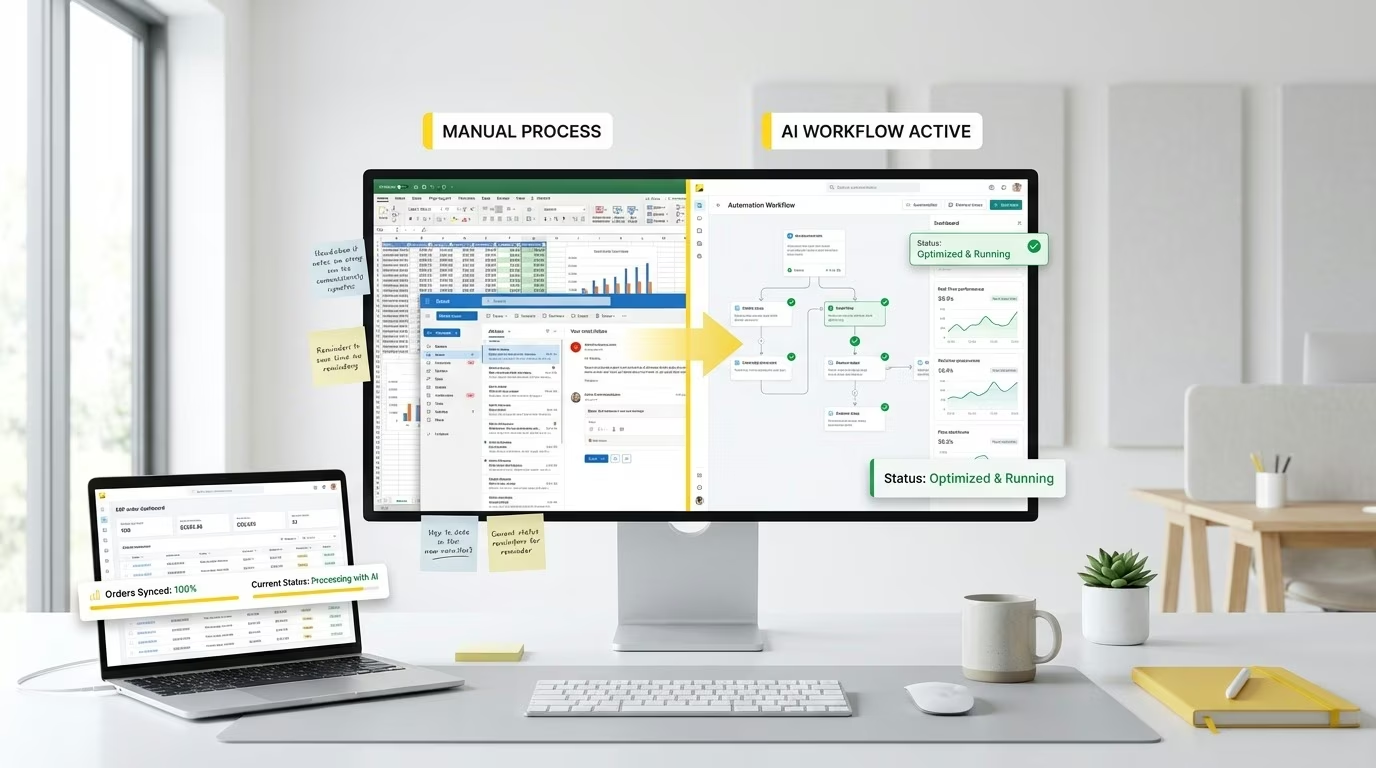
This demonstrates how automation enhances integration beyond basic setup.
In 2026, Marketo Salesforce Integration is not optional. It’s the foundation for accurate pipelines, stronger campaigns, and reliable ROI tracking. While traditional setups face API limits, sync issues, and data chaos, automation-first platforms like eZintegrations™ bring speed, scale, and reliability.
If your business wants seamless lead management and a smarter sales-marketing engine, it’s time to take the next step.
Book a free demo of eZintegrations™ and see how you can transform your Marketo Salesforce Integration in 2026.
Recommend Salesforce Integration Solutions by eZintegrations™
Salesforce and NetSuite
Salesforce and Snowflake
Salesforce and HubSpot
Salesforce and Jira
Salesforce and Xero
Salesforce and Microsoft Teams
Q1. What is the main benefit of Marketo Salesforce Integration?
It aligns marketing and sales by ensuring clean, accurate, and real-time data sharing.
Q2. How long does it take to set up Marketo Salesforce Integration?
Basic setup can take a few hours, but optimization and error-proofing may take weeks without automation tools.
Q3. What are the most common integration issues?
API limits, field mismatches, duplicate records, and slow syncing.
Q4. Do I need developers for Marketo Salesforce Integration?
Not always. With no-code platforms like eZintegrations™, marketing teams can handle integration themselves.
Q5. Can eZintegrations™ integrate other systems besides Salesforce and Marketo?
Yes, it supports connections with ERP, CRM, SaaS apps, SQL/NoSQL databases, and APIs.
Q6. Which is the best Salesforce and Marketo integration platform?
eZintegrations™ is one of the best Salesforce and Marketo integration platform


© Copyright 2026 Bizdata Inc. | All Rights Reserved
 Watch Demo
 Post on LinkedIn
 Post on Facebook
 Post on Twitter/X