In 2026, embedded integration is no longer just an optional feature for enterprise software; it is an absolute necessity for staying competitive. According to a recent report by Grand View Research, the global integration platform as a service (iPaaS) market is expected to reach USD 22.5 billion by 2028, growing at a CAGR of 16.3%. Yet, despite its growing popularity, many organizations struggle to implement seamless embedded integrations that connect SaaS platforms, mobile applications, ERP platforms, and other enterprise tools.
For many tech leaders and SaaS product owners, the pain points are familiar:
Disjointed data across SaaS platforms
High costs and long deployment times
Scalability issues when onboarding new SaaS applications
Complexity of managing custom connections and APIs
This is where embedded integration shines. Done right, it empowers SaaS platforms to embed seamless connectivity within their products, providing end-users with a more unified experience. In this comprehensive guide, we’ll explore what embedded integration is, why it matters, best practices for 2026, and how platforms like eZintegrations™ and AI tools like Goldfinch AI are making this future a reality.
What is Embedded Integration?
Embedded Integration is the practice of embedding connectivity and data-sharing capabilities within SaaS platforms or enterprise software. It enables applications to integrate directly with other SaaS platforms, databases, and APIs, providing seamless connectivity for end-users.
For example:
A SaaS ERP can have built-in connectors for Salesforce and Slack.
A SaaS HR platform can embed connections for payroll and benefits platforms.
Why it matters: Today, SaaS platforms must connect to an average of 350+ SaaS apps across industries (according toStatista), making seamless connectivity a core competitive advantage.
Types of Embedded Integration
Embedded integrations can be classified based on their design and delivery approach. Understanding these types will help in selecting the right embedded integration design services.
Native Integrations: Developed and delivered within the SaaS application itself (eg, direct CRM connectors).
White-Label Integrations: Built using embedded-integration platforms like eZintegrations™, allowing SaaS vendors to brand integrations as their own.
Custom Integrations: Developed by SaaS vendors for unique use cases or enterprise clients.
Prebuilt Marketplace Integrations: Available via an embedded- integration platform as a service (iPaaS), allowing SaaS platforms to monetize connectivity.
Low-Code/No-Code Integrations: Leveraging platforms that enable SaaS teams to build connections quickly without deep coding expertise.
How Does Embedded Integration Work?
Embedded integration operates by creating a direct link between a SaaS platform and external services using standardized APIs, connectors, and protocols.
Here’s the process:
The SaaS platform invokes an embedded-integration tool via APIs.
The tool transforms and maps data from one system’s structure to another.
AI capabilities enable intelligent field mapping, error detection, and seamless data synchronization.
End-users access this connectivity directly within their SaaS interface.
Benefits of Embedded Integration
With embedded integration platforms, SaaS vendors can:
Deliver seamless user experiences
Reduce the time and cost of building custom integrations
Enhance customer satisfaction and retention
Minimize manual data entry errors
Scale connections quickly across platforms and industries
Here’s a closer look:
Faster Time to Market: Enables SaaS platforms to launch connected services quickly.
Better User Experience: Removes the friction caused by manual import/export and disconnected apps.
Reduced Development Cost: Enables SaaS teams to focus on core product areas.
Future-Proof Architecture: Supports easy onboarding of new SaaS services.
Advanced AI Capabilities: Enables intelligent data mapping and anomaly detection (using tools like Goldfinch AI).
Embedded Integration Examples
Here are examples of embedded integration across industries:
CRM: Integrate Slack, Outlook, and LinkedIn within the CRM.
E-commerce: Link ERP platforms with marketplaces like Amazon or eBay.
Telehealth: Connect EMR platforms with patient engagement apps.
Automotive: Embed connectivity between in-car infotainment platforms and mobile devices.
Accounting & ERP: Integrate SaaS platforms like NetSuite, Xero, or QuickBooks for seamless data flow.
Embedded Integration Challenges
Although embedded integration platforms can deliver immense benefits, common challenges include:
Data Compatibility Issues: Different SaaS platforms use varying data standards.
Security and Compliance: Managing privacy and data security across platforms.
API Changes: SaaS APIs evolve quickly, creating breaking changes.
Scale and Maintenance: Managing connections across hundreds of SaaS platforms.
User Education: Helping SaaS customers understand and utilize built-in integrations.
Embedded Integration Best Practices for 2026
To build effective embedded integrations, SaaS platforms and enterprises should adopt best practices:
Prioritize Modularity: Build connectors as modular services for scalability.
Leverage AI and ML: Incorporate tools like Goldfinch AI for automated schema detection and data mapping.
Use Low-Code/No-Code Frameworks: Accelerate the deployment of new connections.
Focus on Security and Compliance: Ensure that your embedded- integration design services adhere to SOC2, GDPR, and CCPA.
Provide Rich User Experience: Enable end-users to configure connections and view status easily.
Robust Monitoring and Alerts: Maintain visibility across connections and alert for failures.
Future-Proof Architecture: Adopt embedded-integration platforms that can adapt to evolving SaaS landscapes.
Who Needs Embedded Integration Platforms?
SaaS Product Companies – To offer seamless third-party integrations directly within their apps.
FinTech Services – To securely connect financial data sources and APIs.
Healthcare SaaS Vendors (EHR, EMR platforms) – To integrate patient data across systems compliantly.
Retail and E-commerce SaaS – To sync inventory, orders, and customer data with external platforms.
Automobile SaaS – To embed real-time services into vehicle infotainment systems.
ERP and HR SaaS Solutions – To unify data flows between payroll, finance, and workforce tools.
Embedded Integration Tools & Services
Here are some of the best embedded integration platforms available in 2026:
eZintegrations™: A no-code, real-time, AI-driven embedded integration platform providing seamless connectivity between SaaS platforms, ERP, and legacy databases.
Embedded Systems Integration vs Embedded Software Integration
Although related, these terms have different meanings:
Embedded Systems Integration: Focuses on hardware and software connectivity for devices and equipment.
Embedded Software Integration: Refers to integrating software components within an application (eg, SaaS platforms).
For SaaS platforms, embedded software integration is the core area of focus.<
AI and Embedded Integration
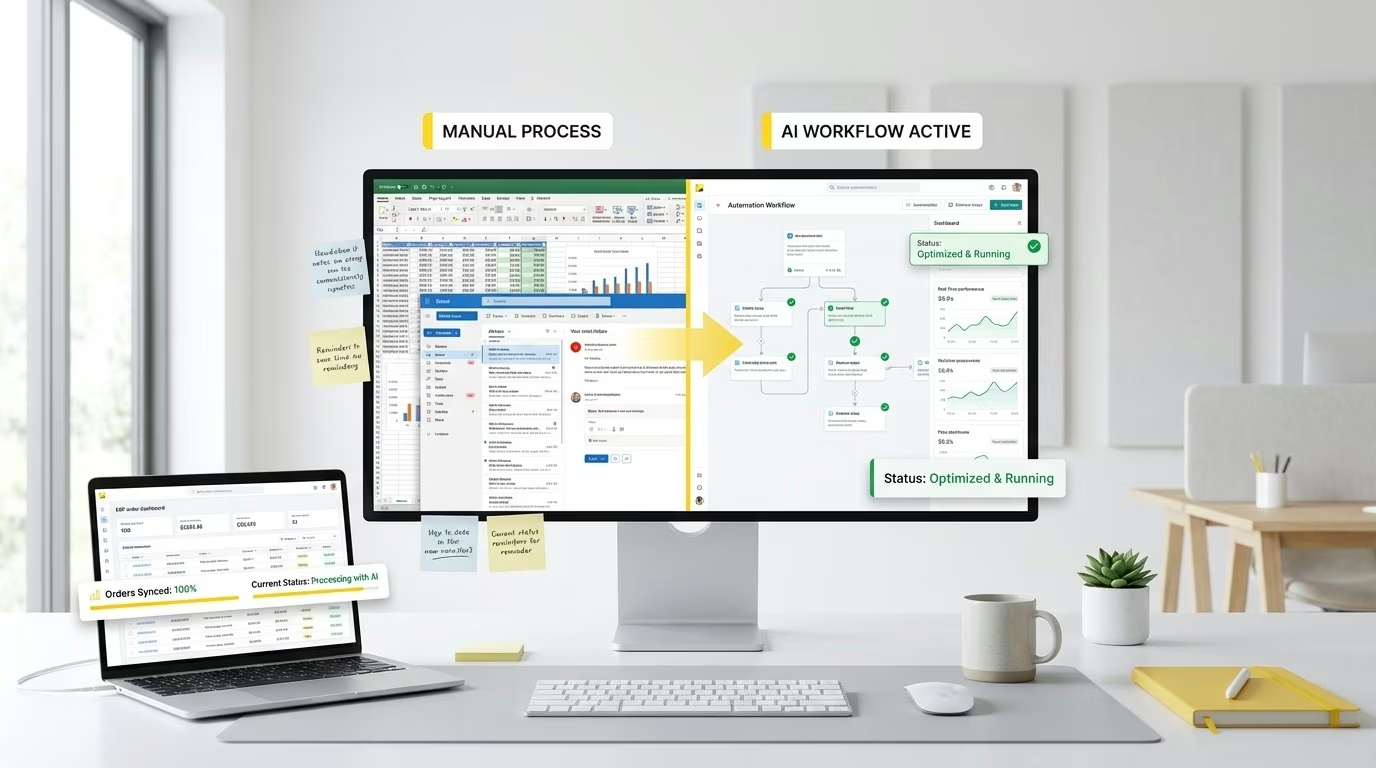
In 2026, AI is playing a transformative role in embedded integration, redefining how software systems connect and communicate. By automating complex tasks like schema detection, field mapping, and error resolution, AI significantly reduces the manual work involved in setting up integrations. Platforms such as Goldfinch AIleverage machine learning to make these connections smarter, faster, and more reliable, empowering SaaS products to offer plug-and-play integrations with minimal configuration.
Automated schema detection and field mapping – AI auto-identifies and aligns data fields across systems.
Anomaly detection and error handling – ML models catch data issues early and suggest corrections.
Intelligent recommendations for connectors – AI propose the best APIs or systems to integrate based on context.
Reduced manual effort for SaaS integrations – Setup times shrink as AI handles repetitive integration steps.
Tools like Goldfinch AI – These solutions apply machine learning to streamline, validate, and optimize integrations at scale.
How eZintegrations™ and Goldfinch AI Elevate Embedded Integration
eZintegrations™ offers a robust, AI-driven embedded integration platform that allows SaaS platforms to embed connectivity quickly. Its no-code environment allows SaaS vendors to launch new connections in hours, making it ideal for enterprise SaaS platforms, automotive infotainment systems, ERP vendors, and more.
Goldfinch AI, an AI/ML engine for embedded integration platforms, automates data schema detection and error handling, making connections:
Faster to implement
More resilient
Smarter and self-improving over time
Use Case Example: A SaaS ERP used eZintegrations™ and Goldfinch AI to embed connections with CRM platforms. The result:
Reduced manual mapping effort by upto 40%
Accelerated the launch of new connections
Minimized errors caused by schema changes
Your Embedded Integration Journey Begins Now
In 2026, embedded integration is no longer be a nice-to-have feature for SaaS platforms. It’s a must-have differentiator. By leveraging AI, adopting best practices, and using platforms like eZintegrations™ and Goldfinch AI, SaaS vendors can future-proof their offerings and deliver seamless user experiences across industries.
If you want to embed seamless, intelligent connections within your SaaS platform and reduce integration complexity, now is the time to act.Book a free demo of eZintegrations™ today and transform the way you connect to SaaS platforms, ERP, and databases.
Frequently Asked Questions about Embedded Integration
Q1: What is embedded integration? Embedded integration allows SaaS platforms to embed connectivity within their offerings, making connections seamless for end‑user customers. Q2: What are the benefits of embedded integration platforms? Benefits include seamless connectivity, lower development costs, improved user experience, future‑proof architecture, and intelligent schema detection with AI. Q3: What are common challenges in embedded integration? Common challenges include data compatibility, security, breaking APIs, and maintaining connections across SaaS platforms. Q4: How can AI help with embedded integration? AI tools like Goldfinch AI enable intelligent schema detection, automated error handling, and predictive connector recommendations. Q5: Who needs embedded integration platforms? SaaS vendors across industries ERP platforms, HR platforms, FinTech platforms, and others benefit from embedded integration platforms.
 support@bizdata360.com
 +1-650-283-1644
 AI Enabled Data Integrations and Analytics


 Watch Demo
 Post on LinkedIn
 Post on Facebook
 Post on Twitter/X