 support@bizdata360.com
 +1-650-283-1644
 AI Enabled Data Integrations and AnalyticsAI Enabled Data Integrations and Analytics

In the world of pharmaceutical quality assurance, there is no bigger stress point than FDA Inspections for documentation accuracy. Nearly every inspection cycle reveals preventable documentation errors such as missing batch records and incomplete logbooks. These gaps trigger regulatory findings more often than any other compliance issue, and they create risk, delays, and resource drain for QA teams.
Imagine an AI that can review thousands of pages of FDA-related documents in hours, catch subtle errors humans miss, and give QA teams confidence heading into inspections. Sounds futuristic. You may be closer to that reality than you think. Today, AI-powered tools like eZintegrations™ AI Document Understanding are helping pharma QA teams significantly reduce documentation mistakes early in the inspection readiness process.
Let’s walk through how pharma quality teams can leverage AI to catch documentation errors before FDA inspectors show up.
Key Takeaways
Pharma QA teams juggle large volumes of text, from batch records and validation reports to SOPs and regulatory submissions. These documents are complex and highly regulated, and even a small omission can lead to an inspection finding.
Common issues include:
These kinds of errors often come to light during, FDA inspections, and they are among the most frequent reasons for compliance observations.
Having a robust documentation review process is essential. But manual reviews are slow, subjective, and often miss subtle compliance gaps.
Manual document review has serious limitations:
This creates a compliance blind spot. If QA teams don’t catch mistakes early, those gaps become inspection risks.
AI isn’t here to replace QA experts, but to augment them. Here’s how AI enhances document accuracy and inspection readiness:
AI Document Understanding can automatically:
This level of extraction goes beyond traditional OCR and handles pharma-specific structure and language.
For example, eZintegrations™ AI Document Understanding ingests complex pharma documents and converts them into structured data that is easy to review and cross-reference. This cuts manual extraction time and reduces errors dramatically. Learn more here:
AI models trained on regulatory patterns can flag:
Instead of sifting through pages manually, QA teams see clear flags showing where attention is needed.
AI can analyze consistency across thousands of documents. For example:
This kind of pattern analysis is extremely difficult and time consuming for humans alone.
AI tools can simulate inspection queries, helping teams practice retrieval and review workflows ahead of time. This brings confidence and preparedness that manual reviews simply cannot match.
Industry case studies show that AI-driven preparation can reduce audit-prep time by over 60 percent and cut document retrieval time by 75 percent.
eZintegrations™ AI Document Understanding is built for real enterprise needs. It plays a valuable role in inspection readiness by handling document complexity automatically.
Here’s what it does well:
This means QA teams spend less time checking for common errors and more time on strategic compliance efforts.
Learn more about how this eZintegrations™ AI Document Understanding solution supports pharma QA teams here.
Here’s a simple roadmap QA leaders can follow:
Step 1. Centralize Documentation
Collect all relevant SOPs, batch records, validation reports, and CAPAs into a secure repository.
Step 2. Choose an AI Document Understanding Tool
Opt for AI solutions that handle pharma-specific structures and supports integration into QA workflows.
Step 3. Train the AI
Use your existing document sets so the AI learns patterns unique to your organization.
Step 4. Run Automated Reviews
Let AI flag errors and inconsistencies. Create reports that QA teams can act on easily.
Step 5. Review and Act
QA experts should validate flagged items and correct errors before any inspection.
One pharma company preparing an FDA audit used an AI inspection simulation feature to test their document readiness. The AI found deviations related to missing document approvals that humans had overlooked. Addressing those early eliminated a potential inspection finding and cut review cycle times significantly.
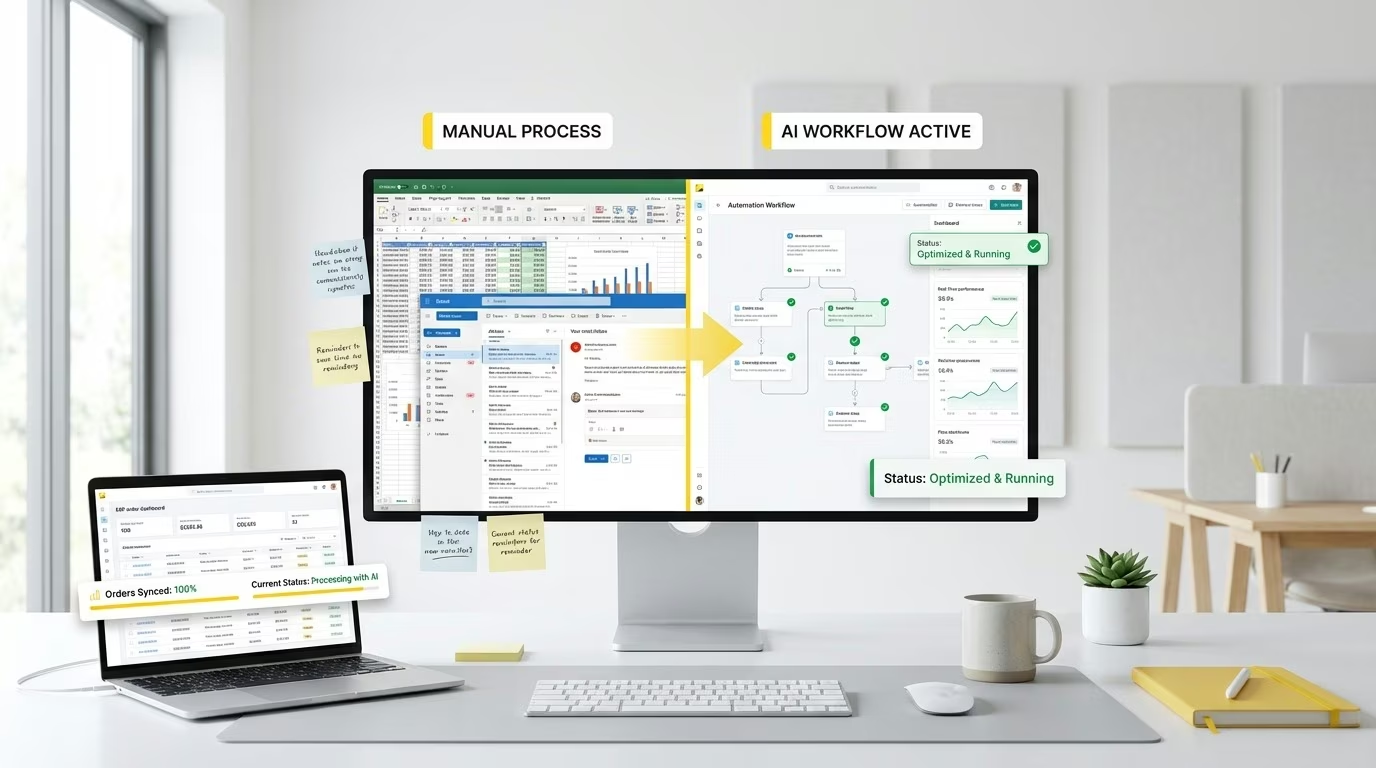
If your QA team still relies on manual processes and spreadsheets, you are leaving inspection readiness to chance. Every inspection cycle reveals preventable documentation errors that slow releases and stress teams.
You can change that today. Book a demo of eZintegrations™ AI Document Understanding today and see how you can identify documentation issues before they become inspection findings. Faster reviews. Fewer errors. Greater confidence going into FDA inspections.
Recommend Blogs:
FAQ QA Teams Ask About AI and FDA Inspection Readiness


© Copyright 2026 Bizdata Inc. | All Rights Reserved
 Watch Demo
 Post on LinkedIn
 Post on Facebook
 Post on Twitter/X